THE CLASSIC COLLECTION✦The garden of resurrectionCLASSIC FREE BOOKS
The garden of resurrection
E. Temple (Ernest Temple) Thurston
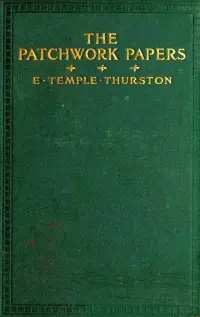
THE CLASSIC COLLECTION · 1910
"The Patchwork Papers" by E. Temple Thurston is a collection of illustrated essays written in the early 20th century. The book explores themes of beauty, memory, and the human experience, weaving together reflections on life through a series of narratives that reveal the author's insights into various characters and situations. Among those introduced are a little old pensioner who creates a patchwork quilt, and Bellwattle, a character with a deep maternal instinct and a love for plants. The opening of the work establishes a tone of introspection and sentimentality as the author reflects on beauty and truth in life. The narrative begins with an encounter with an elderly pensioner, who expresses her desire to create a quilt as a means of leaving behind a lasting memory, emphasizing the themes of connection and remembrance. There is a poignant dialogue between the narrator and the pensioner, revealing her determination to contribute something meaningful, suggesting that our thoughts keep the memory of loved ones alive. This initial chapter sets the stage for further explorations of human emotions and relationships throughout the collection, promising readers a rich tapestry of stories that meld the beautiful with the everyday.
Introduction adapted from the source catalogue; source summaries may be automatically generated.
Free to read · English · 32,084 words · No account needed
MAKE TIME FOR A GOOD BOOK
On by default. Untick to stop anonymous reading totals. Each page counts after 10 seconds in view. How this works.
Anonymous counting is on unless you have switched it off.
I can see now the German master—that is to say the stolid Englishman who taught us German—I can see him now reading out a sentence for us to translate into the language.
“My heart,” read he, most solemnly, “my heart is in the Highlands—my heart is not here.”
And there was such pathos, such a tone of exile in his voice, that I was prompted to ask him whether, under the circumstances, he could give his proper attention to the class.
“Might we not shut up our books,” said I—“straight away?”
The look that came into his face then was the look—exaggerated a little perhaps—which comes into the faces of most men when the dignity of their great wisdom is upset. Cruikshank and I, then, were struggling for our dignity against the fire of Bellwattle’s questions. It was no good talking about the evolution of language to her. She would never have understood a word of it. Now, when a man tells a woman anything which she does not understand, she is just as likely to think him a consummate fool. And a man will always be a fool rather than be thought one.
We were trying, therefore, to answer Bellwattle as she would have answered herself. In other words, we were making fools of ourselves in order that Bellwattle should think us wise.
It was here that Cruikshank tempted providence. Doubtless he thought we were getting on so well that we could afford to be generous with our information, for in quite an uncalled-for way he volunteered to tell her more.
“Is there anything else,” said he, “that you want to know?”
She nodded her head and around the corners of her lips I believe I caught the suspicion of a smile.
“If Adam called it a cow,” she began——
“He did,” interrupted Cruikshank. “In those days it probably made that
sort of noise.”
“Then why,” said Bellwattle, giving him never a moment to retract, “why do they call it a vache in France?”
We all looked at each other—I at Cruikshank, Cruikshank at me, and Bellwattle alternately at both of us.
After a pregnant pause, Cruikshank began to temporise.
“That’s very like a woman,” said he—“you’re going into another issue
altogether.”
“Now,” said I, “you’re coming to Bible history.”
“Yes, that’s Bible history,” repeated Cruikshank, “you’re going back to the Tower of Babel.”
“Is that where they wanted to get up to Heaven?” she asked.
We nodded our heads emphatically.
“And it all smashed up, and they began talking like a crowd of
tourists?”
“Something like that,” we agreed.
Your reading position is saved on this browser. Take it to another device with a library code. Reading pages adapt to text, rather than matching a printed edition.
E. Temple (Ernest Temple) Thurston
E. Temple (Ernest Temple) Thurston
E. Temple (Ernest Temple) Thurston
BEHIND THE BOOK
This eBook is for the use of anyone anywhere in the United States and most other parts of the world at no cost and with almost no restrictions whatsoever. You may copy it, give it away or re-use it under the terms of the Project Gutenberg License included with this eBook or online at www.gutenberg.org. If you are not located in the United States, you will have to check the laws of the country where you are located before using this eBook. Read the source licence.
The original source file, including credits and licence, is retained by this library. Request an original-format copy at no charge. Please include the book title and Project Gutenberg identifier #62297.
KEEP YOUR CURIOSITY GOING

David Patterson (Spirit) Hatch

David Patterson (Spirit) Hatch

David Patterson (Spirit) Hatch

Ralph Waldo Emerson

Maurice Baring

Oscar Wilde & James McNeill Whistler