THE CLASSIC COLLECTION✦Mountain Idylls, and Other PoemsCLASSIC FREE BOOKS
Mountain Idylls, and Other Poems
Alfred Castner King
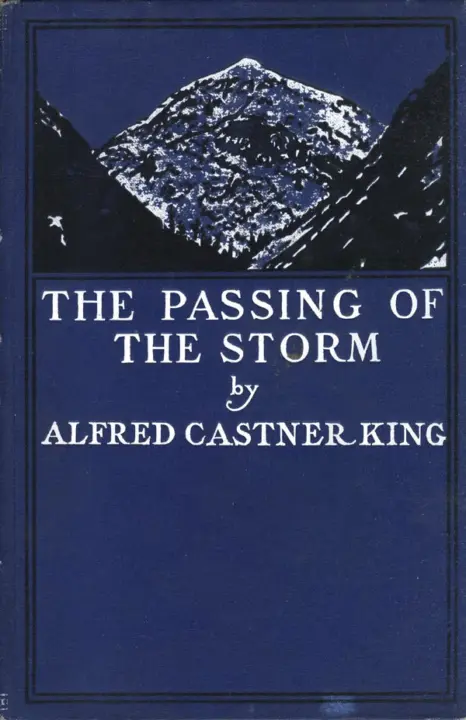
THE CLASSIC COLLECTION · 1907
"The Passing of the Storm and Other Poems" by Alfred Castner King is a collection of poems written in the early 20th century. The work reflects on the experiences and challenges faced by pioneers and miners in the American West, highlighting themes of adventure, hope, and the complexities of human nature. King's poetry captures the rugged beauty of nature and the resilience of individuals who ventured into the wilderness. The beginning of the collection sets the tone with a dedication to pioneer prospectors, which serves as both a tribute and an exploration of their often misrepresented lives. The opening poem, "The Storm," paints a vivid picture of a harsh winter landscape while delving into the emotional and physical struggles of those who endure such conditions. The subsequent preface introduces readers to the author's intent, emphasizing the importance of preserving individual narratives and the wisdom contained within them. King's lyrical depictions invite readers to reflect on the human experience, particularly the sacrifices, aspirations, and memories that shape our lives.
Introduction adapted from the source catalogue; source summaries may be automatically generated.
Free to read · English · 22,735 words · No account needed
MAKE TIME FOR A GOOD BOOK
On by default. Untick to stop anonymous reading totals. Each page counts after 10 seconds in view. How this works.
Anonymous counting is on unless you have switched it off.
Beneath a pine's protecting skirt,
It reared its modest roof of poles,
Laid close, then overlaid with dirt,
To cover up the cracks and holes;
The intervals between the logs
Were daubed with mud from mountain bogs.
The ground did service as a floor
In this, as many huts before;
So beaten down beneath the tread,
It more resembled tile instead.
The plastic clay, compressed and sleek,
Was level and as hard as brick.
Protruding boulders, smooth and bare,
Exposed their faces here and there;
And with their surfaces displayed,
A primitive mosaic made.
And, terminating in a stack,
Some feet above the cabin's roof,
The fireplace, comfortless and black,
Arose the dingy form uncouth.
This object of depressing gloom,
Built in the corner of the room,
When filled with lurid tongues of flame,
A cheerful cynosure became.
The furnishings within were crude;
A table fastened to the wall
Had been with some exertion hewed
From aspen timbers straight and tall,
And was, in lieu of table legs,
Supported by protruding pegs.
A cracker box, with shelves inside,
The leading corner occupied,
And made an ample cupboard there,
Where tin supplanted chinaware.
A frying pan, which from a nail
Suspended, dripped a greasy trail.
Framed from the hemlock's poles and boughs,
The rustic bunks within the house
Were not elaborate affairs;
While boxes filled the place of chairs.
Tacked on the unpretentious wall
Were advertisements, great and small,
While lithograph and crayon scenes,
Clipped from the standard magazines,
Comprised a mimic gallery,
Which broke the wall's monotony.
No carpets were upon that floor,
But at the bottom of the door
The rug, against its yawning crack,
Consisted of a gunny-sack.
Nor was there lock upon that door,
The guardian of sordid pelf;
The traveller, distressed and sore,
Might enter there and help himself.
Within this weather-beaten hut
Of logs, by many a tempest tried,
With doors and windows closely shut,
To keep the genial warmth inside;
A group of hardy mountaineers,
Blockaded by the winter's snow,
Sat by the fireside's ruddy glow.
Some old, and old beyond their years,
As disappointments, toil and strife,
Which constitute the miner's life,
Must operate with process sure,
Toward age, unduly premature;
[Blank Page]
For years, in stern privation spent,
Are traced in seam and lineament,
Which gives the patriarchal face
Its rugged dignity and grace.
Although by fond illusions led,
Through phantasies of empty air,
Which mark an ultimate despair,
The miner still sees hope ahead.
The prospector could never cope
With dangers and realities,
But for the visionary hope
Which both deceives and mollifies,
Alluring him with siren song
Her vague uncertain paths along.
Your reading position is saved on this browser. Take it to another device with a library code. Reading pages adapt to text, rather than matching a printed edition.
BEHIND THE BOOK
This eBook is for the use of anyone anywhere in the United States and most other parts of the world at no cost and with almost no restrictions whatsoever. You may copy it, give it away or re-use it under the terms of the Project Gutenberg License included with this eBook or online at www.gutenberg.org. If you are not located in the United States, you will have to check the laws of the country where you are located before using this eBook. Read the source licence.
The original source file, including credits and licence, is retained by this library. Request an original-format copy at no charge. Please include the book title and Project Gutenberg identifier #42422.
KEEP YOUR CURIOSITY GOING

Eric Mackay
Edmund Gosse
Sophia Margaretta Hensley
Gilbert Parker
George MacDonald

Elizabeth Bibesco