
Last letters from the living dead man
David Patterson (Spirit) Hatch
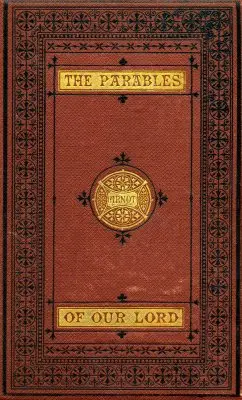
THE CLASSIC COLLECTION · 1870
"The Parables of Our Lord" by William Arnot is a theological exposition written in the late 19th century. This work aims to explore and explain the parables attributed to Jesus Christ, providing insights into their spiritual and moral significance. Arnot emphasizes the importance of understanding these parables as tools for teaching profound truths about the Kingdom of God and human nature. The opening of the book presents an introduction to the study of parables, discussing the significance of literary form in conveying spiritual truths. Arnot reflects on the parables' unique ability to illustrate complex ideas through relatable, everyday scenarios, thereby making them accessible to all audiences. He likens the sower's actions in the familiar agricultural context to the sharing of divine truth, inviting readers to consider their hearts—represented by different types of soil—as the receptacles for God's word. Arnot's writing suggests a strong focus on introspection and the necessity of self-examination when engaging with the lessons imparted through these parables.
Introduction adapted from the source catalogue; source summaries may be automatically generated.
Free to read · English · 166,638 words · No account needed
MAKE TIME FOR A GOOD BOOK
On by default. Untick to stop anonymous reading totals. Each page counts after 10 seconds in view. How this works.
Anonymous counting is on unless you have switched it off.
The natural history of a parable is like the (probable) natural history of a pearl. Something alien and irritating has alighted upon life, and forthwith a covering of pure and precious matter is thrown over it. After this manner, indeed, as we have already noted, a greater than the parable came. In this way redemption began, and grew. Sin entered Eden and fastened upon that image of God which had appeared on earth in the person of primeval man; forthwith holy promises from heaven began to cluster round the sin-spot. As age succeeded age these promises distilled like dew and crystallized around the original nucleus, until redemption was completed in the sacrifice of Christ and the ministry of the Spirit: that glorious gospel on which we now fondly look, gathered round the fall. The sin of man, though not the cause of God's salvation, became its occasion and determined its form.
The particular lessons which Jesus taught in the course of his ministry, followed in this respect the analogy of his redeeming work as a whole; in most cases his instructions were called forth and fashioned by hard, bold outstanding sins. Some of the brightest jewels which shine in the life of Christ are the pure pearly coverings which he threw around Pharisaic pride, or Sadducean unbelief, or the self-righteous stumbles of his own disciples. Thus he made the wrath, and the malice, and the deceit of men to show forth his own praise; thus rust-spots were converted into shining pearls; thus human errors, as they sprung up, were seized and choked and buried under a mantle of glorious grace.
Here in Matthew's Gospel, we encounter a group of three parables, the two sons, the wicked husbandmen, and the marriage of the king's son, connected with each other historically in a consecutive report, and logically as successive steps in the development of one argument. The portion, chapters xxi. xxii. xxiii., is the compact record of a single scene. Approaching by the Mount of Olives, Jesus entered Jerusalem in a simple but significant triumphal procession, heralded by the hosannahs of the multitude, which, if for the most part neither intelligent nor permanent, were sincere and spontaneous. Arrived in the city he at once made his way to the Temple, and there assumed an unwonted and severe authority. The mercenary profaners of the temple he cast out; the blind and lame he healed. On the way to and from Bethany, where he lodged for the night, the fruitless fig tree withered under his word. Next morning as he was teaching in the temple, the heads of the Jewish external theocracy, stung to rage by his words and deeds on the preceding day, formally demanded the exhibition of his authority, as a preliminary step to the violent suppression of his work. Jesus knew the hearts of these men; he knew that while, in virtue of their office, they affected to expound and apply the divine law, and to rule the people in accordance with it, they were at once ignorant of God's word and tamely subservient to the passions of the people. To tear off, or rather to compel them with their own hands to tear off their cloak of hypocrisy, he addressed to them that question of wonderful simplicity but wonderful power, The baptism of John, whence was it? from heaven or of men? Knowing that if they should confess the divine origin of John's mission they would thereby establish the Messiahship of Jesus to whom John had borne witness, and that if they should deny it they would forfeit the favour of the people, they answered, We cannot tell, meaning, It is inconvenient to express an opinion. As they could not venture to pronounce whether a ministry which had left its impress deep on the whole land, was a human usurpation or a divine mission, they had obviously no right to sit in judgment on the credentials of Jesus. When on this point they were condemned out of their own lips the Lord, rising now more into the stern dignity of judge when his ministry was drawing to a close, advances against the discomfited and stunned hierarchs, with another, another, and yet another stroke, unveiling the hypocrisy of their religious profession, predicting the consummation of the crime, the murder of the Father's well beloved, which they were already cherishing in their hearts, and denouncing finally the doom which in the righteous government of God should fall upon themselves and their city.[39] Such are the occasion, the places, the object, and the nature of the three parables which Jesus spoke that day in the Temple, and the Evangelist Matthew has recorded in this portion of the word. The first is the parable of--
Your reading position is saved on this browser. Take it to another device with a library code. Reading pages adapt to text, rather than matching a printed edition.
BEHIND THE BOOK
This eBook is for the use of anyone anywhere in the United States and most other parts of the world at no cost and with almost no restrictions whatsoever. You may copy it, give it away or re-use it under the terms of the Project Gutenberg License included with this eBook or online at www.gutenberg.org. If you are not located in the United States, you will have to check the laws of the country where you are located before using this eBook. Read the source licence.
The original source file, including credits and licence, is retained by this library. Request an original-format copy at no charge. Please include the book title and Project Gutenberg identifier #21328.
KEEP YOUR CURIOSITY GOING
David Patterson (Spirit) Hatch

David Patterson (Spirit) Hatch

David Patterson (Spirit) Hatch

Edwin Abbott Abbott

Richard Watson
T. G. (Theophilus Gould) Steward