THE CLASSIC COLLECTION✦An outlaw’s diary: the CommuneCLASSIC FREE BOOKS
An outlaw’s diary: the Commune
Cécile Tormay
THE CLASSIC COLLECTION · 1913
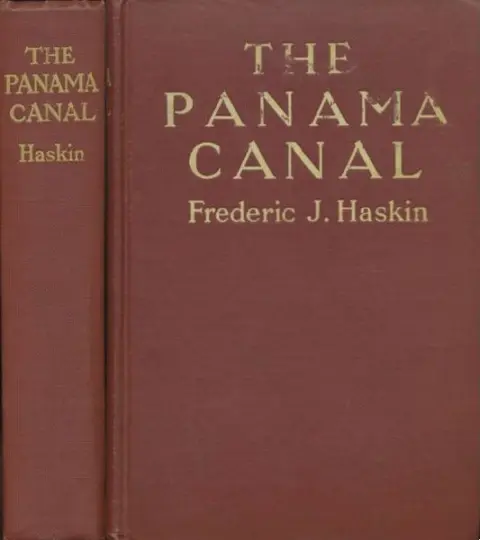
"The Panama Canal" by Frederic J. Haskin is a historical account written in the early 20th century. The book explores the monumental engineering feat that is the Panama Canal, detailing its construction, significance, and the various challenges faced during its building. It serves as an informative resource for readers interested in engineering marvels, American history, and international commerce. The opening of "The Panama Canal" sets the stage for understanding the canal's historical context, beginning with the early attempts to find a navigable route between the Atlantic and Pacific Oceans. Haskin chronicles the persistent efforts by explorers, likens the canal's construction to epic historical undertakings, and highlights the role of the United States in ultimately completing the project after the French debacle. The narrative emphasizes the significance of the canal not only as a strategic passage for international shipping but also as a symbol of American ingenuity and determination.
Introduction adapted from the source catalogue; source summaries may be automatically generated.
Free to read · English · 97,426 words · No account needed
MAKE TIME FOR A GOOD BOOK
On by default. Untick to stop anonymous reading totals. Each page counts after 10 seconds in view. How this works.
Anonymous counting is on unless you have switched it off.
The line hotels were, more properly speaking, merely dining-rooms where the American employees were furnished substantial meals for 30 cents each. Outsiders paid 50 cents each for these meals. They were up to a very high standard. Once the late Senator Thomas H. Carter, of Montana, was a member of a Senate committee visiting the Isthmus and he invited the subsistence officer, Maj. Wilson, to come to Washington and show the manager of the Senate restaurant how to prepare a good meal. A year later, after Senator Albert B. Cummins, of Iowa, had eaten one of the lunches at Gatun, he renewed the invitation of Senator Carter, telling Maj. Wilson he was sure that if he were to come Senators would get better meals for their money. At one of the Congressional hearings on the Isthmus Representative T. W. Sims, of Tennessee, asked that the menu of a meal he had eaten at one of these hotels be inserted in the record. Major Wilson inserted the menu for several days instead. The following is the menu at the Cristobal Hotel for January 20, 1912:
Breakfast.--Oranges, sliced bananas, oatmeal, eggs to order, German potatoes, ham or bacon, hot cakes, maple sirup, tea, coffee, cocoa.
Lunch.--Vegetable soup, fried pork chops, apple sauce, boiled potatoes, pork and beans, sliced buttered beets, stewed cranberries, creamed parsnips, lemon meringue pie, tea, coffee, cocoa.
Dinner.--Consomme vermicelli, beefsteak, natural gravy, lyonnaise potatoes, stewed beans, sliced beets, stewed apples, carrots a la Julienne, hot biscuits, ice-cream, chocolate cake, tea, coffee, cocoa.
The line hotels in 1912, which were operated at a loss of $12,000, served over 2,000,000 meals. The cost of the supplies per meal amounted to $0.2504 and the service to $0.0165, making the average meal cost $0.3065, while the employees were charged 30 cents. Approximately 2,000 Americans were continuous patrons of the line hotels.
The messes for European laborers were operated in 1912 at a total cost of $405,000. The returns from their operations amounted to $443,000, showing a net profit of $38,000 on 1,108,000 rations. The net profit per day's ration approximated 3-1/2 cents. The supplies entering into the ration cost $0.3106 and the service of preparing it $0.0547.
The national diet for Europeans would appear very monotonous to Americans. For the Spaniards who constituted the major portion of the European employees, it was a "rancho," which is a mixture of stewed meat, potatoes, cabbage, tomatoes and garbanzos heavily flavored with Spanish sweet pepper. Their soups were made very stiff, really a meal in themselves, since they were about the consistency of Irish stew mashed up. A day's ration for Spanish laborers ran about as follows:
Breakfast.--Roast beef, pork sausage, corned-beef, sardines or bacon, one-half loaf of bread, chocolate and milk.
Your reading position is saved on this browser. Take it to another device with a library code. Reading pages adapt to text, rather than matching a printed edition.
BEHIND THE BOOK
This eBook is for the use of anyone anywhere in the United States and most other parts of the world at no cost and with almost no restrictions whatsoever. You may copy it, give it away or re-use it under the terms of the Project Gutenberg License included with this eBook or online at www.gutenberg.org. If you are not located in the United States, you will have to check the laws of the country where you are located before using this eBook. Read the source licence.
The original source file, including credits and licence, is retained by this library. Request an original-format copy at no charge. Please include the book title and Project Gutenberg identifier #41807.
KEEP YOUR CURIOSITY GOING
Cécile Tormay

Moritz Busch
John L. Ransom
Frances Wright
Cécile Tormay

Mabel Potter Daggett