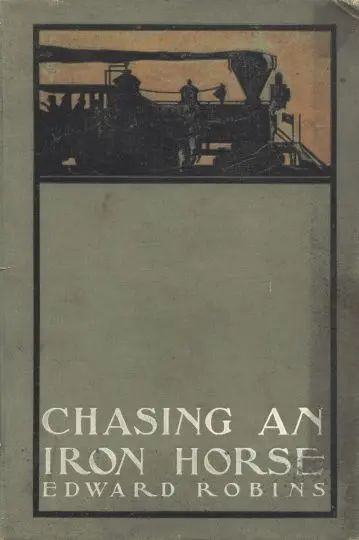
Chasing an Iron Horse; Or, A Boy’s Adventures in the Civil War
Edward Robins
THE CLASSIC COLLECTION · 1898
"The Palmy Days of Nance Oldfield" by Edward Robins is a historical account likely written in the late 19th century. The book chronicles the life of Anne Oldfield, a celebrated comedienne of the early 18th century, tracing her journey from humble beginnings as a seamstress to becoming a prominent figure on the English stage. The narrative captures the culture of the theatrical world during her time, offering insight into the social dynamics and the evolution of drama in England. The opening of the book introduces Anne Oldfield's origins, noting her birth into a family with a royal connection yet plunged into poverty after her father's death. Despite her circumstances, her talent and deep appreciation for theatre emerge early, as she captivates audiences with her voice while performing at the Mitre Tavern. The narrative sets the stage for her eventual rise in the theatre scene, detailing her encounters with influential figures like Captain Farquhar and Sir John Vanbrugh, who encourage her ambitions. Through vivid depictions of her charm and intelligence, the start of the book establishes the foundation for a journey marked by artistic evolution and societal intrigue as Oldfield seeks her place within the competitive world of 18th-century theatre.
Introduction adapted from the source catalogue; source summaries may be automatically generated.
Free to read · English · 75,061 words · No account needed
MAKE TIME FOR A GOOD BOOK
On by default. Untick to stop anonymous reading totals. Each page counts after 10 seconds in view. How this works.
Anonymous counting is on unless you have switched it off.
[Footnote A: The solemn lying in state of an English actress in the Jerusalem Chamber, the sorrow of the public over their lost favourite, and the regret of friends in noble, or humble, but virtuous homes, where Mrs. Oldfield had been ever welcome, contrast strongly with the French sentiment towards French players. It has been already said, that as long as Clairon exercised the power, when she advanced to the footlights, to make the (then standing) pit recoil several feet, by the mere magic of her eyes, the pit, who enjoyed the terror as a luxury, flung crowns to her, and wept at the thought of losing her; but Clairon infirm was Clairon forgotten, and to a decaying actor or actress a French audience is the most merciless in the world. The brightest and best of them, as with us, died in the service of the public. Monfleury, Mondory, and Bricourt died of apoplexy, brought on by excess of zeal. Molière, who fell in harness, was buried with less ceremony than some favourite dog. The charming Lecouvreur, that Oldfield of the French stage, whose beauty and intellect were the double charm which rendered theatrical France ecstatic, was hurriedly interred within a saw-pit. Bishops might be exceedingly interested in, and unepiscopally generous to living actresses of wit and beauty, but the prelates smote them with a "Maranatha!" and an "Avaunt ye!" when dead.--DR. DORAN.]
Later on Savage was inspired to write that famous poem of his, unsigned though it appeared, on the virtues of the departed:
"Oldfield's no more! and can the Muse forbear
O'er Oldfield's grave to shed a grateful tear?
Shall she, the Glory of the British Stage,
Pride of her sex, and wonder of the age;
Shall she, who, living, charm'd th' admiring throng,
Die undistinguish'd, and not claim a song?
No; feeble as it is, I'll boldly raise
My willing voice, to celebrate her praise,
And with her name immortalise my lays.
Had but my Muse her art to touch the soul,
Charm ev'ry sense, and ev'ry pow'r control,
I'd paint her as she was--the form divine,
Where ev'ry lovely grace united shine;
A mein majestic, as the wife of Jove;
An air as winning as the Queen of Love:
In ev'ry feature rival charms should rise,
And Cupid hold his empire in her eyes.
A soul, with ev'ry elegance refin'd,
By nature, and the converse of mankind:
Wit, which could strike assuming folly dead;
And sense, which temper'd ev'ry thing she said;
Judgment, which ev'ry little fault could spy;
But candour, which would pass a thousand by:
Such finish'd breeding, so polite a taste,
Her fancy always for the fashion pass'd;
Whilst every social virtue fir'd her breast
To help the needy, succour the distrest;
A friend to all in misery she stood,
And her chief pride was plac'd in doing good.
But now, my Muse, the arduous task engage,
And shew the charming figure on the stage;
Describe her look, her action, voice and mein,
The gay coquette, soft maid, or haughty Queen.
So bright she shone, in ev'ry different part,
She gain'd despotic empire o'er the heart;
Knew how each various motion to control,
Sooth ev'ry passion, and subdue the soul:
As she, o'er gay, or sorrowful appears,
She claims our mirth, or triumphs in our tears.
When Cleopatra's form she chose to wear
We saw the monarch's mein, the beauty's air;
Charmed with the sight, her cause we all approve,
And, like her lover, give up all for love:
Anthony's fate, instead of Caesar's choose,
And wish for her we had a world to lose.
But now the gay delightful scene is o'er,
And that sweet form must glad our world no more;
Relentless death has stop'd the tuneful tongue,
And clos'd those eyes, for all, but death, too strong,
Blasted that face where ev'ry beauty bloom'd,
And to Eternal Rest the graceful Mover doom'd."
Your reading position is saved on this browser. Take it to another device with a library code. Reading pages adapt to text, rather than matching a printed edition.
BEHIND THE BOOK
This eBook is for the use of anyone anywhere in the United States and most other parts of the world at no cost and with almost no restrictions whatsoever. You may copy it, give it away or re-use it under the terms of the Project Gutenberg License included with this eBook or online at www.gutenberg.org. If you are not located in the United States, you will have to check the laws of the country where you are located before using this eBook. Read the source licence.
The original source file, including credits and licence, is retained by this library. Request an original-format copy at no charge. Please include the book title and Project Gutenberg identifier #11717.
KEEP YOUR CURIOSITY GOING
Cécile Tormay

Moritz Busch
John L. Ransom
Frances Wright
Cécile Tormay

Mabel Potter Daggett