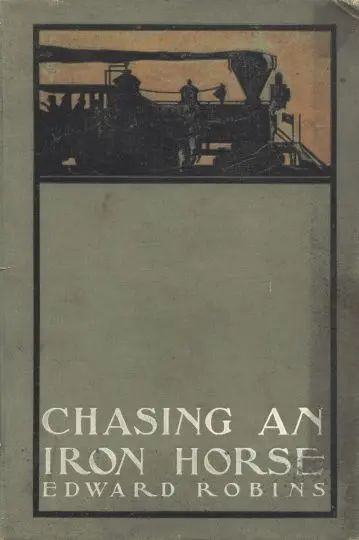
Chasing an Iron Horse; Or, A Boy’s Adventures in the Civil War
Edward Robins
THE CLASSIC COLLECTION · 1898
"The Palmy Days of Nance Oldfield" by Edward Robins is a historical account likely written in the late 19th century. The book chronicles the life of Anne Oldfield, a celebrated comedienne of the early 18th century, tracing her journey from humble beginnings as a seamstress to becoming a prominent figure on the English stage. The narrative captures the culture of the theatrical world during her time, offering insight into the social dynamics and the evolution of drama in England. The opening of the book introduces Anne Oldfield's origins, noting her birth into a family with a royal connection yet plunged into poverty after her father's death. Despite her circumstances, her talent and deep appreciation for theatre emerge early, as she captivates audiences with her voice while performing at the Mitre Tavern. The narrative sets the stage for her eventual rise in the theatre scene, detailing her encounters with influential figures like Captain Farquhar and Sir John Vanbrugh, who encourage her ambitions. Through vivid depictions of her charm and intelligence, the start of the book establishes the foundation for a journey marked by artistic evolution and societal intrigue as Oldfield seeks her place within the competitive world of 18th-century theatre.
Introduction adapted from the source catalogue; source summaries may be automatically generated.
Free to read · English · 75,061 words · No account needed
MAKE TIME FOR A GOOD BOOK
On by default. Untick to stop anonymous reading totals. Each page counts after 10 seconds in view. How this works.
Anonymous counting is on unless you have switched it off.
These lines are decidedly unfeminine and coarse, as viewed from a nineteenth century standard, and there is nothing in them to recommend the two girls to the particular favour of the audience. Yet, in the case of Leonora, they are given with such rare spirit, and the speaker, with her almost sensuous charm and the melody of that marvellous voice, is so fascinating, that the house is suddenly caught in some entrancing spell. Oldfield has burst upon it in all the sudden glory of a newly unfolded flower, and murmurs of admiration and surprise are heard on every side. More than this, Queen Anne, whose thoughts may have been far away with the dead Duke of Gloucester, betrays a sudden interest in the performance, and thus sets the fashion for all those around her, excepting his most sleepy Royal Highness, the Prince of Denmark. He dozes on; twenty angels from heaven would not disturb him.
As the play proceeds, the curiosity centres around the new Leonora, so that even the scene where Sir Courtly is found making the most elaborate of toilets, with the assistance of a bevy of vocalists, does not exert the attraction to be found in the presence of Oldfield. The episode is all very funny, of course, and there is an appreciative titter when the fop defines the characteristics of a gentleman:
"Complaisance, fine hands, a mouth well furnished--
"SERVANT. With fine language?
"SIR COURTLY. Fine teeth, you sot; fine language belongs to pedants and poor fellows that live by their wits. Men of quality are above wit. 'Tis true, for our diversion, sometimes we write, but we ne'er regard wit. I write, but I never write any wit.
"SERVANT. How then, sir?
"SIR COURTLY. I write like a gentleman, soft and easy."
It is only a titter, however, that Cibber can produce this afternoon, or evening,[A] nor does the audience take the usual relish in that touch-and-go rubbish of a duet sung by a supposed Indian and his love, a duet in which the former declares:
"My other Females all Yellow, fair or Black,
To thy Charmes shall prostrate fall,
As every kind of elephant does
To the white Elephant Buitenacke.
And thou alone shall have from me
Jimminy, Gomminy, whee, whee, whee,
The Gomminy, Jimminy, whee."
To which the lovely maiden answers:
"The great Jaw-waw that rules our Land,
And pearly Indian sea
Has not so absolute Command
As thou hast over me,
With a Jimminy, Gomminy, Gomminy,
Jimminy, Jimminy, Gomminy, whee."
[Footnote A: Theatrical performances in this reign generally began at
5 p.m.]
Your reading position is saved on this browser. Take it to another device with a library code. Reading pages adapt to text, rather than matching a printed edition.
BEHIND THE BOOK
This eBook is for the use of anyone anywhere in the United States and most other parts of the world at no cost and with almost no restrictions whatsoever. You may copy it, give it away or re-use it under the terms of the Project Gutenberg License included with this eBook or online at www.gutenberg.org. If you are not located in the United States, you will have to check the laws of the country where you are located before using this eBook. Read the source licence.
The original source file, including credits and licence, is retained by this library. Request an original-format copy at no charge. Please include the book title and Project Gutenberg identifier #11717.
KEEP YOUR CURIOSITY GOING
Cécile Tormay

Moritz Busch
John L. Ransom
Frances Wright
Cécile Tormay

Mabel Potter Daggett