THE CLASSIC COLLECTION✦The Disappearing EyeCLASSIC FREE BOOKS
The Disappearing Eye
Fergus Hume
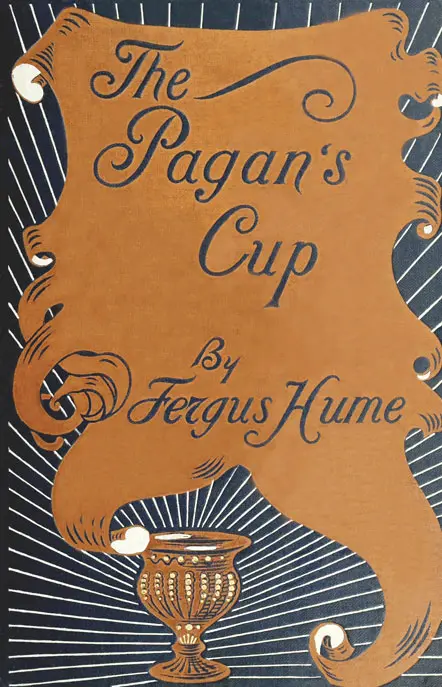
THE CLASSIC COLLECTION · 1902
"The Pagan's Cup" by Fergus Hume is a novel written in the early 20th century. Set in the quaint village of Colester, the narrative introduces readers to Richard Pratt, an American who has eagerly settled in this picturesque yet insular community, and his interactions with the local inhabitants, particularly involving the enigmatic Mrs. Gabriel and her adopted son Leo Haverleigh. The plot navigates through themes of social dynamics, love, and personal struggles as characters grapple with their desires and societal expectations. At the start of the novel, the village of Colester is depicted as a peaceful, almost hidden gem in England, untouched by the hustle of modern life. We meet Pratt who enjoys the serenity of village life while attempting to win the trust of the wary locals. The opening also introduces Leo Haverleigh, who is torn between his obligations to his stern guardian, Mrs. Gabriel, and his blossoming romance with Sybil Tempest. As tensions rise around Leo's future and financial troubles, alongside Pratt's mysterious plan to gift a lavish altar cup to the chapel, the stage is set for a tale full of intrigue and emotional conflicts.
Introduction adapted from the source catalogue; source summaries may be automatically generated.
Free to read · English · 76,322 words · No account needed
MAKE TIME FOR A GOOD BOOK
On by default. Untick to stop anonymous reading totals. Each page counts after 10 seconds in view. How this works.
Anonymous counting is on unless you have switched it off.
"The church party," said Mrs Gabriel, disdainfully. She had no love for Tempest, whom she regarded as half insane, nor for Sibyl, who was too beautiful for womanly taste, nor for Raston, who had frequently fought her on questions connected with parish affairs.
"By the way," said Leo, who had been meditating, "why has Mr Pratt settled in these parts? I should think he found it dull."
Mrs Gabriel smiled contemptuously. "Mr Pratt is not a foolish young man like someone I know," she said; "he does not find pleasure in the follies of the Town. For my part, I think he is wise to settle here in his old age. He is a delightful neighbour and a pleasant companion."
"He is all that," assented Leo, heartily. He liked Pratt. "You have known him for many years, mother?"
"For ten or twelve," replied Mrs Gabriel, carelessly. "I met him in Vienna, I think, and he called on me when I returned to London. Afterwards he came down here and fell in love with the place. For years he has been a rolling stone, but always said that when he settled down he would come to Colester. He is liked, is he not, Leo?"
"He is more than liked. He is immensely popular--with our friends, if not with the villagers. You have done a good deed in introducing him to our dull parish."
"I don't think Mr Pratt, who has so many resources in himself, finds it dull, my dear. However, I shall be glad to accept the invitation to his dinner. I should like to see him married."
"Indeed! Have you chosen him a wife also?"
Mrs Gabriel laughed. "I thought he might take a fancy to Sibyl Tempest."
"Why, he's old enough to be her father. Besides--"
"Besides you love her," finished Mrs Gabriel, with a shrug. "Well, do not get angry, Leo. I should like to see Mr Pratt marry Sybil and you the husband of Edith Hale. Then everything would be right."
"I don't think so at all," commenced Haverleigh in vexed tones. "But don't let us quarrel any more. I have the greatest regard for Pratt, but I do not care to go the length of letting him marry the girl I love."
"You know very little of Mr Pratt," said Mrs Gabriel, looking suddenly at the young man, "how, then, can you regard him so--"
"Oh, I have seen him often in Town," broke in Leo; "sometimes when I was in difficulties and did not want to tell you Pratt helped me."
"With money?" asked Mrs Gabriel, sharply.
"Of course with money. But I paid him back."
Your reading position is saved on this browser. Take it to another device with a library code. Reading pages adapt to text, rather than matching a printed edition.
Fergus Hume

Fergus Hume

Fergus Hume
Fergus Hume
BEHIND THE BOOK
This eBook is for the use of anyone anywhere in the United States and most other parts of the world at no cost and with almost no restrictions whatsoever. You may copy it, give it away or re-use it under the terms of the Project Gutenberg License included with this eBook or online at www.gutenberg.org. If you are not located in the United States, you will have to check the laws of the country where you are located before using this eBook. Read the source licence.
The original source file, including credits and licence, is retained by this library. Request an original-format copy at no charge. Please include the book title and Project Gutenberg identifier #34835.
KEEP YOUR CURIOSITY GOING
Coulson Kernahan

Maurice Baring
Frances Wright
Cécile Tormay

Frederic Jesup Stimson

W. H. P. (William Henry Pope) Jarvis