
Love Letters of a Violinist, and Other Poems
Eric Mackay
THE CLASSIC COLLECTION · 1918
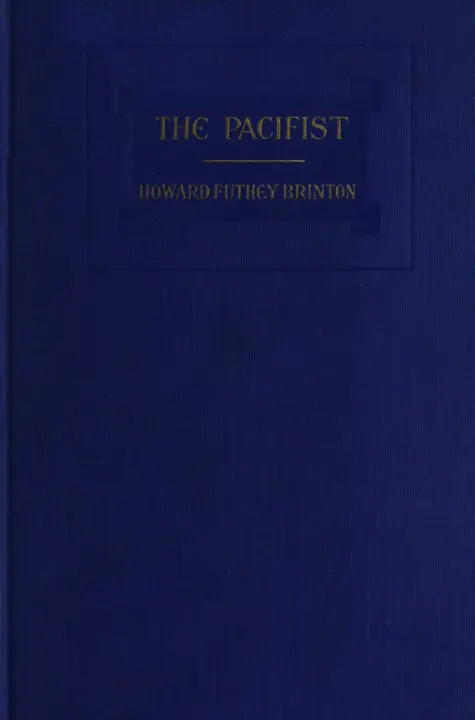
"The Pacifist, and other poems" by Howard Futhey Brinton is a collection of poems written during the early 20th century. This poetic anthology features a diverse array of themes, encapsulating the complexities of human experiences, societal issues, and personal reflections. The poems are characterized by their vivid imagery, clever wordplay, and a blend of humor and serious commentary that invites readers to consider both the light and dark aspects of life. The collection opens with the titular poem, "The Pacifist," which explores the paradox of a man's noble intentions met with the harsh realities of war. Other poems in the book delve into topics such as love, societal norms, and personal introspection, weaving together witty observations and poignant moments. For instance, pieces like "Mac’s (Psychologic) Cigar" reflect on the nature of social gatherings, while "The Blues" resonates with themes of companionship and emotional support. Ultimately, Brinton's work captures the nuances of the human condition, making it a thought-provoking read for those interested in reflections on life and society through poetry.
Introduction adapted from the source catalogue; source summaries may be automatically generated.
Free to read · English · 7,071 words · No account needed
MAKE TIME FOR A GOOD BOOK
On by default. Untick to stop anonymous reading totals. Each page counts after 10 seconds in view. How this works.
Anonymous counting is on unless you have switched it off.
Oh, the “Man About Town;” the “Man About Town;” He sometimes is “up,” and he’s usually “down.” He’s always well-dressed, and he’s real debonair And lives by his wits with a true savoir faire. He quotes from R. Kipling, R. Service and “sich;” Looks down on the poor, “plays up” to the rich. The wise cannot answer his fool questionings; His mental suggestions are terrible things. He “blows hot and cold” with his two-edged breath, And plays for your confidence “even till death.” He looks in your eyes in a terrible way, To find what you’ve “doped,” not because he’s O. K. He’s glib on eugenics, and smattered in all The games of cheap “con” on this old earthly ball. Some day you may meet him, a real mental clown. That cosmic creation, “The Man About Town.”
Purling and winding midst balsam and pine;
Hiding ’neath willow and spruce.
Sinuous, singing a sweet crooning rhyme;
Pleading to malcontents “truce.”
Lilting the line of a sad roundelay,
Presaging optimist’s prayer.
Sun-lit, twisting its silvery way,
Moon-kissed, ethereal, rare.
Tom walked into a bar-room to have a quiet beer, Odds Bodkins! Jerry saw him, white-necktied Jerry Lear.
Now Jerry was an elder, a presbyter, you see, Who prated loud ’gainst drinking, but “sneaked one” frequently.
Tom Benton was no tippler, but took one when he would, No sweeter, kinder fellow e’er lived, nor half so good.
His quiet deeds of kindness, a help now here, now there, A “candle under bushel” who always seemed to care
To help the weak and erring in unobtrusive way; To make the lowly happy, and aching hearts make gay
By quip or jest or story, by his own soulful smile, By merry rippling laughter, which heartened them awhile――
A law unto himself, then, this lovable old soul, Who treated men as humans, but couldn’t “Jordan Roll,”
A bent and crooked body, but straight and pure at heart, Who loved the young and aged, whom tears could rend apart.
Now this is how it happened that poor old Tom was damned By Puritanic gossips through length and breath of land.
“Drab” Jerry told the parson, who told his wife, you see; His wife informed Ned Nosy of Tom’s catastrophe,
Ned was a devout deacon, a long, thin-visaged wight, Who’d sneak away sub rosa to train around at night,
But Sunday sat in church pew and bawled a mighty chant, Or railed against men’s vices with Puritanic rant.
Ned buttonholed old Bowser, a wily, canny runt, Who’d beat deserving clients by doing bankrupt’s stunt.
Your reading position is saved on this browser. Take it to another device with a library code. Reading pages adapt to text, rather than matching a printed edition.
BEHIND THE BOOK
This eBook is for the use of anyone anywhere in the United States and most other parts of the world at no cost and with almost no restrictions whatsoever. You may copy it, give it away or re-use it under the terms of the Project Gutenberg License included with this eBook or online at www.gutenberg.org. If you are not located in the United States, you will have to check the laws of the country where you are located before using this eBook. Read the source licence.
The original source file, including credits and licence, is retained by this library. Request an original-format copy at no charge. Please include the book title and Project Gutenberg identifier #66892.
KEEP YOUR CURIOSITY GOING
Eric Mackay
Edmund Gosse
Sophia Margaretta Hensley
Gilbert Parker
George MacDonald

Elizabeth Bibesco