The Mud Larks
Crosbie Garstin
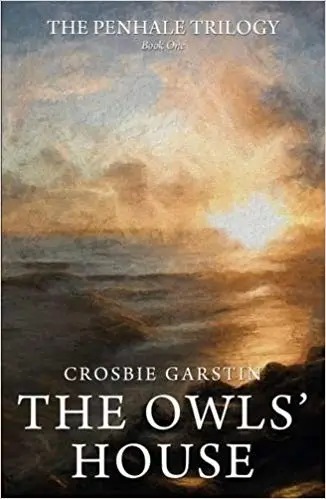
THE CLASSIC COLLECTION · 1923
"The Owls' House" by Crosbie Garstin is a novel written in the early 20th century. The story follows John Penhale, a reclusive farmer, who is shaped by a traumatic accident that left him disfigured and embittered. As he grapples with his solitary existence, the narrative unfolds around themes of isolation, love, and the complexity of human relationships against the backdrop of rural England. The opening of the novel introduces John Penhale as he leaves a lawyer’s office, reflecting on his awkwardness in social situations filled with raucous behavior and laughter that he feels excluded from due to his scars. After a distressing encounter at an inn, he reminisces about the accident that changed his life and how it has affected his interactions, providing a glimpse into the bitterness and seclusion he endures. Throughout this initial passage, the reader witnesses his longing for home and a sense of belonging, laying the foundation for a story rich in personal conflict and emotional depth as he navigates the complexities of returning to a life where he must ultimately confront both his past and the prospect of marriage as dictated by his aunt's will.
Introduction adapted from the source catalogue; source summaries may be automatically generated.
Free to read · English · 92,055 words · No account needed
MAKE TIME FOR A GOOD BOOK
On by default. Untick to stop anonymous reading totals. Each page counts after 10 seconds in view. How this works.
Anonymous counting is on unless you have switched it off.
“And why should I not return to this house?” said Ortho.
The beggar hesitated. “Muley, I made sure . . . I thought . . . it was not customary . . . young men do not linger in the places of lost love.”
“Dog,” said Ortho, suddenly cold about the heart, “what do you mean?”
“Surely the Kaid knows?” There was a note of surprise in the mendicant’s
voice.
“I know nothing; I have been away . . . the lalla Ourida?”
The beggar locked both hands over his head and squirmed in the dust. “Kaid, Kaid . . . the will of Allah.”
The little court reeled under Ortho’s feet, a film like a heat wave rose up before his eyes, everything went blurred for a minute. Then he spoke quite calmly:
“Why did she not go away?”
“She had no time, lord. The little one, thy son, took the sickness first; she stayed to nurse him and herself was taken. But she was buried with honor, Kaid; the Turkish officer buried her with honor in a gay bier with tholbas chanting. I, miserable that I am, I followed also—afar. She was kind to the poor, the lalla Ourida.”
“But why, why didn’t Osman get them both away before the plague struck the palace?” Ortho muttered fiercely, more to himself than otherwise, but the writhing rag heap heard him and answered:
“He had no time, Muley. The kasba was the first infected.”
“The first! How?”
“Yakoub Ben Ahmed brought many rebel heads from Tissant thinking to please Sidi. They stank and many soldiers fell sick, but Yakoub would not throw the heads away—it was his first command. They marched into the kasba with drums beating, sick soldiers carrying offal.”
Ortho laughed mirthlessly. So the dead had their revenge.
“Where is the Turk officer now?” he asked presently. “Rabat?”
“No, Muley—he too took the sickness tending thy lancers.”
Ortho walked away. All over, all gone—wife, boy, faithful friend. Ourida would not see her son go by at the proud head of a regiment, nor Osman review his memories in his vineyard by the Bosporus. All over, all gone, the best and truest.
Turning, he flung a coin at the beggar. “Go . . . leave me.”
Dusk was flooding the little court, powder blue tinged with the rose-dust of sunset. A pair of gray pigeons perched on the parapet made their love cooings and fluttered away again. From the kasba minaret came the boom of the muezzin. High in the summer night drifted a white petal of a moon.
Ortho leaned against a pillar listening. The chink of anklets, the plud, plud of small bare feet.
Your reading position is saved on this browser. Take it to another device with a library code. Reading pages adapt to text, rather than matching a printed edition.
Crosbie Garstin
BEHIND THE BOOK
This eBook is for the use of anyone anywhere in the United States and most other parts of the world at no cost and with almost no restrictions whatsoever. You may copy it, give it away or re-use it under the terms of the Project Gutenberg License included with this eBook or online at www.gutenberg.org. If you are not located in the United States, you will have to check the laws of the country where you are located before using this eBook. Read the source licence.
The original source file, including credits and licence, is retained by this library. Request an original-format copy at no charge. Please include the book title and Project Gutenberg identifier #60528.
KEEP YOUR CURIOSITY GOING
Coulson Kernahan

Maurice Baring
Frances Wright
Cécile Tormay

Frederic Jesup Stimson

W. H. P. (William Henry Pope) Jarvis