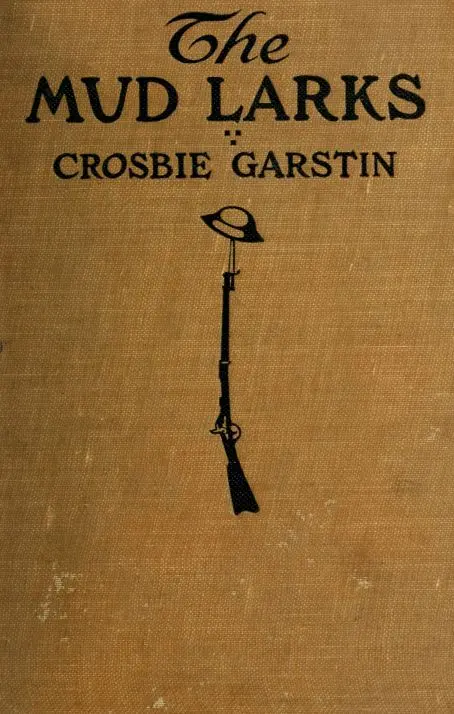
The Mud Larks
Crosbie Garstin
THE CLASSIC COLLECTION · 1923
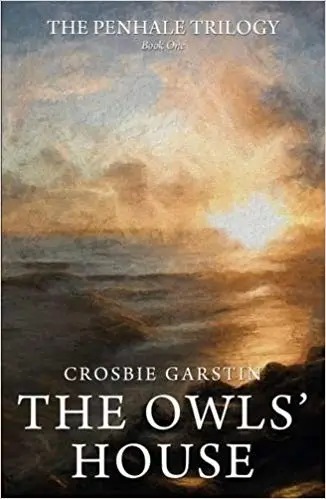
"The Owls' House" by Crosbie Garstin is a novel written in the early 20th century. The story follows John Penhale, a reclusive farmer, who is shaped by a traumatic accident that left him disfigured and embittered. As he grapples with his solitary existence, the narrative unfolds around themes of isolation, love, and the complexity of human relationships against the backdrop of rural England. The opening of the novel introduces John Penhale as he leaves a lawyer’s office, reflecting on his awkwardness in social situations filled with raucous behavior and laughter that he feels excluded from due to his scars. After a distressing encounter at an inn, he reminisces about the accident that changed his life and how it has affected his interactions, providing a glimpse into the bitterness and seclusion he endures. Throughout this initial passage, the reader witnesses his longing for home and a sense of belonging, laying the foundation for a story rich in personal conflict and emotional depth as he navigates the complexities of returning to a life where he must ultimately confront both his past and the prospect of marriage as dictated by his aunt's will.
Introduction adapted from the source catalogue; source summaries may be automatically generated.
Free to read · English · 92,055 words · No account needed
MAKE TIME FOR A GOOD BOOK
On by default. Untick to stop anonymous reading totals. Each page counts after 10 seconds in view. How this works.
Anonymous counting is on unless you have switched it off.
She was going to strangle him, the time-hallowed practice of the East. He tried to stop her, lifted his heavy hands, but they were powerless, like so much dead wood. He swelled his neck muscles, but it was useless; the silk was cutting in all round, a red-hot wire. He had a flash picture of Osman Bâki standing over his body, wagging his head regretfully and saying, “I said so,” Osman Bâki with the Owls’ House for background. It was all over; the girl had waited and got him in the end. Even at that moment he admired her for it. She had spirit; never had he seen such spirit. Came a pang of intolerable pain, his eyeballs were starting out, his head was bursting open—and then the tension at his throat inexplicably relaxed.
Ortho rolled over, panting and retching, and as he did so heard
footsteps on the stairs.
A fist thumped on the door, a voice cried, “Kaid! Kaid!” and there was
Osman Bâki.
He peered into the room, holding a lantern before him. “Kaid, are you there? Where are you? There is a riot of Draouia in the Djeema El Fna; two troops to go out. Oh, there you are—Bismillah! What is this?”
He sprang across to where Ortho lay and bent over him.
“What is the matter? Are you ill? What is it?”
“Nothing,” Ortho croaked. “Trying hasheesh . . . took too much . . . nothing at all. See to troops yourself . . . go now.” He coughed and coughed.
“Hasheesh!” The Turk sniffed, stared at him suspiciously, glanced round the room, caught sight of the girl and held up the lantern.
“Ha-ha!”
The two stood rigid eye to eye, the soldier with chin stuck forward, every hair bristling, like a mastiff about to spring, the girl unflinching, three beads of her black necklace in her teeth.
“Ha-ha!” Osman put the lantern deliberately on the ground beside him and stepped forward, crouched double, his hands outstretched like claws. “You snake,” he muttered. “You Arab viper, I’ll . . . I’ll . . .”
Ortho hoisted himself on his elbow. The girl was superb! So slight and yet so defiant. “Osman,” he rasped, “Osman, friend, go! The riot! Go, it is an order!”
The Turk stopped, stood up, relaxed, turned slowly about and picked up the lantern. He looked at Ortho, walked to the door, hesitated, shot a blazing glance at the girl, gave his mustache a vicious tug and went out.
Silence but for the sputter of the brazier and the squeak of a mouse in
the wall.
Then Ortho heard the soft plud-plud of bare feet crossing the room and he knew the girl was standing over him.
Your reading position is saved on this browser. Take it to another device with a library code. Reading pages adapt to text, rather than matching a printed edition.
Crosbie Garstin
BEHIND THE BOOK
This eBook is for the use of anyone anywhere in the United States and most other parts of the world at no cost and with almost no restrictions whatsoever. You may copy it, give it away or re-use it under the terms of the Project Gutenberg License included with this eBook or online at www.gutenberg.org. If you are not located in the United States, you will have to check the laws of the country where you are located before using this eBook. Read the source licence.
The original source file, including credits and licence, is retained by this library. Request an original-format copy at no charge. Please include the book title and Project Gutenberg identifier #60528.
KEEP YOUR CURIOSITY GOING
Coulson Kernahan

Maurice Baring
Frances Wright
Cécile Tormay

Frederic Jesup Stimson

W. H. P. (William Henry Pope) Jarvis