THE CLASSIC COLLECTION✦An outlaw’s diary: the CommuneCLASSIC FREE BOOKS
An outlaw’s diary: the Commune
Cécile Tormay
THE CLASSIC COLLECTION · 1911
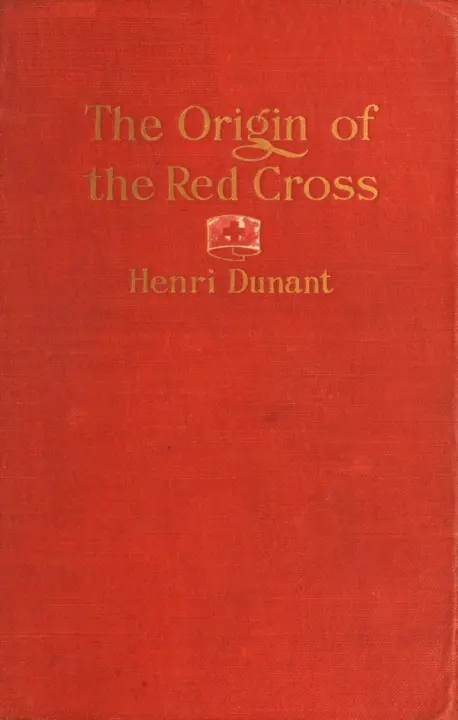
"The Origin of the Red Cross: 'Un souvenir de Solferino'" by Henri Dunant is a historical account written in the mid-19th century. It presents a poignant examination of the brutal realities of war, specifically following the battle of Solferino, and highlights the dire need for humanitarian efforts to care for those wounded in conflict. The book details Dunant's experiences as he witnessed the suffering of soldiers and the public's subsequent response, leading to the establishment of the Red Cross movement. The opening of the book recounts the lead-up to the battle of Solferino, setting the stage for the ensuing chaos and carnage. Dunant describes the military preparations and the eventual collision of the Austrians and Franco-Sardinian armies. As the battle unfolds, vivid imagery captures the horror of war, with descriptions of the suffering of wounded soldiers and the lack of adequate medical attention. The narrative shifts from the battlefield to the immediate aftermath, where Dunant reflects on the overwhelming need for organized medical aid and voluntary nursing, ultimately sparking his vision for a more systematic humanitarian response during conflicts.
Introduction adapted from the source catalogue; source summaries may be automatically generated.
Free to read · English · 18,994 words · No account needed
MAKE TIME FOR A GOOD BOOK
On by default. Untick to stop anonymous reading totals. Each page counts after 10 seconds in view. How this works.
Anonymous counting is on unless you have switched it off.
The heights which extend from Castiglione to Volta, sparkle with thousands of fires, which are fed by pieces of Austrian gun-wagons and by huge branches of trees, broken by the tempest or by cannon balls. The soldiers dry their dripping clothes; then, overcome by fatigue and exhaustion, they fall asleep on the stones or on the ground.
What terrible episodes! What touching scenes! What disillusionments!
There are battalions without food, companies lacking almost every necessity, because of the loss of the knapsacks. Water also is lacking, but their thirst is so intense that officers and soldiers resort to slimy and even bloody pools. Everywhere the wounded are begging for water.
Through the silence of the night are heard groans, stifled cries of anguish and pain, and heartrending voices calling for help.
Who will ever be able to paint the agonies of this horrible night!
The sun on the twenty-fifth of June, 1859, shines above one of the most frightful sights imaginable. The battle-field is everywhere covered with corpses of men and horses. They appear as if sown along the roads, in the hollows, the thickets and the fields, above all, near the village of Solferino.
The fields ready for the harvest are ruined, the grain trodden down, the fences overturned, the orchards destroyed.
Here and there one finds pools of blood.
The villages are deserted. They bear traces of bullets, of bombs and
shells and grenades.
The houses whose walls have been pierced with bullets and are gaping widely, are shaken and ruined.
The inhabitants, of whom the greater number have passed almost twenty hours in the refuge of their cellars, without light or food, are commencing to come out. The look of stupor of these poor peasants bears testimony to the long terror they have endured.
The ground is covered with all kinds of debris, broken pieces of arms, articles of equipments and blood-stained clothing.
The miserable wounded gathered up during the day are pale, livid and
inert.
Some, principally those seriously injured, have a vacant look, they seem not to understand what is said to them. They turn their staring eyes toward those who bring them help.
Others, in a dangerous state of nervous shock, are shaking with
convulsive tremblings.
Still others, with uncovered wounds, where inflammation has already appeared, seem frenzied with pain; they beg that someone may end their sufferings, and, with drawn faces, writhe in the last torments of agony.
Elsewhere, poor fellows are prostrated on the ground by bullets and bursting shells. Their arms and legs have been fractured by the cannon wheels that have passed over them.
Your reading position is saved on this browser. Take it to another device with a library code. Reading pages adapt to text, rather than matching a printed edition.
BEHIND THE BOOK
This eBook is for the use of anyone anywhere in the United States and most other parts of the world at no cost and with almost no restrictions whatsoever. You may copy it, give it away or re-use it under the terms of the Project Gutenberg License included with this eBook or online at www.gutenberg.org. If you are not located in the United States, you will have to check the laws of the country where you are located before using this eBook. Read the source licence.
The original source file, including credits and licence, is retained by this library. Request an original-format copy at no charge. Please include the book title and Project Gutenberg identifier #50968.
KEEP YOUR CURIOSITY GOING
Cécile Tormay

Moritz Busch
John L. Ransom
Frances Wright
Cécile Tormay

Mabel Potter Daggett