THE CLASSIC COLLECTION✦The art of fictionCLASSIC FREE BOOKS
The art of fiction
Walter Besant
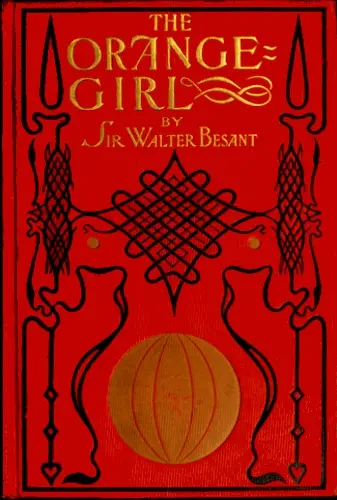
THE CLASSIC COLLECTION · 1898
"The Orange Girl" by Sir Walter Besant is a novel written in the late 19th century. The story begins with the protagonist, Will Halliday, who finds himself imprisoned for debt, reflecting on his life and the characters around him in the King's Bench Prison. The narrative explores themes of love, loss, and the quest for freedom as Will navigates his circumstances, particularly his passion for music and his interactions with various characters he encounters, including rogues and the enchanting Jenny Wilmot. At the start of the story, we meet Will Halliday, a young man confined to the King's Bench Prison for debt, who finds solace in playing the violin and composing music. The atmosphere is stark and filled with a mix of despair and camaraderie among the prisoners, painted vividly by Will's observations. He longs for freedom and a different life, which leads to significant encounters, including his first sight of the beautiful Jenny, who captivates him and stirs emotions he thought he had lost. This opening sets the stage for Will’s journey as he seeks to break free from his confinement and pursue his passion in a world filled with challenges and beautiful moments.
Introduction adapted from the source catalogue; source summaries may be automatically generated.
Free to read · English · 141,170 words · No account needed
MAKE TIME FOR A GOOD BOOK
On by default. Untick to stop anonymous reading totals. Each page counts after 10 seconds in view. How this works.
Anonymous counting is on unless you have switched it off.
'You wish to see me, Mr. William,' he began. 'May I ask with what
object?'
'I come in reply to your letter, Mr. Probus,'
'My letter? My letter?' He pretended to have forgotten the letter. 'I write so many, and sometimes--ay--ay--surely. The letter about the trifling debt due to the estate of David Camlet Deceased. Yes--yes, I am administering the worthy man's estate. One of many--very many--who have honoured me with their confidence.'
'That letter, Mr. Probus, is the reason why I have called.'
'You are come to discharge your obligation. It is what I expected. You are not looking well, Mr. William. I am sorry to observe marks--are they of privation?--on your face. Our worthy cousin, on the other hand, has a frame of iron. He will live, I verily believe, to ninety.'
'Never mind my cousin, Mr. Probus. He will live as long as the Lord
permits.'
'When last I saw you Sir, you foolishly rejected a most liberal offer. Well: youth is ignorant. We live and learn. Some day, too late, you will be sorry. Now, Sir, for this debt. Fifty-five pounds. Ay. Fifty-five pounds. And my costs, which are trifling.'
'I have come to tell you, Mr. Probus, that your letter was written under
a misapprehension.'
'Truly? Under a misapprehension? Of what kind, pray?'
The harpsichord was a gift made by Mr. David Camlet. I did not buy it.'
Mr. Probus lifted his eyebrows. 'A gift? Really? You have proof, no
doubt, of this assertion?'
'Certainly.'
'Well, produce your proofs. If you have proofs, as you say, I shall be the first to withdraw my client's claim. But makers of musical instruments do not usually give away their wares. What are your proofs, Sir?'
'My word, first.'
'Ta--ta--ta. Your word. By such proof every debtor would clear himself.
What next?'
'The word of my wife who with me received the instrument from Mr.
Camlet.'
'Receiving the instrument does not clear you of liability--what else?'
'The fact that Mr. Camlet never asked me for the money.'
'An oversight. Had he, in a word, intended the instrument for a gift, he would have said so. Now, Sir, what other proofs have you?'
I was silent. I had no other proof.
He turned again to the book he had before consulted. It was the ledger, and there, in Mr. Camlet's own handwriting, firm and square, was an entry:
'To Will Halliday--a Harpsichord, £55.
In another book was an entry to the office that the instrument had been
delivered.
Your reading position is saved on this browser. Take it to another device with a library code. Reading pages adapt to text, rather than matching a printed edition.
Walter Besant
Walter Besant

Walter Besant

Walter Besant
BEHIND THE BOOK
This eBook is for the use of anyone anywhere in the United States and most other parts of the world at no cost and with almost no restrictions whatsoever. You may copy it, give it away or re-use it under the terms of the Project Gutenberg License included with this eBook or online at www.gutenberg.org. If you are not located in the United States, you will have to check the laws of the country where you are located before using this eBook. Read the source licence.
The original source file, including credits and licence, is retained by this library. Request an original-format copy at no charge. Please include the book title and Project Gutenberg identifier #41545.
KEEP YOUR CURIOSITY GOING
Cécile Tormay

Moritz Busch
Coulson Kernahan
John L. Ransom

Maurice Baring
Frances Wright