THE CLASSIC COLLECTION✦The art of fictionCLASSIC FREE BOOKS
The art of fiction
Walter Besant
THE CLASSIC COLLECTION · 1898
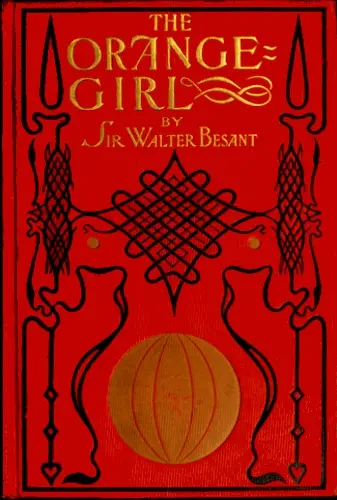
"The Orange Girl" by Sir Walter Besant is a novel written in the late 19th century. The story begins with the protagonist, Will Halliday, who finds himself imprisoned for debt, reflecting on his life and the characters around him in the King's Bench Prison. The narrative explores themes of love, loss, and the quest for freedom as Will navigates his circumstances, particularly his passion for music and his interactions with various characters he encounters, including rogues and the enchanting Jenny Wilmot. At the start of the story, we meet Will Halliday, a young man confined to the King's Bench Prison for debt, who finds solace in playing the violin and composing music. The atmosphere is stark and filled with a mix of despair and camaraderie among the prisoners, painted vividly by Will's observations. He longs for freedom and a different life, which leads to significant encounters, including his first sight of the beautiful Jenny, who captivates him and stirs emotions he thought he had lost. This opening sets the stage for Will’s journey as he seeks to break free from his confinement and pursue his passion in a world filled with challenges and beautiful moments.
Introduction adapted from the source catalogue; source summaries may be automatically generated.
Free to read · English · 141,170 words · No account needed
MAKE TIME FOR A GOOD BOOK
On by default. Untick to stop anonymous reading totals. Each page counts after 10 seconds in view. How this works.
Anonymous counting is on unless you have switched it off.
As soon as the doors were thrown open, a line of footmen received the company, took their tickets and showed them into the tea-room where that refreshment was offered before the ball commenced. When this room was full, the doors leading to the ball-rooms and the other rooms were also thrown open, and the company streamed along the great gallery which was lined with flowering shrubs. Here was stationed a small string band playing soft and pleasing music. Then they crowded up the Grand staircase. When most of the masqueraders were within the Ball-room, and before they had done looking about them and crying out for astonishment at the mirrors and the candelabra and the lights, we struck up the music in the gallery, and as soon as order was a little restored, the minuets began.
For my own part I love to look upon dancing. The country-dance expresses the happiness of youth and the gladness of life. The hey and jig are rustic joys which cannot keep still, but must needs jump about to show their pleasure. But the minuet expresses the refinement, the courtesies, the politeness of life. It is artificial, but the politeness of Fashion in the Civilized world must be acknowledged to be an improvement on mere Nature, which is too often barbarous in its expression and coarse in its treatment. I know not any of our music which could be played to such a dance of savages as the Guinea Traders report from the West Coast and the Bight of Benin.
The company flowed in fast. All, except a few who kept about the doors and did not venture in the crowd, were in masquerade dress, and even those who were not carried dominoes in their hands. One would have thought the whole world had sent representatives to the ball. There were pig-tailed Chinese; Dervishes in turbans; American Indians with tomahawks; Arabs in long silken robes; negroes and negresses; proud Castilians; Scots in plaid; Monks and Romish Priests; Nuns and Sisters; milkmaids in dowlass; ploughboys in smocks; lawyers; soldiers and sailors: there were gods and goddesses; Venus came clad much like her figure in the books; Diana carried her bow; the Graces endeavoured to appear as they are commonly represented: Apollo came with his lyre; Mars with his shield and spear: Vulcan with his lame leg: Hercules with his club. There were dozens of Cupids: there were dozens of Queens; Cleopatra; Dido; Mary, Queen of Scots: and Queen Elizabeth. There were famous kings as Henry the Fifth; Henry the Eighth: Charles the First; and Charles the Second. There were potentates, as the Pope, the Sultan, the Grand Cham, Prester John, and the Emperor of China: there were famous women, mostly kings' favourites, as the Fair-Haired Editha: Fair Rosamund: Jane Shore, the most beautiful of London maidens: and merry Nell Gwynne, once an Orange Girl: there were half a dozen ladies representing Joan of Arc in armour: there was a bear-ward leading a man dressed as a bear who made as if he would hug the women (at which they screamed in pretended affright) and danced to the music of a crowd: there were gipsies and fortune-tellers: there were two girls--nobody knew who they were--one of whom danced on a tight-rope, while the other turned somersaults. There were Harlequin, Columbine, Pantaloon and clown, as if straight from Drury Lane: there was the showman who put his show in a corner and loudly proclaimed the wonders that were within: there was the Cheap Jack in another corner, who pretended to sell everything: there was the itinerant Quack who bawled his nostrums for prolonging life and restoring youth and arresting beauty: there was the orange girl, of Drury Lane, impudent and ready with an answer and a joke to anything: there were dancing-girls who ran in and out, cleared a space; danced: then ran to another place and danced again. I learned, afterwards, that the dancers and tumblers, with many of the masks, were actors, actresses, and dancing-girls, hired from the Theatre by Madame herself, in order to ensure vivacity and activity and movement in the evening. If these things were neglected or left to the masquers themselves, the assembly would fall quite flat, very few persons having the least power to play any part or keep up any character. Punchinello, for instance, trod the floor with a face like a physician for solemnity: the clown could not dance or laugh or make other people laugh: and so with the women: they thought their part was played as soon as they were dressed.
Your reading position is saved on this browser. Take it to another device with a library code. Reading pages adapt to text, rather than matching a printed edition.
Walter Besant
Walter Besant

Walter Besant

Walter Besant
BEHIND THE BOOK
This eBook is for the use of anyone anywhere in the United States and most other parts of the world at no cost and with almost no restrictions whatsoever. You may copy it, give it away or re-use it under the terms of the Project Gutenberg License included with this eBook or online at www.gutenberg.org. If you are not located in the United States, you will have to check the laws of the country where you are located before using this eBook. Read the source licence.
The original source file, including credits and licence, is retained by this library. Request an original-format copy at no charge. Please include the book title and Project Gutenberg identifier #41545.
KEEP YOUR CURIOSITY GOING
Cécile Tormay

Moritz Busch
Coulson Kernahan
John L. Ransom

Maurice Baring
Frances Wright