THE CLASSIC COLLECTION✦Search-Light LettersCLASSIC FREE BOOKS
Search-Light Letters
Robert Grant
THE CLASSIC COLLECTION · 1893
"The Opinions of a Philosopher" by Robert Grant is a humorous novel written in the late 19th century. The narrative unfolds through the perspective of Fred, a self-proclaimed non-philosopher who reflects on the challenges and ironies of middle-class family life, centered around his wife Josephine and their four children. The story explores themes of personal philosophy, parenting, marital dynamics, and societal expectations, offering a light-hearted look at domestic life through the lens of a man grappling with his evolving role and identity. The opening of the book introduces Fred as he humorously contemplates his newfound philosophical outlook as he enters middle age. He reflects on various aspects of his family life, including his wife's insistence on attending church and the chaos caused by their children, particularly a memorable incident involving his son Fred and an encounter with a fisherman. Grant's writing captures the comedy of errors that often accompanies family life, as Fred recognizes his struggle to practice the ideals he espouses. The initial chapters establish the playful tone of the narrative as Fred navigates his domestic challenges, with a blend of self-awareness and amusing introspection.
Introduction adapted from the source catalogue; source summaries may be automatically generated.
Free to read · English · 40,477 words · No account needed
MAKE TIME FOR A GOOD BOOK
On by default. Untick to stop anonymous reading totals. Each page counts after 10 seconds in view. How this works.
Anonymous counting is on unless you have switched it off.
"Oh, Fred, who are they?" cried Josephine, ecstatically, and she began to dust the seedy, frameless canvases with a reverential air. "Where did they come from?"
"They're ancestors of mine, love."
"Ancestors? How lovely, Fred! I didn't know you had any. I mean I didn't know you had any who had their portraits painted."
"On the contrary, Josephine, I told you who they were when we were engaged, and I remember I was rather anxious to hang them in the dining-room, but you said they were a pair of old frumps, and that you wouldn't give them house space. So we compromised on the attic."
"Did I?" said my darling, gravely. "Well it must have been because the dining-room was too small for them. They will look delightfully in our new one, when they are mounted and touched up a bit, and they will set off our Copley of my great-aunt in the turban. What are their names? They must have names."
"They are my great-grandfather Plunkett and his wife, on my father's side. He was a common hangman."
"Now don't be idiotic, Fred."
"He was, my dear. It was you yourself who said it. Don't you remember my calling two of your forbears a precious pair of donkeys because they wouldn't eat any form of shell-fish, and your replying that, though I was in the habit of grandiloquently describing my ancestor who used to execute people as 'the sheriff of the county,' he was only a common hangman?"
"Oh, was that the man? All I said was that if he had been my ancestor instead of yours, you would have called him a hangman. He was sheriff of the county, wasn't he, dear?"
"So I have been taught to believe."
"'My ancestor, the high sheriff,' won't sound badly at all," she said,
jauntily.
"Especially if we can tone up the old gentleman's game eye a little."
Josephine's face expressed open admiration. "You are a genius and a duck," she exclaimed; then, after a reflective pause, she murmured, "Very likely he met with an accident just before he was painted."
"Yes, dear. Consequently, if the eye can't be improved by means of the best modern artistic talent, the least we can do is to put a shade over it."
This waggish remark seemed to be lost on Josephine. She wore a far-away look as though her thoughts were following some fancy which had appealed to her. She did not deign to take me into her confidence at the moment, but a fortnight later I happened to come upon her in close confabulation with a very clever, rising, local artist, over this same portrait of my great-grandfather Plunkett.
Your reading position is saved on this browser. Take it to another device with a library code. Reading pages adapt to text, rather than matching a printed edition.
Robert Grant
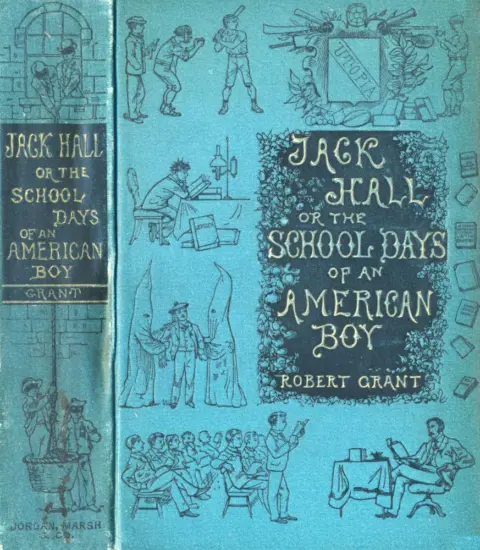
Robert Grant
Robert Grant
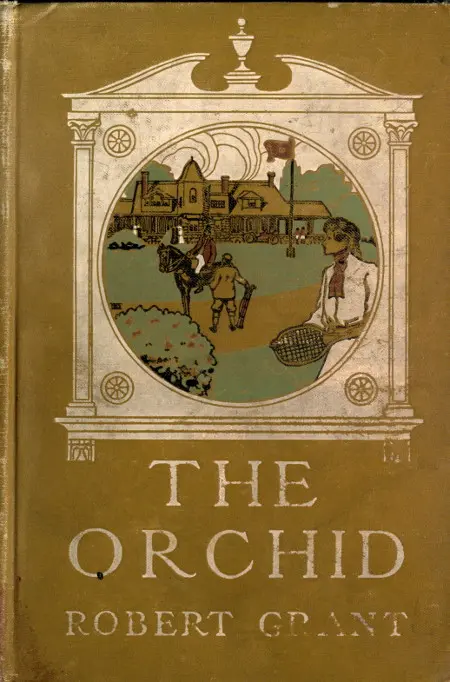
Robert Grant
BEHIND THE BOOK
This eBook is for the use of anyone anywhere in the United States and most other parts of the world at no cost and with almost no restrictions whatsoever. You may copy it, give it away or re-use it under the terms of the Project Gutenberg License included with this eBook or online at www.gutenberg.org. If you are not located in the United States, you will have to check the laws of the country where you are located before using this eBook. Read the source licence.
The original source file, including credits and licence, is retained by this library. Request an original-format copy at no charge. Please include the book title and Project Gutenberg identifier #19509.
KEEP YOUR CURIOSITY GOING
Coulson Kernahan

Maurice Baring
Frances Wright
Cécile Tormay

Frederic Jesup Stimson

W. H. P. (William Henry Pope) Jarvis