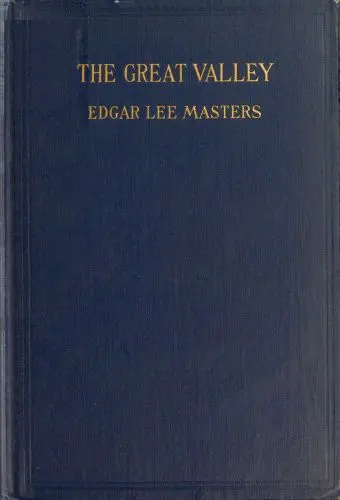
The Great Valley
Edgar Lee Masters
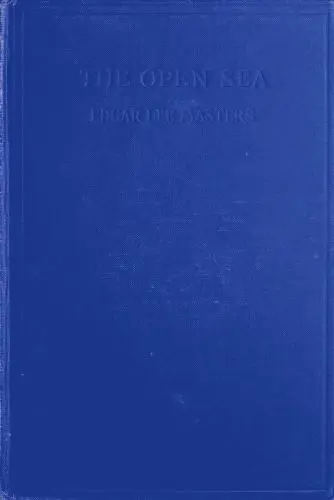
THE CLASSIC COLLECTION · 1921
"The Open Sea" by Edgar Lee Masters is a collection of poetic works written in the early 20th century. This compilation delves into historical figures and moments, weaving a tapestry of themes including love, betrayal, and virtue as seen through the lens of significant historical events and personas such as Brutus, Antony, and Lincoln. Masters employs rich language and emotional depth to explore the complex interplay between personal ambitions and wider societal implications. At the start of the book, readers are introduced to "Brutus," where Lucilius reflects on his past during a feast in Rome. The narrative initiates a discussion on Brutus and Antony's intertwined destinies against the backdrop of treachery and loyalty. Lucilius shares memories of pivotal events, particularly Brutus’ philosophical grappling with virtue and moral choices, contrasting it with Antony’s passionate yet misguided pursuits. This opening sets a tone of introspection and philosophical inquiry, prompting readers to consider the deeper implications of heroism, failure, and the intrinsic conflicts within human nature as navigated by these historical characters.
Introduction adapted from the source catalogue; source summaries may be automatically generated.
Free to read · English · 49,827 words · No account needed
MAKE TIME FOR A GOOD BOOK
On by default. Untick to stop anonymous reading totals. Each page counts after 10 seconds in view. How this works.
Anonymous counting is on unless you have switched it off.
So at the last
The question is, is history the truth,
Or is the Shakespeare genius, which arranges
History to speak the Shakespeare mood,
Reaction to our life, the truth?
And here
I leave you to reflect. Let’s one more ale
And then I go.
(The Revolutionary Tribunal; July 17th, 1793)
MONTANÉ, Presiding judge.
FOUQUER-TINVILLE, Prosecutor.
CHAVEAU-LAGARDE, Defending counsel.
DANTON,} Leaders of the Jacobins.
ROBESPIERRE,}
MADAM EVARD, Marat’s friend.
CHARLOTTE CORDAY.
Where is your home?
CHARLOTTE
Caen.
Why did you come to Paris?
To kill Marat.
Why?
His crimes.
What crimes?
The woes of France! His readiness to fire
All France with civil war.
You meant to kill
When you struck?
Yes! I meant to kill.
How old are you?
Twenty-four.
A woman
Young as you are could not have done this murder
Unless abetted.
No! You little know
The human heart. The hatred of one’s heart
Impels the hand better than other’s hate.
You hated Marat?
Hated! I did not kill
A man, I killed a wild beast eating up
The people and the nation.
She’s familiar
With crime, no doubt.
You monster! Do you take me
For just a common murderer?
Yes! Why not?
Here is your knife!
Oh! Yes, I recognize it.
I bought it at the cutler’s shop.
What for?
To kill Marat with; cost me forty sous.
After I came to Paris--
When?
Four days ago.
That was the day you wrote Marat?
Same day.
Saying you knew of news in Caen, knew
Means by the which Marat could render service
To the Republic!
By his death!
But yet
You gave him credit in this note for love
Of France, our France. You tricked him.
Like a viper.
He was a mad-dog, dog-leech, alley rat,
With bits of carrion festering ’twixt his teeth,
Hair glued with ordure, urine. Why not trick
By best means, so to catch a beast with fangs
As venomous as his? He was a fire
That crawled and licked its way; why not put out
The fire by water, snuffing, stamping, why
Be precious of the means?
You know me, woman?
You struck me when I stabbed him. You’re his whore!
Oh! Oh!
(To Danton)
This is enough! When fury claws at fury.
I hear the tumbril for her. Come!
DANTON
The slut!
(Danton and Robespierre leave the room together.)
Was that not Robespierre who left the room?
Why do you ask?
Your reading position is saved on this browser. Take it to another device with a library code. Reading pages adapt to text, rather than matching a printed edition.
Edgar Lee Masters
Edgar Lee Masters
Edgar Lee Masters
Edgar Lee Masters
BEHIND THE BOOK
This eBook is for the use of anyone anywhere in the United States and most other parts of the world at no cost and with almost no restrictions whatsoever. You may copy it, give it away or re-use it under the terms of the Project Gutenberg License included with this eBook or online at www.gutenberg.org. If you are not located in the United States, you will have to check the laws of the country where you are located before using this eBook. Read the source licence.
The original source file, including credits and licence, is retained by this library. Request an original-format copy at no charge. Please include the book title and Project Gutenberg identifier #52786.
KEEP YOUR CURIOSITY GOING
Cécile Tormay

Moritz Busch
Coulson Kernahan
John L. Ransom

Maurice Baring
Frances Wright