THE CLASSIC COLLECTION✦An outlaw’s diary: the CommuneCLASSIC FREE BOOKS
An outlaw’s diary: the Commune
Cécile Tormay
THE CLASSIC COLLECTION · 1913
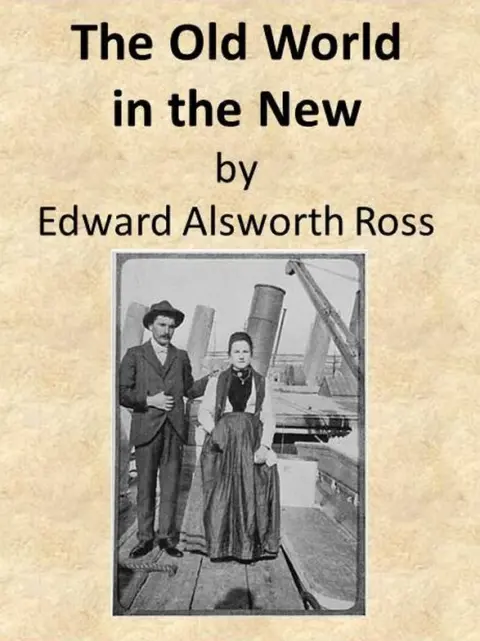
"The Old World in the New" by Edward Alsworth Ross is a sociological study written in the early 20th century. The book examines the effects and significance of immigration on American society, tracing the characteristics and contributions of various immigrant groups to the development of the United States. It explores themes such as cultural assimilation, economic impact, and the evolving identity of the American populace in light of the influx of diverse ethnicities. The opening of the work provides a thoughtful preface, arguing against a purely humanitarian view of immigration, framing it as a complex issue that involves both the benefits to immigrants and the potential consequences for the host nation. Ross reflects on the transformative power of immigration in spreading democratic ideals globally, using anecdotes to illustrate the emotional and social stakes involved. He conveys a nuanced understanding of immigration, recognizing both the struggles faced by new arrivals and the responsibility to maintain the standards and values that define the nation. This introduction sets the tone for a deeper exploration of the many facets of immigration and its role in shaping American society.
Introduction adapted from the source catalogue; source summaries may be automatically generated.
Free to read · English · 60,448 words · No account needed
MAKE TIME FOR A GOOD BOOK
On by default. Untick to stop anonymous reading totals. Each page counts after 10 seconds in view. How this works.
Anonymous counting is on unless you have switched it off.
While the Bohemians and the Moravians, thanks to a great intellectual awakening, have come nearly abreast of the Germans, the bulk of the Slavs remain on a much lower plane of culture. In ignorance and illiteracy, in the prevalence of superstition and priestcraft, in the harshness of church and state, in the subservience of the common people to the upper classes, in the low position of woman, in the subjection of the child to the parent, in coarseness of manner and speech, and in low standards of cleanliness and comfort, a large part of the Slavic world remains at the level of our English forefathers in the days of Henry the Eighth.
According to mother-tongue, there were in this country in 1910, 941,000 Poles, 228,000 Bohemians and Moravians, 165,000 Slovaks from the southern slopes of the Carpathians, 123,000 Slovenes from the head of the Adriatic, 78,000 Croatians and Dalmatians, 56,000 Russians, 40,000 Bulgarians, Servians, and Montenegrins, 30,000 Slavonians, 25,000 Ruthenians, to say nothing of 140,000 Lithuanians and Letts, who insist that they are a race apart. All told, there are 2,000,000 Slavs among us, and, if we heed the estimates of the leaders of the Slav groups, we should reckon at least 3,000,000. No doubt, between five and six per cent. of the whites in this country are of Slavic blood.
Of the Slav arrivals since 1899 nearly three-fourths are males. Among the immigrants from the Balkans, the men are from ten to twenty times as numerous as the women. Thirty-two per cent. have been illiterates, the proportion ranging from 1.7 per cent. among the Bohemians to 53.4 per cent. among the Ruthenians. Excepting the Bohemians, few of them have had any industrial experience or bring any valuable skill. It is as if great numbers of the English of the sixteenth century had suddenly appeared among us.
When, about fifteen years ago, the great Slav invasion began, the American frontier was remote, shrunken, and forbidding. The newcomers were not in quest of cheap land, with independence, so much as of paying jobs from which they might hoard "big money" and return well off to their homes. They gravitated, therefore, to the mining, metal-working, and packing centers, where there is a demand for unlimited quantities of raw labor, provided always it be cheap. So these sturdy peasant lads came to be Nibelungs, "sons of the gloom," haunting our coal-pits, blast-furnaces, coke-ovens, smelters, foundries, steel-mills, and metal refineries, doing rough, coarse work under skilled men who, as one foreman put it to me, "don't want them to think, but to obey orders."
Your reading position is saved on this browser. Take it to another device with a library code. Reading pages adapt to text, rather than matching a printed edition.
BEHIND THE BOOK
This eBook is for the use of anyone anywhere in the United States and most other parts of the world at no cost and with almost no restrictions whatsoever. You may copy it, give it away or re-use it under the terms of the Project Gutenberg License included with this eBook or online at www.gutenberg.org. If you are not located in the United States, you will have to check the laws of the country where you are located before using this eBook. Read the source licence.
The original source file, including credits and licence, is retained by this library. Request an original-format copy at no charge. Please include the book title and Project Gutenberg identifier #47954.
KEEP YOUR CURIOSITY GOING
Cécile Tormay

Moritz Busch
John L. Ransom
Frances Wright
Cécile Tormay

Mabel Potter Daggett