THE CLASSIC COLLECTION✦An outlaw’s diary: the CommuneCLASSIC FREE BOOKS
An outlaw’s diary: the Commune
Cécile Tormay
THE CLASSIC COLLECTION · 1913
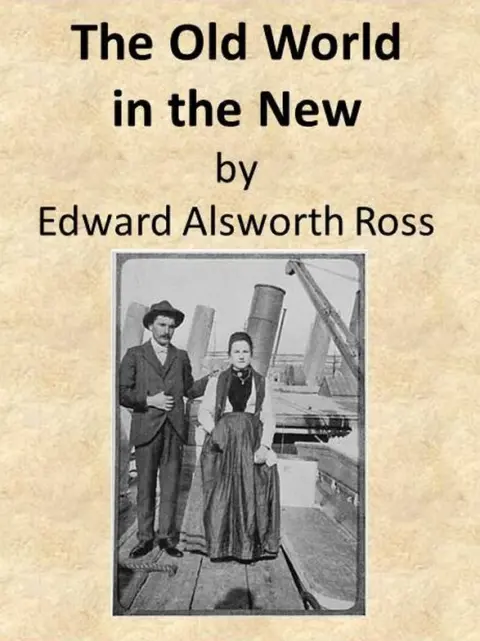
"The Old World in the New" by Edward Alsworth Ross is a sociological study written in the early 20th century. The book examines the effects and significance of immigration on American society, tracing the characteristics and contributions of various immigrant groups to the development of the United States. It explores themes such as cultural assimilation, economic impact, and the evolving identity of the American populace in light of the influx of diverse ethnicities. The opening of the work provides a thoughtful preface, arguing against a purely humanitarian view of immigration, framing it as a complex issue that involves both the benefits to immigrants and the potential consequences for the host nation. Ross reflects on the transformative power of immigration in spreading democratic ideals globally, using anecdotes to illustrate the emotional and social stakes involved. He conveys a nuanced understanding of immigration, recognizing both the struggles faced by new arrivals and the responsibility to maintain the standards and values that define the nation. This introduction sets the tone for a deeper exploration of the many facets of immigration and its role in shaping American society.
Introduction adapted from the source catalogue; source summaries may be automatically generated.
Free to read · English · 60,448 words · No account needed
MAKE TIME FOR A GOOD BOOK
On by default. Untick to stop anonymous reading totals. Each page counts after 10 seconds in view. How this works.
Anonymous counting is on unless you have switched it off.
When a more-developed element is obliged to compete on the same economic plane with a less-developed element, the standards of cleanliness or decency or education cherished by the advanced element act on it like a slow poison. William does not leave as many children as 'Tonio, because he will not huddle his family into one room, eat macaroni off a bare board, work his wife barefoot in the field, and keep his children weeding onions instead of at school. Even moral standards may act as poison. Once the women raisin-packers at Fresno, California, were American-born. Now the American women are leaving because of the low moral tone that prevails in the working force by reason of the coming in of foreigners with lax notions of propriety. The coarseness of speech and behavior among the packers is giving raisin-packing a bad name, so that American women are quitting the work and taking the next best job. Thus the very decency of the native is a handicap to success and to fecundity.
As they feel the difficulty of keeping up their standards on a Slav wage, the older immigrant stocks are becoming sterile, even as the old Americans became sterile. In a generation complaint will be heard that the Slavs, too, are shirking big families, and that we must admit prolific Persians, Uzbegs, and Bokhariots, in order to offset the fatal sterility that attacks every race after it has become Americanized. Very truly says a distinguished economist, in praise of immigration: "The cost of rearing children in the United States is rapidly rising. In many, perhaps in most cases, it is simpler, speedier, and cheaper to import labor than to breed it." In like vein it is said that "a healthy immigrant lad of eighteen is a clear $1000 added to the national wealth of the United States."
Just so. "The Roman world was laughing when it died." Any couple or any people that does not feel it has anything to transmit to its children may well reason in such fashion. A couple may reflect, "It is simpler, speedier, and cheaper for us to adopt orphans than to produce children of our own." A nation may reason, "Why burden ourselves with the rearing of children? Let them perish unborn in the womb of time. The immigrants will keep up the population." A people that has no more respect for its ancestors and no more pride of race than this deserves the extinction that surely awaits it.
Year ending Sept. 30
1820 8,385
1821 9,127
1822 6,911
1823 6,354
1824 7,912
1825 10,199
1826 10,837
Year ending Sept. 30
1827 18,875
1828 27,382
1829 22,520
1830 23,322
1831 22,633
15 months ending Dec. 31
1832 60,482
Year ending Dec. 31
1833 58,640
1834 65,365
1835 45,374
1836 76,242
1837 79,340
1838 38,914
1839 68,069
1840 84,066
1841 80,289
1842 104,565
9 months ending Sept. 30
1843 52,496
Year ending Sept. 30
1844 78,615
1845 114,371
1846 154,416
1847 234,968
1848 226,527
1849 297,024
1850 310,004
3 months ending Dec. 31
1850 59,976
Year ending Dec. 31
1851 379,466
1852 371,603
1853 368,645
1854 427,833
1855 200,877
1856 200,436
1857 251,306
1858 123,126
1859 121,282
1860 153,640
1861 91,918
1862 91,985
1863 176,282
1864 193,418
1865 248,120
1866 318,568
1867 315,722
6 months ending June 30
1868 138,840
Your reading position is saved on this browser. Take it to another device with a library code. Reading pages adapt to text, rather than matching a printed edition.
BEHIND THE BOOK
This eBook is for the use of anyone anywhere in the United States and most other parts of the world at no cost and with almost no restrictions whatsoever. You may copy it, give it away or re-use it under the terms of the Project Gutenberg License included with this eBook or online at www.gutenberg.org. If you are not located in the United States, you will have to check the laws of the country where you are located before using this eBook. Read the source licence.
The original source file, including credits and licence, is retained by this library. Request an original-format copy at no charge. Please include the book title and Project Gutenberg identifier #47954.
KEEP YOUR CURIOSITY GOING
Cécile Tormay

Moritz Busch
John L. Ransom
Frances Wright
Cécile Tormay

Mabel Potter Daggett