THE CLASSIC COLLECTION✦Tales of the Trail: Short Stories of Western LifeCLASSIC FREE BOOKS
Tales of the Trail: Short Stories of Western Life
Henry Inman
THE CLASSIC COLLECTION · 1897
"The Old Santa Fe Trail: The Story of a Great Highway" by Colonel Henry Inman is a historical account written in the late 19th century. The book narrates the thrilling and often perilous history of the Santa Fe Trail, illustrating its significance as a crucial trade route for pioneers and settlers venturing westward across the American plains. It touches on pioneering figures and events that shaped the trail's legacy and the conflicts between various cultures during the era of westward expansion. At the start of this work, the preface by W.F. "Buffalo Bill" Cody sets the tone for the narrative, emphasizing the romance and drama of the past while preparing the reader for the gripping stories ahead. Inman recounts the early days of the trail, describing the struggles faced by explorers, traders, and settlers who traveled this treacherous route. He discusses the frequent conflicts with Indigenous tribes, the harsh conditions of the landscape, and the evolution of travel from slow ox-drawn caravans to more advanced modes of transportation. The opening sets the stage for a deep exploration into the trials they endured, personal accounts, and historical insights into the profound impact the Santa Fe Trail had on American history.
Introduction adapted from the source catalogue; source summaries may be automatically generated.
Free to read · English · 153,212 words · No account needed
MAKE TIME FOR A GOOD BOOK
On by default. Untick to stop anonymous reading totals. Each page counts after 10 seconds in view. How this works.
Anonymous counting is on unless you have switched it off.
A hurried consultation ensued. The presence of so many dogs in the village was regarded by the half-breed as almost positive assurance that the Indians were still there. Yet it was difficult to account for their silence. Gurrier in a loud tone repeated who he was, and that our mission was friendly. Still no answer. He then gave it as his opinion that the Indians were on the alert, and were probably waiting in the shadow of the trees for us to approach nearer, when they would pounce upon us. This comforting opinion induced another conference. We must ascertain the truth of the matter; our party could do this as well as a larger number, and to go back and send another party in our stead could not be thought of.
Forward! was the verdict. Each one grasped his revolver, resolved to do his best, whether it was in running or fighting. I think most of us would have preferred to take our own chances at running. We had approached near enough to see that some of the lodges were detached some distance from the main encampment. Selecting the nearest of these, we directed our advance on it. While all of us were full of the spirit of adventure, and were further encouraged with the idea that we were in the discharge of our duty, there was scarcely one of us who would not have felt more comfortable if we could have got back to our horses without loss of pride. Yet nothing, under the circumstances, but a positive order would have induced any one to withdraw.
Cautiously approaching, on all fours, to within a few yards of the nearest lodge, occasionally halting and listening to discover whether the village was deserted or not, we finally decided that the Indians had fled before the arrival of the cavalry, and that none but empty lodges were before us. This conclusion somewhat emboldened as well as accelerated our progress. Arriving at the first lodge, one of our party raised the curtain or mat which served as a door, and the doctor and myself entered. The interior of the lodge was dimly lighted by the dying embers of a small fire built in the centre. All around us were to be seen the usual adornments and articles which constitute the household effects of an Indian family. Buffalo-robes were spread like carpets over the floor; head-mats, used to recline on, were arranged as if for the comfort of their owners; parfleches, a sort of Indian band-box, with their contents apparently undisturbed, were carefully stowed away under the edges or borders of the lodge. These, with the door-mats, paint-bags, rawhide ropes, and other articles of Indian equipment, were left as if the owners had only absented themselves for a brief period. To complete the picture of an Indian lodge, over the fire hung a camp-kettle, in which, by means of the dim light of the fire, we could see what had been intended for the supper of the late occupants of the lodge. The doctor, ever on the alert to discover additional items of knowledge, whether pertaining to history or science, snuffed the savoury odours which arose from the dark recesses of the mysterious kettle. Casting about the lodge for some instrument to aid him in his pursuit of knowledge, he found a horn spoon, with which he began his investigation of the contents, finally succeeding in getting possession of a fragment which might have been the half of a duck or rabbit, judging from its size merely. "Ah!" said the doctor, in his most complacent manner, "here is the opportunity I have long been waiting for. I have often desired to test the Indian mode of cooking. What do you suppose this is?" holding up the dripping morsel. Unable to obtain the desired information, the doctor, whose naturally good appetite had been sensibly sharpened by his recent exercise, set to with a will and ate heartily of the mysterious contents of the kettle. He was only satisfied on one point, that it was delicious--a dish fit for a king. Just then Gurrier, the half-breed, entered the lodge. He could solve the mystery, having spent years among the Indians. To him the doctor appealed for information. Fishing out a huge piece, and attacking it with the voracity of a hungry wolf, he was not long in determining what the doctor had supped heartily upon. His first words settled the mystery: "Why, this is dog." I will not attempt to repeat the few but emphatic words uttered by the heartily disgusted member of the medical fraternity as he rushed from the lodge.
Your reading position is saved on this browser. Take it to another device with a library code. Reading pages adapt to text, rather than matching a printed edition.
Henry Inman
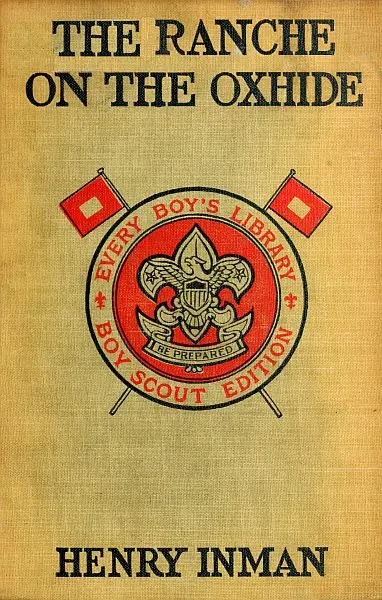
Henry Inman
Henry Inman & Buffalo Bill
BEHIND THE BOOK
This eBook is for the use of anyone anywhere in the United States and most other parts of the world at no cost and with almost no restrictions whatsoever. You may copy it, give it away or re-use it under the terms of the Project Gutenberg License included with this eBook or online at www.gutenberg.org. If you are not located in the United States, you will have to check the laws of the country where you are located before using this eBook. Read the source licence.
The original source file, including credits and licence, is retained by this library. Request an original-format copy at no charge. Please include the book title and Project Gutenberg identifier #7984.
KEEP YOUR CURIOSITY GOING
Cécile Tormay

Moritz Busch
John L. Ransom
Frances Wright
Cécile Tormay

Mabel Potter Daggett