THE CLASSIC COLLECTION✦Tales of the Trail: Short Stories of Western LifeCLASSIC FREE BOOKS
Tales of the Trail: Short Stories of Western Life
Henry Inman
THE CLASSIC COLLECTION · 1897
"The Old Santa Fe Trail: The Story of a Great Highway" by Colonel Henry Inman is a historical account written in the late 19th century. The book narrates the thrilling and often perilous history of the Santa Fe Trail, illustrating its significance as a crucial trade route for pioneers and settlers venturing westward across the American plains. It touches on pioneering figures and events that shaped the trail's legacy and the conflicts between various cultures during the era of westward expansion. At the start of this work, the preface by W.F. "Buffalo Bill" Cody sets the tone for the narrative, emphasizing the romance and drama of the past while preparing the reader for the gripping stories ahead. Inman recounts the early days of the trail, describing the struggles faced by explorers, traders, and settlers who traveled this treacherous route. He discusses the frequent conflicts with Indigenous tribes, the harsh conditions of the landscape, and the evolution of travel from slow ox-drawn caravans to more advanced modes of transportation. The opening sets the stage for a deep exploration into the trials they endured, personal accounts, and historical insights into the profound impact the Santa Fe Trail had on American history.
Introduction adapted from the source catalogue; source summaries may be automatically generated.
Free to read · English · 153,212 words · No account needed
MAKE TIME FOR A GOOD BOOK
On by default. Untick to stop anonymous reading totals. Each page counts after 10 seconds in view. How this works.
Anonymous counting is on unless you have switched it off.
Uncle Dick Wooton told how once, when he, Old Bill Williams, and many other trappers, were lying around the camp-fire one night, the strange fellow, in a preaching style of delivery, related to them all how he was to be changed into a buck elk and intended to make his pasture in the very region where they then were. He described certain peculiarities which would distinguish him from the common run of elk, and was very careful to caution all those present never to shoot such an animal, should they ever run across him.
Williams was regarded as a warm-hearted, brave, and generous man. He was at last killed by the Indians, while trading with them, but has left his name to many mountain peaks, rivers, and passes discovered by him.
Tom Tobin, one of the last of the famous trappers, hunters, and Indian fighters to cross the dark river, flourished in the early days, when the Rocky Mountains were a veritable terra incognita to nearly all excepting the hardy employees of the several fur companies and the limited number of United States troops stationed in their remote wilds.
Tom was an Irishman, quick-tempered, and a dead shot with either rifle, revolver, or the formidable bowie-knife. He would fight at the drop of the hat, but no man ever went away from his cabin hungry, if he had a crust to divide; or penniless, if there was anything remaining in his purse.
He, like Carson, was rather under the average stature, red-faced, and lacking much of being an Adonis, but whole-souled, and as quick in his movements as an antelope.
Tobin played an important role in avenging the death of the Americans killed in the Taos massacre, at the storming of the Indian pueblo, but his greatest achievement was the ending of the noted bandit Espinosa's life, who, at the height of his career of blood, was the terror of the whole mountain region.
At the time of the acquisition of New Mexico by the United States, Espinosa, who was a Mexican, owning vast herds of cattle and sheep, resided upon his ancestral hacienda in a sort of barbaric luxury, with a host of semi-serfs, known as Peons, to do his bidding, as did the other "Muy Ricos," the "Dons," so called, of his class of natives. These self-styled aristocrats of the wild country all boasted of their Castilian blue blood, claiming descent from the nobles of Cortez' army, but the fact is, however, with rare exceptions, that their male ancestors, the rank and file of that army, intermarried with the Aztec women, and they were really only a mixture of Indian and Spanish.
Your reading position is saved on this browser. Take it to another device with a library code. Reading pages adapt to text, rather than matching a printed edition.
Henry Inman
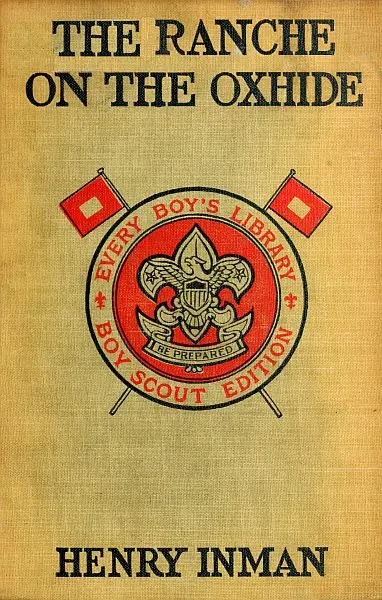
Henry Inman
Henry Inman & Buffalo Bill
BEHIND THE BOOK
This eBook is for the use of anyone anywhere in the United States and most other parts of the world at no cost and with almost no restrictions whatsoever. You may copy it, give it away or re-use it under the terms of the Project Gutenberg License included with this eBook or online at www.gutenberg.org. If you are not located in the United States, you will have to check the laws of the country where you are located before using this eBook. Read the source licence.
The original source file, including credits and licence, is retained by this library. Request an original-format copy at no charge. Please include the book title and Project Gutenberg identifier #7984.
KEEP YOUR CURIOSITY GOING
Cécile Tormay

Moritz Busch
John L. Ransom
Frances Wright
Cécile Tormay

Mabel Potter Daggett