THE CLASSIC COLLECTION✦Tales of the Trail: Short Stories of Western LifeCLASSIC FREE BOOKS
Tales of the Trail: Short Stories of Western Life
Henry Inman
THE CLASSIC COLLECTION · 1897
"The Old Santa Fe Trail: The Story of a Great Highway" by Colonel Henry Inman is a historical account written in the late 19th century. The book narrates the thrilling and often perilous history of the Santa Fe Trail, illustrating its significance as a crucial trade route for pioneers and settlers venturing westward across the American plains. It touches on pioneering figures and events that shaped the trail's legacy and the conflicts between various cultures during the era of westward expansion. At the start of this work, the preface by W.F. "Buffalo Bill" Cody sets the tone for the narrative, emphasizing the romance and drama of the past while preparing the reader for the gripping stories ahead. Inman recounts the early days of the trail, describing the struggles faced by explorers, traders, and settlers who traveled this treacherous route. He discusses the frequent conflicts with Indigenous tribes, the harsh conditions of the landscape, and the evolution of travel from slow ox-drawn caravans to more advanced modes of transportation. The opening sets the stage for a deep exploration into the trials they endured, personal accounts, and historical insights into the profound impact the Santa Fe Trail had on American history.
Introduction adapted from the source catalogue; source summaries may be automatically generated.
Free to read · English · 153,212 words · No account needed
MAKE TIME FOR A GOOD BOOK
On by default. Untick to stop anonymous reading totals. Each page counts after 10 seconds in view. How this works.
Anonymous counting is on unless you have switched it off.
Poor Mexicans hurried to and fro, casting suspicious glances around; los Yankees at El casa Americano drank their juleps, and puffed their cigarettes in silence.
The sheriff, Metcalf, formerly a mountaineer, was in want of the wherewithal to hang the condemned criminals, so he borrowed some rawhide lariats and picket-ropes of a teamster.
"Hello, Met," said one of the party present, "these reatas are mighty stiff--won't fit; eh, old feller?"
"I've got something to make 'em fit--good 'intment--don't emit very sweet perfume; but good enough for Greasers," said the sheriff, producing a dollar's worth of Mexican soft soap. "This'll make 'em slip easy--a long ways too easy for them, I 'spect."
The prison apartment was a long chilly room, badly ventilated by one small window and the open door, through which the sun lit up the earth floor, and through which the poor prisoners wistfully gazed. Two muscular Mexicans basked in its genial warmth, a tattered serape interposing between them and the ground. The ends, once fringed but now clear of pristine ornament, were partly drawn over their breasts, disclosing in the openings of their fancifully colored shirts--now glazed with filth and faded with perspiration--the bare skin, covered with straight black hair. With hands under their heads, in the mass of stringy locks rusty-brown from neglect, they returned the looks of their executioners with an unmeaning stare, and unheedingly received the salutation of--"Como le va!"
Along the sides of the room, leaning against the walls, were crowded the poor wretches, miserable in dress, miserable in features, miserable in feelings--a more disgusting collection of ragged, greasy, unwashed prisoners were, probably, never before congregated within so small a space as the jail of Taos.
About nine o'clock, active preparations were made for the execution, and the soldiery mustered. Reverend padres in long black gowns, with meek countenances, passed the sentinels, intent on spiritual consolation, or the administration of the Blessed Sacrament.
Lieutenant-Colonel Willock, commanding the military, ordered every American under arms. The prison was at the edge of the town; no houses intervened between it and the fields to the north. One hundred and fifty yards distant, a gallows was erected.
The word was passed, at last, that the criminals were coming. Eighteen soldiers received them at the gate, with their muskets at "port arms"; the six abreast, with the sheriff on the right--nine soldiers on each side.
The poor prisoners marched slowly, with downcast eyes, arms tied behind, and bare heads, with the exception of white cotton caps stuck on the back, to be pulled over the face as the last ceremony.
Your reading position is saved on this browser. Take it to another device with a library code. Reading pages adapt to text, rather than matching a printed edition.
Henry Inman
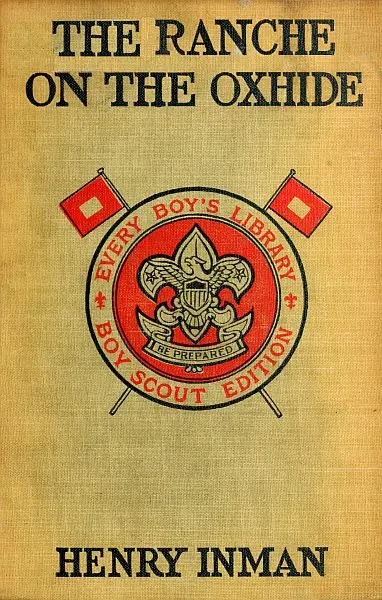
Henry Inman
Henry Inman & Buffalo Bill
BEHIND THE BOOK
This eBook is for the use of anyone anywhere in the United States and most other parts of the world at no cost and with almost no restrictions whatsoever. You may copy it, give it away or re-use it under the terms of the Project Gutenberg License included with this eBook or online at www.gutenberg.org. If you are not located in the United States, you will have to check the laws of the country where you are located before using this eBook. Read the source licence.
The original source file, including credits and licence, is retained by this library. Request an original-format copy at no charge. Please include the book title and Project Gutenberg identifier #7984.
KEEP YOUR CURIOSITY GOING
Cécile Tormay

Moritz Busch
John L. Ransom
Frances Wright
Cécile Tormay

Mabel Potter Daggett