THE CLASSIC COLLECTION✦An outlaw’s diary: the CommuneCLASSIC FREE BOOKS
An outlaw’s diary: the Commune
Cécile Tormay
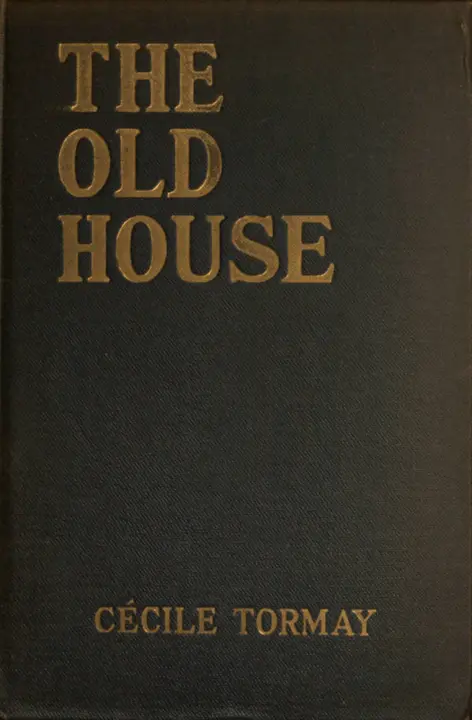
THE CLASSIC COLLECTION · 1922
"The Old House: A Novel" by Cécile Tormay is a historical novel likely written in the early 20th century. The narrative introduces Christopher Ulwing, a master builder deeply tied to his family's legacy and the evolving city around him. As he navigates his ambitions, familial relationships, and the impact of societal changes, the story explores themes of heritage, progress, and personal conflict amidst the backdrop of a changing world. The beginning of the novel sets a vivid scene with a winter evening in Pest, Hungary, where Christopher Ulwing arrives at his newly constructed house, which symbolizes both a personal and communal achievement. As Christopher interacts with his family, including his son John Hubert and their dedicated servant, the opening captures a blend of nostalgia and the burdens of expectation. His thoughts drift to the history of his family, shaping the essence of his identity. The domestic life is interwoven with the broader context of socio-political transformations and local events, hinting at the challenges that lie ahead for both Ulwing and the community he is a part of, ultimately foreshadowing the trials that will challenge his convictions and relationships.
Introduction adapted from the source catalogue; source summaries may be automatically generated.
Free to read · English · 62,973 words · No account needed
MAKE TIME FOR A GOOD BOOK
On by default. Untick to stop anonymous reading totals. Each page counts after 10 seconds in view. How this works.
Anonymous counting is on unless you have switched it off.
“He has a pain in his foot,” said the master builder, bowing to the company. Anne turned up her nose significantly. The children did not think Uncle Sebastian belonged quite among the grown-ups. He understood many things grandfather could not grasp. They put their heads together, secretively, affectionately. Anne began to dangle her little legs in the air and ask for gingerbread. Then she proceeded to investigate the shop.
At the bottom of it a semi-circular window opened on a courtyard. A deep leather armchair and a long table with curved legs stood in front of the window. The table was covered with a lot of old rubbish. The shelves too were laden with odds and ends. Watches and clocks covered the grimy walls.
Near the table, a lady tried to sell a repoussé, silver, dove-shaped loving-cup. Perceiving Christopher Ulwing, she curtseyed deeply.
“With your permission, I am Amalia Csik, from the Fisherman’s bastion.”
She wore a hat like a hamper. Everything on her was faded and shabby. Anne noticed that whenever she moved a musty odour spread from her clothes. In the shop nobody took any notice of this. All these people were dressed differently from her grandfather.
“Even the little children are dressed in a modish way,” the lady said disparagingly. “Of course, everything in Pest is different from what we have in Buda.... We, here in the castle, are faithful to our own ways, thank God. Are we not, your reverence?”
The castle chaplain nodded several times his yellow, bird-like head.
“I hear,” said the lady, “that they have started a fashion paper in
Pest.”
“Yes, and they print it in the same type as the prayer books,” grumbled
the chaplain.
The lady gave a deep sigh.
“Notwithstanding that the devil himself is the editor of fashion
papers.”
“Of all newspapers,” said the official censor of the Governor’s council from beside the stove.
Christopher Ulwing raised one eyebrow in sign of derision. “Is it the
censor who says that?”
“It is I,” came the answer, emphatically, as if an incontrovertible argument had been thrust into the discussion.
“Literary people in Pest have a different opinion,” grumbled the
builder.
“Perhaps it would be better not to drag them in. As censor, I am a
literary man myself....”
The builder was getting more and more impatient. The censor turned to
the chaplain.
“The written word must not serve the ideals of the individual but the purposes of the State and Church.”
Christopher Ulwing went to the door. He would have liked to let a little fresh air into the place. Suddenly he turned back angrily: “I suppose, gentlemen, you only approve of mediocrity?”
Your reading position is saved on this browser. Take it to another device with a library code. Reading pages adapt to text, rather than matching a printed edition.
BEHIND THE BOOK
This eBook is for the use of anyone anywhere in the United States and most other parts of the world at no cost and with almost no restrictions whatsoever. You may copy it, give it away or re-use it under the terms of the Project Gutenberg License included with this eBook or online at www.gutenberg.org. If you are not located in the United States, you will have to check the laws of the country where you are located before using this eBook. Read the source licence.
The original source file, including credits and licence, is retained by this library. Request an original-format copy at no charge. Please include the book title and Project Gutenberg identifier #66344.
KEEP YOUR CURIOSITY GOING
Cécile Tormay

Moritz Busch
Coulson Kernahan
John L. Ransom

Maurice Baring
Frances Wright