THE CLASSIC COLLECTION✦An outlaw’s diary: the CommuneCLASSIC FREE BOOKS
An outlaw’s diary: the Commune
Cécile Tormay
THE CLASSIC COLLECTION · 1903
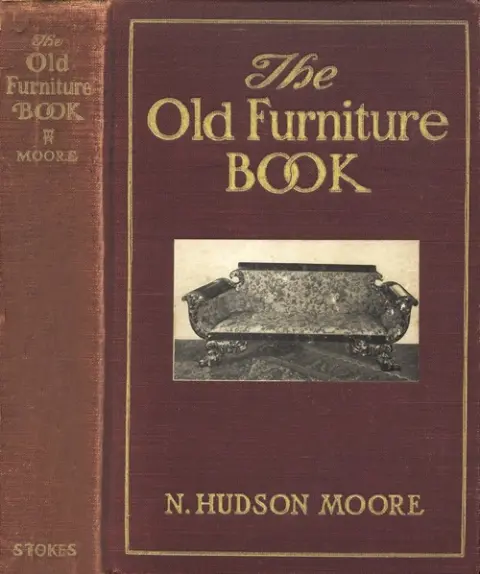
"The Old Furniture Book, with a Sketch of Past Days and Ways" by N. Hudson Moore is a historical account written in the early 20th century. The book delves into the evolution of furniture styles, particularly from English, Dutch, and Spanish origins, celebrating the antiques that have found their way into American homes. It presents insights into the craftsmanship, materials, and historical significance of furniture, inviting collectors and history enthusiasts to appreciate the artistry involved in these pieces. The opening of the work establishes a context around the rekindled interest in antiques during the author's time, particularly in the United States, where old furniture from Europe increasingly adorned modern homes. It discusses the noteworthy characteristics of oak furniture, the various styles that emerged over centuries, and the significance of craftsmanship in different periods, such as Queen Elizabeth's influence on panelling and the rise of intricate designs in furniture. This section sets the stage for a comprehensive exploration of historical furniture, encouraging readers to view these artifacts not just as functional items, but as narratives of past lifestyles and aesthetics.
Introduction adapted from the source catalogue; source summaries may be automatically generated.
Free to read · English · 67,502 words · No account needed
MAKE TIME FOR A GOOD BOOK
On by default. Untick to stop anonymous reading totals. Each page counts after 10 seconds in view. How this works.
Anonymous counting is on unless you have switched it off.
--"1 chimney glass and arms; 1 marble table; 1 large Turkey carpet; 1 compleat brass sett, hearth-dogs, tongs, shovel, and bellows; 1 copper tea-table; cups, saucers, tea-pot, stand, bowl and sugar-dish; 3 alabaster bowls and stands; 1 large oval mahogany table, 12 plain walnut-frame leather-bottom chairs; 1 prospect of Boston, 2 landskips on copper, and the Temple of Solomon."
The "Great Centre Hall" must have made a quaint appearance, since here hung the fire apparatus; "1 large entry lantern; 12 baggs and buckets, and books £50."
The sleeping-rooms were handsomely equipped, and each was furnished with its appropriate colour. The list includes:
"1 harrateen bed, bedstead and window curtains, matrass and two green silk quilts and feather-bed, £65
3 scones with arms
1 bureau, 1 table, 1 pr. brass-faced dogs, 1 fire-shovel, tongs bellows, and one Turkey carpet, £107"
Peter Faneuil's own room was not lacking in comforts, as is shown by
the enumeration of:
--"1 silver-hilted sword, 1 pair of pistols and 1 powder-flask, £15; 1 case 6 razors, bone penknife, strap, 2 bottles, looking-glass tipt with silver; yellow mohair bed-counterpane, feather-bed, bolster, 2 false pillows, false curtains, 6 chairs, 1 great chair, 2 stools, window curtains," etc.
The furnishings of this room, exclusive of the small-arms, was valued at £245. He had "6 lignum-vitæ chocolate-cups lined with silver", which were probably Dutch, for among the goods of Sara Van der Vulgen, of Schenectady, at about this same period, was a great "saler" or salt-cellar, made of lignum-vitæ, bound with silver and standing on three little silver feet.
In Mr. Faneuil's kitchen were many utensils of copper, pots, pans, and kettles, together with an "engine and cistern." He had many jewels, 1,400 ounces of plate, including a shaving-basin worth £40. There were silver snuff-boxes, seven gold rings, and "chrystall buttons set in gold." Just before he died he sent to London for "six gross of the very best London King Henry's cards", for his store no doubt, for cards were becoming more popular among the descendants of the Puritans than they had been.
In 1729 Governor Burnet, of New York and Massachusetts, died, leaving behind him a long list of valuable personal goods. He owned as many as seventy chairs and twelve tables. The chairs were of mahogany and walnut, with leather or bass bottoms, and one easy-chair was covered with silk. Twenty-four chairs had seats of red leather, a noble set, and there are two chairs now in the Yale University Library which belonged to Governor Burnet, and which are of the exact style of what we call Chippendale. They were made more than twenty-five years before the "Director" was published, but are made of mahogany with richly carved knees, ball-and-claw feet, with carved and ornamentally pierced splats, handsome upper rail curved and ending in the little ears before mentioned.
Your reading position is saved on this browser. Take it to another device with a library code. Reading pages adapt to text, rather than matching a printed edition.
BEHIND THE BOOK
This eBook is for the use of anyone anywhere in the United States and most other parts of the world at no cost and with almost no restrictions whatsoever. You may copy it, give it away or re-use it under the terms of the Project Gutenberg License included with this eBook or online at www.gutenberg.org. If you are not located in the United States, you will have to check the laws of the country where you are located before using this eBook. Read the source licence.
The original source file, including credits and licence, is retained by this library. Request an original-format copy at no charge. Please include the book title and Project Gutenberg identifier #47917.
KEEP YOUR CURIOSITY GOING
Cécile Tormay

Moritz Busch
John L. Ransom
Frances Wright
Cécile Tormay

Mabel Potter Daggett