THE CLASSIC COLLECTION✦My diaries, being a personal narrative of events 1888-1914, Part 2 (1900-1914)CLASSIC FREE BOOKS
My diaries, being a personal narrative of events 1888-1914, Part 2 (1900-1914)
Wilfrid Scawen Blunt
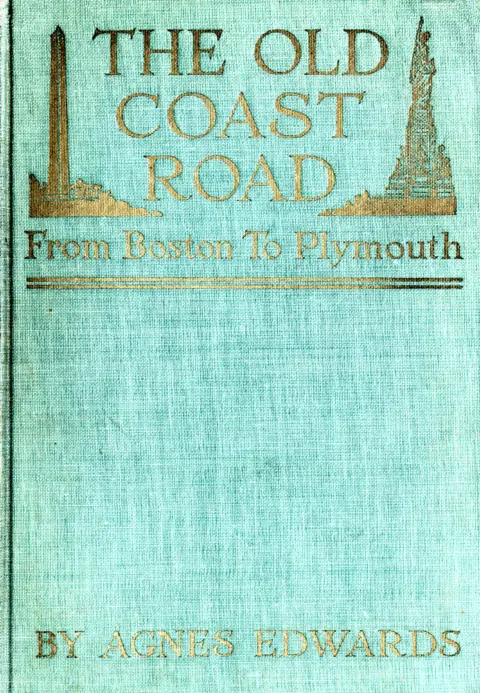
THE CLASSIC COLLECTION · 1920
"The Old Coast Road" by Agnes Rothery is a historical account written in the early 20th century. This work focuses on the Old Coast Road, which historically linked Boston to Plymouth, and traces the significant events tied to its development, highlighting the cultural and historical richness of the areas it traverses. At the start of the narrative, the author sets the stage for a journey down the Old Coast Road, emphasizing its importance as the earliest major thoroughfare in New England, initially used by Indigenous peoples and later by early settlers such as Pilgrims and horseback travelers. Rothery paints a vivid picture of the road's evolution from a narrow Indian path to a well-maintained turnpike, illustrating the changes in transportation and societal structures. Engaging with the rich quilt of history, she introduces figures from various eras who shaped the region, leading to an exploration of the landmarks and significant historical events tied to this iconic route.
Introduction adapted from the source catalogue; source summaries may be automatically generated.
Free to read · English · 38,151 words · No account needed
MAKE TIME FOR A GOOD BOOK
On by default. Untick to stop anonymous reading totals. Each page counts after 10 seconds in view. How this works.
Anonymous counting is on unless you have switched it off.
The Puritans themselves grew away from many of their excessive severities. But as they gained bodily strength from their conflict with the elements, so they gained a certain moral stamina by their self-imposed religious observance. And this moral stamina has marked New England ever since, and marked her to her glory.
One cannot speak of Hingham churches--indeed, one cannot speak of Hingham--without admiring mention of the New North Church. This building, of exquisite proportions and finish, within and without, built by Bulfinch in 1806, is one of the most flawless examples of its type on the South Shore. You will appreciate the cream-colored paint, the buff walls, the quaint box pews of oiled wood, with handrails gleaming from the touch of many generations, with wooden buttons and protruding hinges proclaiming an ancient fashion; but the unique feature of the New North Church is its slave galleries. These two small galleries, between the roof and the choir loft, held for thirty years, in diminishing numbers, negroes and Indians. The last occupant was a black Lucretia, who, after being freed, was invited to sit downstairs with her master and mistress, which she did, and which she continued to do until her death, not so very long ago.
Hingham, its Main Street--alas for the original name of "Bachelors Rowe"--arched by a double row of superb elms on either side, is incalculably rich in old houses, old traditions, old families. Even motoring through, too quickly as motorists must, one cannot help being struck by the substantial dignity of the place, by the well-kept prosperity of the houses, large and small, which fringe the fine old highway. Ever since the days when the three Misses Barker kept loyal to George IV, claiming the King as their liege lord fifty years after the Declaration of Independence, the town has preserved a Cranford-like charm. And why not, when the very house is still handsomely preserved, where the nameless nobleman, Francis Le Baron, was concealed between the floors, and, as we are told in Mrs. Austen's novel, very properly capped the climax by marrying his brave little protector, Molly Wilder? Why not, when the Lincoln family, ancestors of Abraham, has been identified with the town since its settlement? The house of Major-General Benjamin Lincoln, who received the sword of Cornwallis at Yorktown, is still occupied by his descendants, its neat fence, many windows, two chimneys, and its two stories and a half proclaiming it a dwelling of repute. Near by, descendants of Samuel Lincoln, the ancestor of Abraham, occupy part of another roomy ancient homestead. The Wampatuck Club, named after the Indian chief who granted the original deeds of the town, has found quarters in an extremely interesting house dating from 1680. In the spacious living-room are seventeen panels, on the walls and in the doors, painted with charming old-fashioned skill by John Hazlitt, the brother of the English essayist. The Reverend Daniel Shute house, built in 1746, is practically intact with its paneled rooms and wall-paper a hundred years old. Hingham's famous elms shade the house where Parson Ebenezer Gay lived out his long pastorate of sixty-nine years and nine months, and the Garrison house, built before 1640, sheltered, in its prime, nine generations of the same family. The Rainbow Roof house, so called from the delicious curve in its roof, is one of Hingham's prettiest two-hundred-year-old cottages, and Miss Susan B. Willard's cottage is one of the oldest in the United States. Derby Academy, founded almost two centuries and a half ago by Madam Derby, still maintains its social and scholarly prestige through all the educational turmoil of the twentieth century. One likes to associate Hingham with Massachusetts's stanch and sturdy "war governor," for it was here that John Albion Andrew, who proved himself so truly one of our great men during the Civil War, courted Eliza Jones Hersey, and here that the happy years of their early married life were spent. Later, another governor, John D. Long, was for many years a mighty figure in the town.
Your reading position is saved on this browser. Take it to another device with a library code. Reading pages adapt to text, rather than matching a printed edition.
BEHIND THE BOOK
This eBook is for the use of anyone anywhere in the United States and most other parts of the world at no cost and with almost no restrictions whatsoever. You may copy it, give it away or re-use it under the terms of the Project Gutenberg License included with this eBook or online at www.gutenberg.org. If you are not located in the United States, you will have to check the laws of the country where you are located before using this eBook. Read the source licence.
The original source file, including credits and licence, is retained by this library. Request an original-format copy at no charge. Please include the book title and Project Gutenberg identifier #21895.
KEEP YOUR CURIOSITY GOING
Wilfrid Scawen Blunt
Wilfrid Scawen Blunt

E. W. (Edgar Watson) Howe
Cécile Tormay

Moritz Busch
John L. Ransom