THE CLASSIC COLLECTION✦The ocean wireless boys of the iceberg patrolCLASSIC FREE BOOKS
The ocean wireless boys of the iceberg patrol
John Henry Goldfrap
THE CLASSIC COLLECTION · 1914
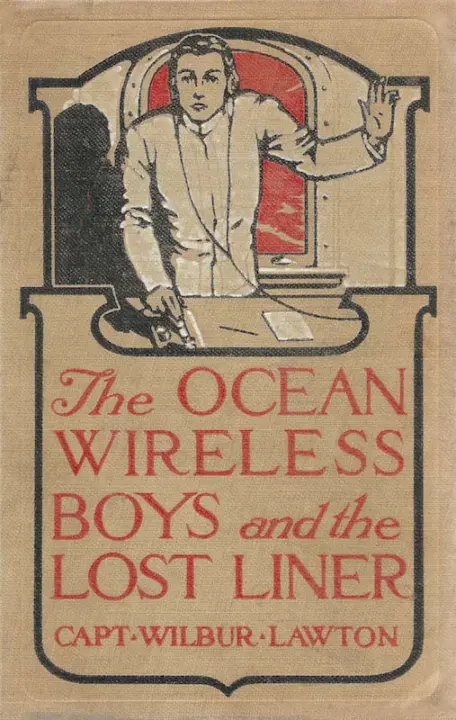
"The Ocean Wireless Boys and the Lost Liner" by Captain Wilbur Lawton is a fictional adventure novel likely written in the early 20th century. The story follows two young protagonists, Jack Ready and Sam Smalley, who work as wireless operators aboard the West Indian liner, "Tropic Queen". As they navigate the challenges of their maritime roles, a series of mysterious events unfolds, including a potential storm and a strange passenger with dubious intentions. The opening of the book introduces readers to the "Tropic Queen" plowing through the sea, where Jack is settling into his new position as Chief Wireless Operator. The narrative quickly establishes a sense of urgency as Jack notes warnings of an impending storm while also encountering peculiar passenger James Jarrold, who seems overly interested in communications from a yacht called the "Endymion". Tension builds as Jack and his assistant, Sam, grapple with a sudden distress call that hints at trouble beyond their immediate concerns, foreshadowing a deeper mystery involving the presumed villainy of Jarrold and the significant role of wireless communication in their adventure at sea.
Introduction adapted from the source catalogue; source summaries may be automatically generated.
Free to read · English · 47,332 words · No account needed
MAKE TIME FOR A GOOD BOOK
On by default. Untick to stop anonymous reading totals. Each page counts after 10 seconds in view. How this works.
Anonymous counting is on unless you have switched it off.
Now that the job was over, he felt that he could never live to reach the deck, miles and miles—hundreds and hundreds of miles—below him. Step by step, though, he descended, fighting for his life against the sense numbness that was creeping over him. Limbs and intelligence seemed equally absent. He felt as if he were a disembodied being, floating through space on the wings of the storm.
He appeared to have no weight. Like a thistle bloom he thought that he might be blown where the winds wished. Conquering this feeling, it was succeeded by a leaden one. He was too heavy to move. His feet felt enormous, and heavy as a deep-sea diver’s weighted boots. His head was balloon-like and appeared to sway crazily on his shoulders.
But he still descended. Step by step, painfully, semi-consciously, the brain-sick, nauseated boy clung to the ratlines. On his grip depended his life, and this, in a dim, stupid sort of way, he realized.
If he could only reach the cross-trees! Here he could rest in
comparative security for a while.
He must reach them, he must! He wasn’t going to die like this. A furious fighting spirit came over him. His head suddenly cleared; the deadly nausea left him; his limbs grew light.
Jack shouted aloud and came swiftly down. He called out defiantly at the storm. He raved, he yelled in wild delirium.
All at once he felt the cross-trees under his feet. With a last loud cry of triumph he sank down on the projecting steel pieces that formed, at any rate, a resting place.
Then came another wild swing of the ship, and a vicious gust.
Jack felt himself flung from the cross-trees and out into the dark void
of the storm.
Down, down, down he went, straight as a stone toward the dark, black, raging vortex through which the ship was fighting.
He felt rather than heard a despairing cry; but did not know whether it had come from his lips or not.
Then a rushing dark cloud enveloped him, and with a fearful roaring in his ears, Jack’s senses swam out to sea.
“The light has disappeared, Metcalf. Do you think the poor lad is lost?”
Far below on the bridge, Captain McDonald, oil-skinned like his officer,
peered upward.
“The good Lord alone knows, sir,” was the fervent reply. “It was a madcap thing to do. I should never have let him go.”
“It’s done now,” muttered the captain. “Though, had you consulted me, I should have forbidden it. That boy is the bravest of the brave.”
Your reading position is saved on this browser. Take it to another device with a library code. Reading pages adapt to text, rather than matching a printed edition.
John Henry Goldfrap
John Henry Goldfrap
John Henry Goldfrap
John Henry Goldfrap
BEHIND THE BOOK
This eBook is for the use of anyone anywhere in the United States and most other parts of the world at no cost and with almost no restrictions whatsoever. You may copy it, give it away or re-use it under the terms of the Project Gutenberg License included with this eBook or online at www.gutenberg.org. If you are not located in the United States, you will have to check the laws of the country where you are located before using this eBook. Read the source licence.
The original source file, including credits and licence, is retained by this library. Request an original-format copy at no charge. Please include the book title and Project Gutenberg identifier #41265.
KEEP YOUR CURIOSITY GOING
Coulson Kernahan

Maurice Baring
Frances Wright
Cécile Tormay

Frederic Jesup Stimson

W. H. P. (William Henry Pope) Jarvis