THE CLASSIC COLLECTION✦My diaries, being a personal narrative of events 1888-1914, Part 2 (1900-1914)CLASSIC FREE BOOKS
My diaries, being a personal narrative of events 1888-1914, Part 2 (1900-1914)
Wilfrid Scawen Blunt
THE CLASSIC COLLECTION · 1915
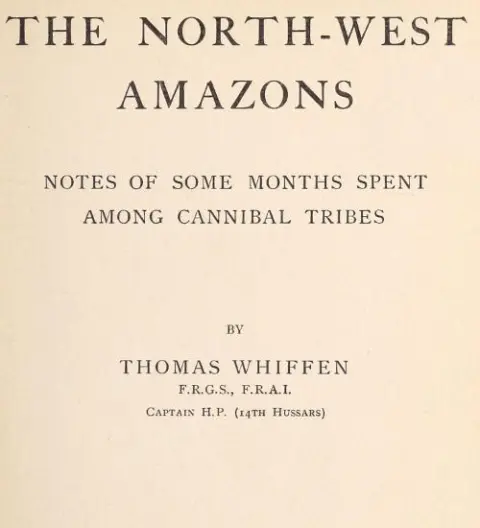
"The North-West Amazons: Notes of some months spent among cannibal tribes" by Thomas Whiffen is a historical account written in the early 20th century. The work details the author's months spent exploring the remote regions near the upper Amazon River, specifically focusing on the cannibal tribes and their cultures. Whiffen shares his observations of the tribes' customs, daily life, and interactions with nature, providing readers with an ethnographic glimpse into a largely untouched world. At the start of the narrative, Whiffen recounts his motivations for embarking on this journey following a period of unemployment due to ill health. He reflects on previous travel experiences and the influence of Dr. Alfred Russel Wallace's writings, which inspired him to explore the Amazon. Arriving in Manaos, he quickly realizes the challenges of accessing the interior and securing a reliable party, and the narrative unfolds with his detailed accounts of the difficulties faced in navigating the forest, river routes, and the dynamics with local tribes. The opening section sets the stage for an immersive exploration of the Amazonian wilderness and the indigenous peoples residing there, capturing both the allure and the difficulties of his expedition.
Introduction adapted from the source catalogue; source summaries may be automatically generated.
Free to read · English · 110,454 words · No account needed
MAKE TIME FOR A GOOD BOOK
On by default. Untick to stop anonymous reading totals. Each page counts after 10 seconds in view. How this works.
Anonymous counting is on unless you have switched it off.
G. Shape of face.
No. 1. Short. Broad.
No. 2. Pyramidal. Wedge-shaped.
H. Profile of nose.
No. 1. Chinese type.
No. 2. Chinese type, but not so pronounced, between
this and European.
I. Prognathism.
No. 1. Slight.
No. 2. Very slight.
J. Lips.
No. 1. Medium--slightly everted.
No. 2. Medium European type.
K.
No. 1. } Platyoprosopic not excessive.
No. 2. }
ARTICLES NOTED BY WALLACE AS IN USE AMONG THE UAUPES INDIANS THAT ARE FOUND WITH THE ISSA-JAPURA TRIBES
Household Furniture and Utensils
Hammocks.
Baskets, flat and deep.
Calabashes and gourds.
Earthenware water-pots.
Earthenware cooking-pots.
Manioc graters.
Manioc squeezers.
Wicker sieves.
Weapons
Bows and arrows.
Quivers.
Blow-pipes.
Small pots and calabashes for poison.
Spears.
Nets.
Rods, lines, and palm-spine hooks.
Wicker fish-traps.
Musical Instruments
Fifes and flutes of reeds--Menimehe and Napo tribes.
Dress and Ornaments
Feather head-dress.
Palm-wood combs.
Necklaces of seeds, beads, and teeth.
Wooden ear-plugs.
Armlets.
Painted aprons.
Rattles and ornaments for legs.
Knitted garters.
Calabashes of red pigment.
Painted earthen pot for caapi.
Small pot of dried peppers.
Dancing rattles.
Balls of string.
Baskets for edible ants.
Small dug-out canoe.
Paddles.
Pestles and mortars.
Bombax silk-cotton for arrows.
Stone axes.
Many writers have stated that the Indians of the Upper Amazon forests have no words in their languages to express a Supreme Being. (See, for example, Bates, i. 162; Wallace, p. 354; Nery, p. 273; Orton, p. 316; Bates, ii. 137, 162-3; Markham.) It therefore seemed to me worth while to make the following list of words expressive of some idea of a superior, non-human being, good or bad.
Tribe. | Good Spirit. | Bad Spirit. Amazon (proper) | | Curupira | | Diabo do mato | | (Spruce, ii. 437) Atabayoo, Inivida | Cachimana | Iolokiamo (Orinoco tribes) | (Humboldt, ii. 362) | (Humboldt, ii. 362) Baniwa | Diotso | Yenauepena | | (Koch-Grünberg) | | Ienahabapen | | (Tavera-Acosta) Baré | Diose (Sp. Dios.) | Iyehe | (Koch-Grünberg, | (Koch-Grünberg) | p. 92) | | Oayaba | | (Spix) | Boro | Neva[441] | Navena[442] Bororo | | Bope[443] | | (Cook, p. 55) Casiquiari | | Yamadu | | (Spruce, ii. 437) Equatorial Andes | | Munyia | | (Spruce, ii. 437) Guayana | | Yawahoo | | (Bancroft and | | Stedman, Spruce, | | ii. 437) Hypurina | | Kamiri | | (Steere, p. 379) Imihita Miranya | Nawene | | (Koch-Grünberg, | | Z. 9081) | Karutana | | Inei | | (Koch-Grünberg, | | p. 93) Katapolitani | | Iyemi, Koai | | (Koch-Grünberg, | | p. 93) Puru | Ara, Carimade | Arabuny, Camery, | (Clough, p. 117) | Mendy | | (Clough, p. 117) Quichua | Apunchi-yaya[444] | | (Orton, p. 628) | Siusi | Yaperikuli[445] | Iyeimi | (Koch-Grünberg, | (Koch-Grünberg, | p. 92) | p. 93) Tamanac | Amulivaca[446] | | (Humboldt, ii. | | 473-474). | Tariana | Yaperikuli | Iyei | (Koch-Grünberg, | (Koch-Grünberg, | p. 93) | p. 93) | Iapiricure | Inhat | (Crevaux) | (Crevaux) Ticuna | Nanuloa | Locazy | (Markham) | (Markham) Tupi-Guarani | Tupan[447] | Ananga[448] | (Nery, p. 281) | (Nery, p. 281) Uaupes | Tupanau | | (Wallace, p. 348) | Uarekena | | Kue | | (Koch-Grünberg, | | p. 92) Witoto | Usiyamoi,[449] | Taifeno, Taifa, | Husinaimui | Taegfeno (spirit), | (Koch-Grünberg) | Foremo (phantom) | | (Koch-Grünberg) Yagua | Tupana | | (Orton, p. 628) | Yukuna | | Hiya | | (Koch-Grünberg, | | p. 93) Zaparo | Piatzo[450] | Mungia (black | (Orton, p. 628) | spectre) | | (Orton, p. 170) | | Zamaro | | (Simson, p. 175) | | Samaro | | (Simson, p. 263)
Your reading position is saved on this browser. Take it to another device with a library code. Reading pages adapt to text, rather than matching a printed edition.
BEHIND THE BOOK
This eBook is for the use of anyone anywhere in the United States and most other parts of the world at no cost and with almost no restrictions whatsoever. You may copy it, give it away or re-use it under the terms of the Project Gutenberg License included with this eBook or online at www.gutenberg.org. If you are not located in the United States, you will have to check the laws of the country where you are located before using this eBook. Read the source licence.
The original source file, including credits and licence, is retained by this library. Request an original-format copy at no charge. Please include the book title and Project Gutenberg identifier #55540.
KEEP YOUR CURIOSITY GOING
Wilfrid Scawen Blunt
Wilfrid Scawen Blunt

E. W. (Edgar Watson) Howe
Cécile Tormay

Moritz Busch
John L. Ransom