
In the Morning
Willis Boyd Allen
THE CLASSIC COLLECTION · 1905
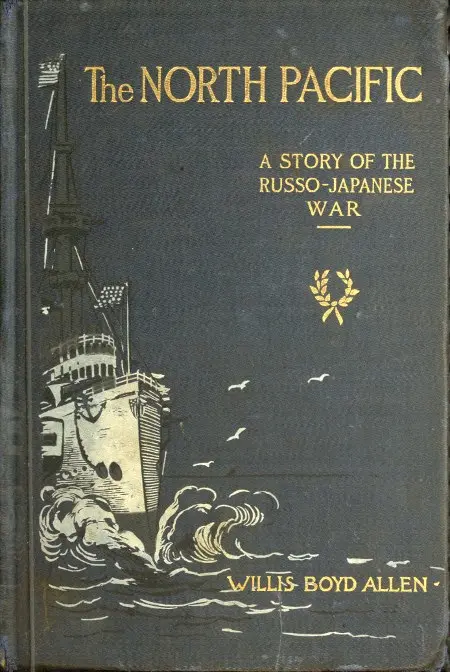
"The North Pacific: A Story of the Russo-Japanese War" by Willis Boyd Allen is a historical account written in the early 20th century. The narrative delves into the Russo-Japanese War, focusing on naval battles and the intricacies of warfare during this significant conflict between two great powers of the East and West. The story likely involves several characters, including members of the American navy and Japanese protagonists who play pivotal roles in the unfolding events. The opening of the book sets the stage with a vivid description of a battleship trial, focusing on the USS Retvizan as it undergoes rigorous testing amid the bustling activity of a shipyard. Two young Japanese men, Oto and Oshima, blend into the background as seemingly ordinary stewards but reveal alertness as they observe the battleship closely. Their keen interest hints at underlying motives related to the war. As the narrative progresses, the ship's crew, including reporter Fred Larkin, takes shape, foreshadowing future developments as the ship sets sail into the conflict-prone waters of the Pacific. The interactions between the sailors and Japanese characters signal potential themes of cultural collision and espionage amid wartime uncertainty.
Introduction adapted from the source catalogue; source summaries may be automatically generated.
Free to read · English · 69,858 words · No account needed
MAKE TIME FOR A GOOD BOOK
On by default. Untick to stop anonymous reading totals. Each page counts after 10 seconds in view. How this works.
Anonymous counting is on unless you have switched it off.
"Mr. Larkin!" exclaimed both girls, rising and cordially shaking his hand. "How delightful to find you here! Colonel Selborne, Mr. Larkin, a friend of Lieutenant-Commander Rexdale's."
"Is Mr. Larkin in the navy?" inquired Colonel Selborne, meeting the young man's friendly greeting in his hearty way.
"Well, no, not exactly," said Larkin with a laugh, "although I am on board the war-vessels pretty often, as war correspondent for the Boston Bulletin. There are half a dozen of us here already, trying to get our passes to go to the front, wherever that may be. Just now it's on the fleet and at Chemulpo, where the Japs have landed a regiment."
"O Mr. Larkin!" exclaimed Edith. "You'll surely be shot, or something, if you go right where the soldiers and battles are!"
"It will be 'something,' then, I guess," said the reporter with another of his jolly laughs. "We fellows aren't often shot. The greatest trouble we have, in a foreign war, is getting within reach of bullets at all. These blessed Japs bow and smile and promise, from dawn to sunset, but somehow there's always some hitch when it comes to actual permission to start. If I don't get my pass soon," he added, lowering his voice, "I shall get a move on, permission or no permission."
As he spoke, both girls nodded to a man who bowed low as he passed them and entered the open door of the hotel. Larkin, following the direction of their glances, stopped short. A puzzled expression came into his face.
"Pardon me," he said quickly, "may I ask you the name of the gentleman
who bowed to you?"
"That? Oh, that's Señor Bellardo," replied Wynnie carelessly. "He's a Spaniard, I believe, travelling for his health, but he speaks English very nicely. Have you met him?"
"There's something familiar about his face," mused Fred, "but I can't remember--a Spaniard, did you say, Miss Ethelwyn?"
"I think--yes, I know he is, for he alluded to his estates near Barcelona. That's in Spain, isn't it?"
"It certainly is," assented the war correspondent, "but that fellow--excuse me; that gentleman-looked more like a--well, I think the air of Tokio, or the pleasure of finding old friends here, must have gone to my head. So we'll let the Señor drop. You'll be surprised when I tell you of another friend of yours who arrived here this very day!"
"Oh, who is it? Tell us!" exclaimed the girls.
"Perhaps you've forgotten him," said Fred, with a sly glance at Wynnie. "I declare there he is, now! Hulloa, there! Ship ahoy!" he cried, beckoning to a trim-looking lad who was passing on the other side of the street.
Your reading position is saved on this browser. Take it to another device with a library code. Reading pages adapt to text, rather than matching a printed edition.
Willis Boyd Allen

Willis Boyd Allen

Willis Boyd Allen
Willis Boyd Allen
BEHIND THE BOOK
This eBook is for the use of anyone anywhere in the United States and most other parts of the world at no cost and with almost no restrictions whatsoever. You may copy it, give it away or re-use it under the terms of the Project Gutenberg License included with this eBook or online at www.gutenberg.org. If you are not located in the United States, you will have to check the laws of the country where you are located before using this eBook. Read the source licence.
The original source file, including credits and licence, is retained by this library. Request an original-format copy at no charge. Please include the book title and Project Gutenberg identifier #45413.
KEEP YOUR CURIOSITY GOING
Cécile Tormay

Moritz Busch
Coulson Kernahan
John L. Ransom

Maurice Baring
Frances Wright