
In the Morning
Willis Boyd Allen
THE CLASSIC COLLECTION · 1905
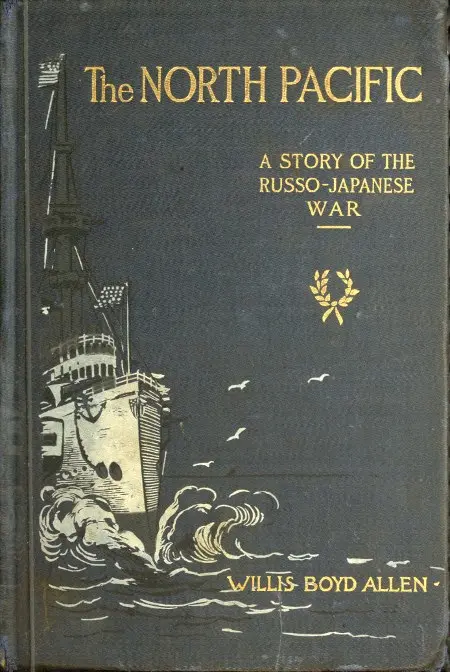
"The North Pacific: A Story of the Russo-Japanese War" by Willis Boyd Allen is a historical account written in the early 20th century. The narrative delves into the Russo-Japanese War, focusing on naval battles and the intricacies of warfare during this significant conflict between two great powers of the East and West. The story likely involves several characters, including members of the American navy and Japanese protagonists who play pivotal roles in the unfolding events. The opening of the book sets the stage with a vivid description of a battleship trial, focusing on the USS Retvizan as it undergoes rigorous testing amid the bustling activity of a shipyard. Two young Japanese men, Oto and Oshima, blend into the background as seemingly ordinary stewards but reveal alertness as they observe the battleship closely. Their keen interest hints at underlying motives related to the war. As the narrative progresses, the ship's crew, including reporter Fred Larkin, takes shape, foreshadowing future developments as the ship sets sail into the conflict-prone waters of the Pacific. The interactions between the sailors and Japanese characters signal potential themes of cultural collision and espionage amid wartime uncertainty.
Introduction adapted from the source catalogue; source summaries may be automatically generated.
Free to read · English · 69,858 words · No account needed
MAKE TIME FOR A GOOD BOOK
On by default. Untick to stop anonymous reading totals. Each page counts after 10 seconds in view. How this works.
Anonymous counting is on unless you have switched it off.
Paterfamilias, grumbling at the shopping memorandum of his wife and daughters on the eve of their Mediterranean vacation trip, would gasp at the list which Uncle Sam must fill, for a long cruise of one of his naval vessels. Here is a single order sent to one wholesale house on the Osprey's account, that week in June: Loaf sugar, brown sugar, powdered sugar, fair molasses, Ceylon tea, Hyson tea, Java coffee, Rio coffee, smoked ham, American rice, breakfast bacon, lambs' tongues, pigs' feet, corned beef, corned pork, leaf lard, dried peas, dried beans, coffee extract, chiccory, chocolate, Swiss cheese, English cheese, New York dairy cheese, canned tomatoes, canned peaches, canned onions, canned asparagus, canned peas, canned corn, canned beets, olives and olive oil, sauces and catsups, oatmeal and flour, limes and lemons, fruit jellies, condensed meats, beef extracts, Jamaica ginger, mustard and spices, cigars and tobacco, corn-meal and hominy, sago and tapioca, crackers and biscuits, lime juice, fresh and limed eggs, baking powder, canned cherries, canned plums, canned pears, canned rhubarb, dried apples, canned salmon, canned oysters, canned clams, sardines, canned lobster, canned mackerel, canned codfish, kippered herring, Yarmouth bloaters, canned ox tongues, canned tripe, canned mutton, canned chicken, canned turkey, canned soups, condensed milk, canned pickles, vinegar, salt, pepper, canned mushrooms, macaroni, vermicelli, laundry soap, toilet soap, sapolio, starch and blue, insect powder, candles, safety matches, stationery, rope and twine, smoking pipes, tubs and washboards, chloride of lime, ammonia, alcohol and paints, shoe blacking, sewing machines.
From this partial list an idea may be formed of the extent and variety of the supplies that go to a modern war-ship. The clothing, medical and mechanical departments of the Osprey's outfit are not included, and each in itself would make a long roll. Of course the delicacies mentioned above are for the officers' use alone. When in port or on a short cruise the sailors get fresh meat, bread, fruit, vegetables and milk. On a long voyage their staple is "salt horse, hard tack, and boot-leg," which, being translated, is corned beef or pork, with crackers and black coffee. They receive frequently, too, oatmeal and rice, hot rolls and tea.
It will be noted that the important items of ice and fresh water do not appear in the list of supplies. Neither is taken aboard from the outside. The ship condenses fresh water pumped in from the sea by ingenious machinery contrived for the purpose, and the supply is limitless. From this fresh water ice is manufactured in any quantity desired, and no properly appointed modern war-ship is now without its ice-plant. It is for the manufacture of ice that ammonia is so largely shipped.
Your reading position is saved on this browser. Take it to another device with a library code. Reading pages adapt to text, rather than matching a printed edition.
Willis Boyd Allen

Willis Boyd Allen

Willis Boyd Allen
Willis Boyd Allen
BEHIND THE BOOK
This eBook is for the use of anyone anywhere in the United States and most other parts of the world at no cost and with almost no restrictions whatsoever. You may copy it, give it away or re-use it under the terms of the Project Gutenberg License included with this eBook or online at www.gutenberg.org. If you are not located in the United States, you will have to check the laws of the country where you are located before using this eBook. Read the source licence.
The original source file, including credits and licence, is retained by this library. Request an original-format copy at no charge. Please include the book title and Project Gutenberg identifier #45413.
KEEP YOUR CURIOSITY GOING
Cécile Tormay

Moritz Busch
Coulson Kernahan
John L. Ransom

Maurice Baring
Frances Wright