
Colonel Washington
Archer Butler Hulbert
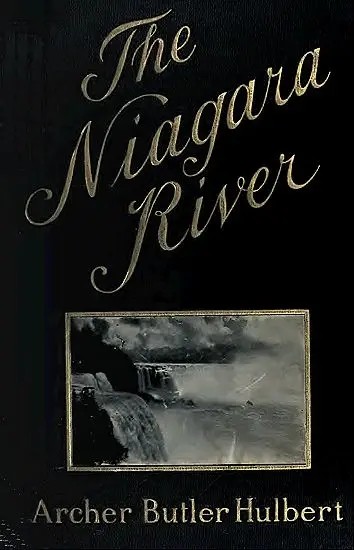
THE CLASSIC COLLECTION · 1908
"The Niagara River" by Archer Butler Hulbert is a historical account written in the early 20th century. The work explores the Niagara River's significance from various perspectives, including its geological, historical, and economic importance in American history. The text reflects on the river's impact on trade routes as well as its natural wonders, setting the stage for a comprehensive examination of the region. At the start of the book, the author introduces the Niagara River as a remarkable geologic and historic entity, emphasizing its multifaceted appeal to historians, artists, and geologists alike. Hulbert discusses the strategic importance of the river during various military conflicts and the natural beauty it presents, including detailed descriptions of the Falls and the surrounding landscapes. He hints at the challenges of summarizing such a vast and intricate subject matter, outlining the structure of the text and foreshadowing a deeper exploration of the region's history and the intertwined narratives of significant figures and events related to the Niagara River.
Introduction adapted from the source catalogue; source summaries may be automatically generated.
Free to read · English · 100,244 words · No account needed
MAKE TIME FOR A GOOD BOOK
On by default. Untick to stop anonymous reading totals. Each page counts after 10 seconds in view. How this works.
Anonymous counting is on unless you have switched it off.
After this followed the singing of the Star Spangled Banner, the audience joining earnestly in the chorus. The oration was delivered by that polished member of the New York Bar, Mr. James C. Carter, giving a full history of the region. The two Canadian officials, Lieutenant-Governor Robinson and Attorney-General Mowat were then introduced, and congratulated the State of New York for the enterprise and public spirit shown by the people and the public officers. The exercise concluded with the Doxology and a benediction. In the afternoon Governor Hill with Generals Jewett and Rogers reviewed the militia. In the evening fireworks were set off from Prospect Park, Goat Island, and the brink of the Falls from the Canadian side. Earlier in the day the Comptroller's check for five hundred thousand dollars was received by the Porter family, the Goat Island property had been transferred to the commissioners, and Niagara was free.
There had been, of course, strong objection on the part of the army of landholders and monopolists who were to be thrown out of their "easy money" livelihoods. Of this the excellent "leader" in the New York Times of July 15th deals as follows:
It would be alike idle and unjust to blame the people of Niagara Falls for this state of mind. They have done what the members of any other community would have done in making the most of their neighbourhood as a wonder of nature. Even the obstinate . . . who declines to be bought out, and insists upon his right to make merchandise out of the river, is entitled to respect for the tenacity with which he proposes to resist the acquisition of his property by the State upon the ground that the law authorising the acquisition is unconstitutional.
He would very possibly be willing to acknowledge the right of eminent domain if it were proposed to take his land for a railroad, but the idea that it shall be taken in order that a river . . . shall be kept for dudes to look at undoubtedly strikes him as unmixed foolishness. However excusable this state of mind may have been, nobody who does not own a point of view or at least a hack at Niagara will dispute that its consequences have been deplorable. Though Niagara has continued to be a frequential resort it has by no means been as popular as it would have become with the increasing facilities of travel and the increasing advantages taken of them, if the fame of the gross and petty extortions had not been almost as widely spread as the fame of Niagara itself. While the local monopolies have deterred people from visiting the Falls, they have nevertheless been so lucrative that the most important of them is reported upon the authority of one of its managers to have returned a net annual profit, of thirty thousand dollars, and the report is not incredible, prodigious as the figure seems as a profit upon the mere command of a point of view. This hedging about and looking up of a boon of nature was perhaps the most objectionable incident of the private shore of Niagara. To a tourist who goes to Niagara from any other motive than that of saying that he had been there the importunity to which he had been subjected at every turn was absolutely destructive of the object of his visit. The prosaic and incongruous surroundings of the cataract completed the disillusion which importunity and extortion were calculated to produce. Many tourists would have been glad to pay down, once for all, as much as their persecutors could have reasonably hoped to extract from them for the privilege of being allowed to look without molestation upon the work of nature undisfigured by the handiwork of man. "For many years this has been impossible, and for several years it has been evident that it could be made possible only by the resumption on the part of the State, as a trustee of its citizens and for all mankind, of the ownership and control of the shore. This resumption will be formally made to-day. But it was really brought about in the Legislature in the winter of 1884, when the full force of the opposition to the project was brought out and fairly defeated. The State of New York has in effect decided that the preservation of a sublime work of nature under conditions which will enable it to affect men's minds most strongly is an object for which it is worth while to pay the money of the State. It is this emphatic decision which marks a real advance in civilisation over the state of mind of the Gradgrinds of the last generation and of the contemporaneous wood-pulp grinder that the proper function of the greatest waterfall in the world is to turn mill-wheels and produce pennies by being turned into a peep show."
Your reading position is saved on this browser. Take it to another device with a library code. Reading pages adapt to text, rather than matching a printed edition.
Archer Butler Hulbert
Archer Butler Hulbert
Archer Butler Hulbert
Archer Butler Hulbert
BEHIND THE BOOK
This eBook is for the use of anyone anywhere in the United States and most other parts of the world at no cost and with almost no restrictions whatsoever. You may copy it, give it away or re-use it under the terms of the Project Gutenberg License included with this eBook or online at www.gutenberg.org. If you are not located in the United States, you will have to check the laws of the country where you are located before using this eBook. Read the source licence.
The original source file, including credits and licence, is retained by this library. Request an original-format copy at no charge. Please include the book title and Project Gutenberg identifier #35194.
KEEP YOUR CURIOSITY GOING
Cécile Tormay

Moritz Busch
John L. Ransom
Frances Wright
Cécile Tormay

Mabel Potter Daggett