THE CLASSIC COLLECTION✦The Story of Francis CluddeCLASSIC FREE BOOKS
The Story of Francis Cludde
Stanley John Weyman
THE CLASSIC COLLECTION · 1891
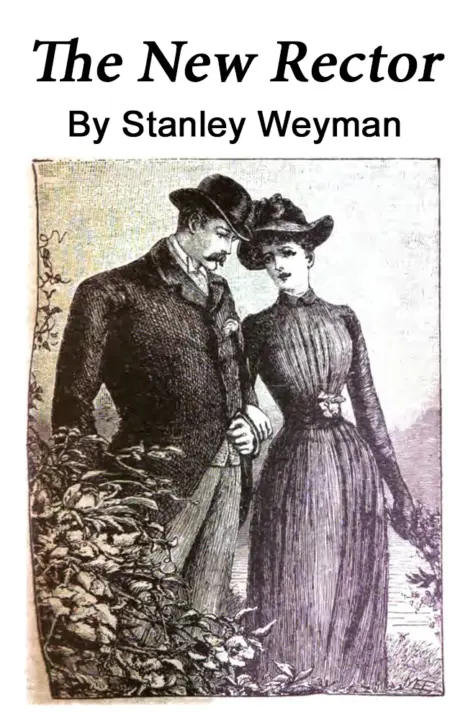
"The New Rector" by Stanley John Weyman is a historical novel written in the late 19th century. The story is set in the quaint Warwickshire town of Claversham during a time of transition following the death of its longtime rector, Mr. Williams. The narrative primarily revolves around the newly appointed rector, Reginald Lindo, as he navigates both his responsibilities and the expectations of the townsfolk, including the formidable churchwarden, Mr. Bonamy, and the lovely but reserved Kate Bonamy. At the start of the novel, we learn of the passing of Mr. Williams, which creates a buzz among the townspeople about who will succeed him. The opening chapters introduce Lindo, a young, idealistic clergyman, and his awkward encounters with the local residents, including the curious and somewhat judgmental members of the parish. As Lindo prepares to take on the role of rector, he becomes aware of the tensions surrounding him, particularly with Mr. Bonamy, who appears to hold considerable sway in the community. Additionally, Lindo's growing acquaintance with Kate Bonamy hints at deeper themes of societal expectations, personal ambition, and the complexities of human relationships within the charming yet challenging world of Claversham.
Introduction adapted from the source catalogue; source summaries may be automatically generated.
Free to read · English · 85,123 words · No account needed
MAKE TIME FOR A GOOD BOOK
On by default. Untick to stop anonymous reading totals. Each page counts after 10 seconds in view. How this works.
Anonymous counting is on unless you have switched it off.
“Why, you do not mean to say,” the lady answered in a low, awe-stricken voice, “that you think he knew anything about it, Mr. Clode?”
“At any rate,” the curate replied firmly, “I cannot acquit him.”
“Not acquit him!—Mr. Lindo!” she stammered.
“No, I cannot,” Clode replied, striving to express in his voice and manner his extreme conscientiousness and the gloomy sense of responsibility under which he had arrived at his decision. “I cannot get out of my head,” he continued, “Lord Dynmore’s remark that, if the circumstances aroused suspicion in my mind, they could scarcely fail to apprise Mr. Lindo, who was more nearly concerned, of the truth, or something like the truth. Mind!” the curate added with a great show of candor, “I do not say, Mrs. Hammond, that Mr. Lindo knew. I only say I think he suspected.”
“Well, that is very good of you!” Mrs. Hammond exclaimed, displaying a spirit and a power of sarcasm he had not expected. “I dare say Mr. Lindo will be much obliged to you for that! But, for my part, I think it is a distinction without a difference!”
“Oh, no!” the curate protested hastily.
“Well, I think it is, at any rate!” retorted the lady, very red in the face, and with all the bugles in her bonnet shaking. “However, everyone to his opinion. But that is not mine, and I am sorry it is yours. Why, you are his curate!” she added in a tone of indignant wonder, which brought the blood to Clode’s cheeks, and made him bite his lip in impotent anger. “You ought to be the last person to doubt him!”
“Can I help it if I do?” he answered sullenly.
“Mother,” said Laura quickly, intercepting the angry reply which was on Mrs. Hammond’s lips, “if Mr. Clode thinks in that way, can he be blamed for telling us? We are not the town. What he has told us he has told us in confidence.”
“A confidence Mrs. Hammond has made me bitterly regret,” he rejoined, taking skilful advantage of her intervention.
Mrs. Hammond grunted. She was still angry, but she felt herself baffled. “Well, I do not understand these things, perhaps,” she said. “But I do not agree with Mr. Clode, and I am not going to pretend to.”
“I am sure he does not wish you to,” said Laura sweetly. “Only you did not quite understand, I think, that he was only giving us his private opinion. Of course he would not tell it to the town.”
Your reading position is saved on this browser. Take it to another device with a library code. Reading pages adapt to text, rather than matching a printed edition.
Stanley John Weyman

Stanley John Weyman
Stanley John Weyman
Stanley John Weyman
BEHIND THE BOOK
This eBook is for the use of anyone anywhere in the United States and most other parts of the world at no cost and with almost no restrictions whatsoever. You may copy it, give it away or re-use it under the terms of the Project Gutenberg License included with this eBook or online at www.gutenberg.org. If you are not located in the United States, you will have to check the laws of the country where you are located before using this eBook. Read the source licence.
The original source file, including credits and licence, is retained by this library. Request an original-format copy at no charge. Please include the book title and Project Gutenberg identifier #39215.
KEEP YOUR CURIOSITY GOING
Cécile Tormay

Moritz Busch
Coulson Kernahan
John L. Ransom

Maurice Baring
Frances Wright