THE CLASSIC COLLECTION✦The Story of Francis CluddeCLASSIC FREE BOOKS
The Story of Francis Cludde
Stanley John Weyman
THE CLASSIC COLLECTION · 1891
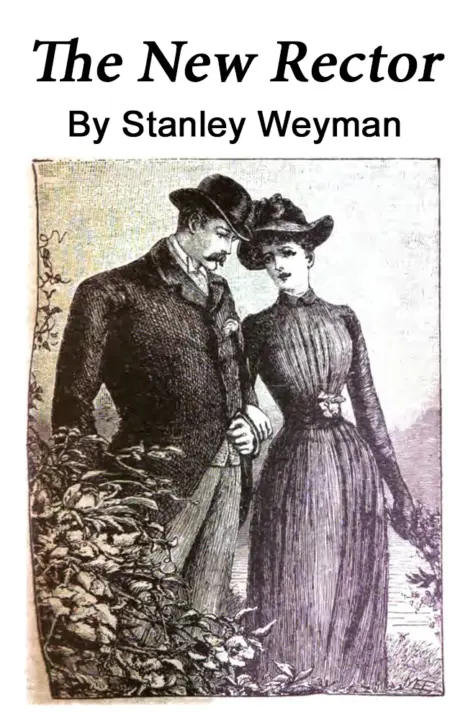
"The New Rector" by Stanley John Weyman is a historical novel written in the late 19th century. The story is set in the quaint Warwickshire town of Claversham during a time of transition following the death of its longtime rector, Mr. Williams. The narrative primarily revolves around the newly appointed rector, Reginald Lindo, as he navigates both his responsibilities and the expectations of the townsfolk, including the formidable churchwarden, Mr. Bonamy, and the lovely but reserved Kate Bonamy. At the start of the novel, we learn of the passing of Mr. Williams, which creates a buzz among the townspeople about who will succeed him. The opening chapters introduce Lindo, a young, idealistic clergyman, and his awkward encounters with the local residents, including the curious and somewhat judgmental members of the parish. As Lindo prepares to take on the role of rector, he becomes aware of the tensions surrounding him, particularly with Mr. Bonamy, who appears to hold considerable sway in the community. Additionally, Lindo's growing acquaintance with Kate Bonamy hints at deeper themes of societal expectations, personal ambition, and the complexities of human relationships within the charming yet challenging world of Claversham.
Introduction adapted from the source catalogue; source summaries may be automatically generated.
Free to read · English · 85,123 words · No account needed
MAKE TIME FOR A GOOD BOOK
On by default. Untick to stop anonymous reading totals. Each page counts after 10 seconds in view. How this works.
Anonymous counting is on unless you have switched it off.
“But what are you doing here?” retorted the other, storming down the interruption which the archdeacon would have effected. “That is what I want to know. Who made you rector of Claversham?”
“The bishop, my lord,” answered the young man sternly.
“Ay, but on whose presentation?”
“On yours.”
“On mine?”
“Most assuredly,” replied the clergyman doggedly—“as the archdeacon here, who indicted me, can bear witness.”
“It is false!” Lord Dynmore almost screamed. He turned to the panic-stricken listeners, who had instinctively grouped themselves round the two, and appealed to them. “I presented a man nearly thrice his age, do you hear!—a man of sixty. As for this—this Reginald Lindo, I never heard of him in my life! Never! If he had letters of presentation, I did not give them to him.”
The young clergyman’s eyes flashed, and his face grew hard as a stone. He guessed already the misfortune which had happened to him, and his heart was sore, as well as full of wrath. But in his pride he betrayed only the anger. “Lord Dynmore,” he said fiercely, “you will have to answer for these insinuations. If there has been any error, the fault has not lain with me!”
“An error, you call it, do you? Let me——”
“Oh, Lord Dynmore!” Mrs. Hammond gasped.
“One moment, Lord Dynmore, if you please.” This from the archdeacon; and he pressed his interruption, placing himself between the two men, and almost laying his hands on the excited peer. “If there has been a mistake,” he urged, “a few words will make it clear. I fully believe—nay, I feel sure, that my friend here is not in fault, whoever is.”
“Ask your questions,” grunted my lord, breathing hard, and eyeing the young clergyman as a terrier eyes the taller dog it means to attack. “He will not answer them, trust me!”
“I think he will,” replied the archdeacon with decision. His esprit de corps was rising. The earl’s rude insistance disgusted him. He remarked, his eyes wandering for a moment while he considered how he should frame his question, that another person, Mr. Clode, had silently entered the room, and was listening with a darkly thoughtful face. It occurred to the archdeacon to suggest that the ladies should withdraw, but then again it seemed fair that, as they had heard the charges, they should hear what answer the rector had to make; and he proceeded. “First, Lord Dynmore,” he said, “I must ask you whom you intended to present.”
“My old friend, Reginald Lindo, of course.”
“His address, please,” continued the archdeacon rather curtly.
Your reading position is saved on this browser. Take it to another device with a library code. Reading pages adapt to text, rather than matching a printed edition.
Stanley John Weyman
Stanley John Weyman
Stanley John Weyman
Stanley John Weyman
BEHIND THE BOOK
This eBook is for the use of anyone anywhere in the United States and most other parts of the world at no cost and with almost no restrictions whatsoever. You may copy it, give it away or re-use it under the terms of the Project Gutenberg License included with this eBook or online at www.gutenberg.org. If you are not located in the United States, you will have to check the laws of the country where you are located before using this eBook. Read the source licence.
The original source file, including credits and licence, is retained by this library. Request an original-format copy at no charge. Please include the book title and Project Gutenberg identifier #39215.
KEEP YOUR CURIOSITY GOING
Cécile Tormay

Moritz Busch
Coulson Kernahan
John L. Ransom

Maurice Baring
Frances Wright