THE CLASSIC COLLECTION✦The Story of Francis CluddeCLASSIC FREE BOOKS
The Story of Francis Cludde
Stanley John Weyman
THE CLASSIC COLLECTION · 1891
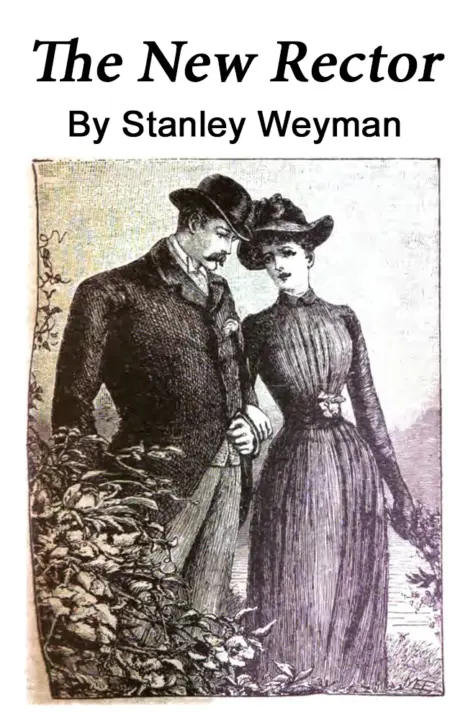
"The New Rector" by Stanley John Weyman is a historical novel written in the late 19th century. The story is set in the quaint Warwickshire town of Claversham during a time of transition following the death of its longtime rector, Mr. Williams. The narrative primarily revolves around the newly appointed rector, Reginald Lindo, as he navigates both his responsibilities and the expectations of the townsfolk, including the formidable churchwarden, Mr. Bonamy, and the lovely but reserved Kate Bonamy. At the start of the novel, we learn of the passing of Mr. Williams, which creates a buzz among the townspeople about who will succeed him. The opening chapters introduce Lindo, a young, idealistic clergyman, and his awkward encounters with the local residents, including the curious and somewhat judgmental members of the parish. As Lindo prepares to take on the role of rector, he becomes aware of the tensions surrounding him, particularly with Mr. Bonamy, who appears to hold considerable sway in the community. Additionally, Lindo's growing acquaintance with Kate Bonamy hints at deeper themes of societal expectations, personal ambition, and the complexities of human relationships within the charming yet challenging world of Claversham.
Introduction adapted from the source catalogue; source summaries may be automatically generated.
Free to read · English · 85,123 words · No account needed
MAKE TIME FOR A GOOD BOOK
On by default. Untick to stop anonymous reading totals. Each page counts after 10 seconds in view. How this works.
Anonymous counting is on unless you have switched it off.
Jack whistled. “A writ!” he exclaimed. “What about?”
“About the sheep in the churchyard. Mr. Lindo turned them out,” Kate explained hurriedly, as if she wished to hear no more upon the subject.
But Jack was curious; and gradually he drew from them the story of the rector’s iniquities, and acquired, in the course of it, a pretty correct notion of the state of things in the parish. He whistled still more seriously then. “It seems to me that the old man has been putting his foot in it here,” he said.
“He has,” Daintry answered solemnly, nodding any number of times. “No
end!”
“And yet he is the very best of fellows,” Jack replied, rubbing his short black hair in honest vexation. “Don’t you like him?”
“I did,” said Daintry, speaking for both of them.
“And you do not now?”
The child reddened, and rubbed herself shyly against Kate’s chair. “Well, not so much!” she murmured, Jack’s eyes upon her. “He is too big a swell for us.”
“Oh, that is it, is it?” Jack said contemptuously.
He pressed it no farther, and appeared to have forgotten the subject; but presently, when he was alone with Kate, he recurred to it. “So, Lindo has been putting on airs, has he?” he observed. “Yet, I thought when Daintry wrote to me, after you left us, that she seemed to like him.”
“He was very kind and pleasant to us on our journey,” Kate answered, compelling herself to speak with indifference. “But—well, you know, my father and he have not got on well; so, of course, we have seen little of him lately.”
“Oh, that is all, is it?” Jack answered, moving restlessly in his
chair.
“That is all,” said Kate quietly.
This seemed to satisfy Jack, for at tea he surprised her—and, for Daintry, she fairly leapt in her seat—by calmly announcing that he proposed to call on the rector in the course of the evening. “You have no objection, sir, I hope,” he said, coolly looking across at his host. “He has been a friend of mine for years, and though I hear you and he are at odds at present, it seems to me that that need not make mischief between us.”
“N—no,” said Mr. Bonamy slowly. “I do not see why it should.” Nevertheless, he was greatly astonished. He had heard that Jack and Mr. Lindo were acquainted, but had thought nothing of it. It is possible that the discovery of this friendship existing between the two led him to take new views of the rector. He continued, “I dare say in private he is not an objectionable man.”
Your reading position is saved on this browser. Take it to another device with a library code. Reading pages adapt to text, rather than matching a printed edition.
Stanley John Weyman

Stanley John Weyman
Stanley John Weyman
Stanley John Weyman
BEHIND THE BOOK
This eBook is for the use of anyone anywhere in the United States and most other parts of the world at no cost and with almost no restrictions whatsoever. You may copy it, give it away or re-use it under the terms of the Project Gutenberg License included with this eBook or online at www.gutenberg.org. If you are not located in the United States, you will have to check the laws of the country where you are located before using this eBook. Read the source licence.
The original source file, including credits and licence, is retained by this library. Request an original-format copy at no charge. Please include the book title and Project Gutenberg identifier #39215.
KEEP YOUR CURIOSITY GOING
Cécile Tormay

Moritz Busch
Coulson Kernahan
John L. Ransom

Maurice Baring
Frances Wright