
Letters to a Friend, Written to Mrs. Ezra S. Carr, 1866-1879
John Muir
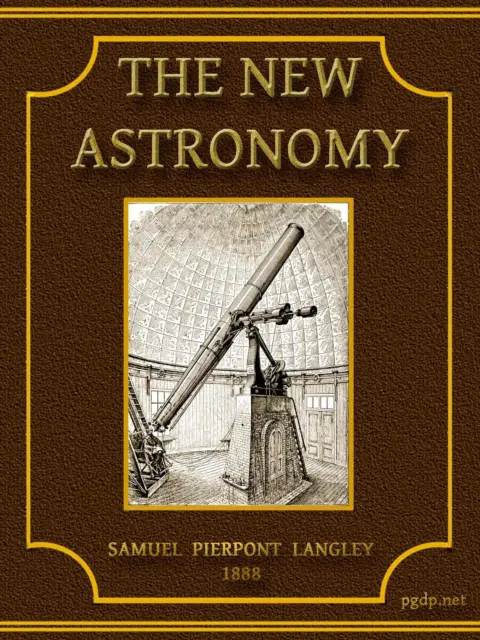
THE CLASSIC COLLECTION · 1884
"The New Astronomy" by S. P. Langley is a scientific publication written in the late 19th century. The work explores the evolving field of astronomy, particularly the new discoveries around solar and celestial physics, which extend our understanding of the sun, stars, and their effects on Earth. Langley aims to engage educated readers with this emerging scientific landscape, rather than solely addressing professional astronomers. The opening of the book sets a broad context for the development of astronomy, contrasting ancient practices, like those observed at Stonehenge, with modern techniques used in observatories such as Greenwich and Washington. Langley introduces the concept of "the New Astronomy" - a branch focused not only on measurements of celestial bodies but also on their physical nature and implications for life on Earth. He discusses early sunspot observations and hints at the complex dynamics of the sun's surface, setting the stage for deeper explorations of solar features like the corona and chromosphere in subsequent chapters.
Introduction adapted from the source catalogue; source summaries may be automatically generated.
Free to read · English · 60,787 words · No account needed
MAKE TIME FOR A GOOD BOOK
On by default. Untick to stop anonymous reading totals. Each page counts after 10 seconds in view. How this works.
Anonymous counting is on unless you have switched it off.
Hengist and Horsa, 1.
(See Britain.)
Hercules, 238.
Herschel, Sir John:
sun-spots, 12–14;
electric storms, 88;
comet’s tail, 216.
Herschel, Sir William:
avoidance of light, 18;
prices, 79;
sun-spots (q. v.), 129.
Herschel’s Outlines, 11.
Holden, Professor, 124.
Honeycomb Structure, 30.
Huggins’s Experiment, 234, 235.
Humanity, deified, 172.
Human Race, 250.
Humboldt, 195.
Humming-bird, 70.
Hunt, Professor, 136, 219.
Hydrogen, 68, 99, 237.
Ibrahim, King, story, 194, 195.
Ice:
melted, 95, 96;
never melted, 163, 164.
Imbrian Sea, 151.
Insects, 224, 250.
(See Ants, Bees.)
Iron:
melting, 19, 107;
appearance of cold, 25;
in sun, 28;
in man, 221;
in stars, 236, 237.
(See Steel.)
Ironstone, 188.
Ivy, 115.
Janssen’s Observations, 61.
Jevons, Professor, 80.
Joseph in Egypt, 90.
Jumping, 241, 242.
Jupiter, 79, 118, 124, 127–129, 156, 185, 229.
Kensington Museum, 221.
Kepler, on Comets, 219.
Kernels, 220.
Kew, 88.
Kirchoff’s Researches, 12.
Krakatao, 181, 185, 186.
La Harpe, quoted, 207.
Landscape, 169.
Langley, Prof. S. P.:
drawings, 15, 16, 18, 19, 21, 22, 25, 28, 30;
note-book, 24;
expedition, 180;
study of Reflection, 216.
(See Allegheny, Pittsburg.)
Latent Power, 220.
Laws of Nature, 250, 251.
Leaf-like Appearances, 23.
(See Willow.)
Lenses, 102, 103;
Galileo’s, 123.
Leo, 195, 197.
Liais’s Drawing, 48, 50.
Lick Glass, 123.
Light:
development, 13;
day and night, 35;
white (q. v.), 48;
mental (see Eye), 71;
from balloon, 179;
transmitted, 227.
(See Sun.)
Lightning, 75, 76, 242, 244, 245.
(See Electric.)
Lily, 73.
(See Flowers.)
Limited Express Train, 5.
Loaf-sugar, experiment, 188.
Lockyer’s Land, 130.
Lockyer’s Solar Physics, 59, 61, 236, 238.
Lombardy, 151.
London, 111.
Lost Pleiad (q. v.), 207.
Louis XV., 42.
Louis XVI., 221.
Lunar Alps (q. v.), 148, 149.
(See Moon.)
Lunar Apennines (q. v.), 153.
Lunar Shadows, 36, 37, 39, 56.
Lyrids, 196, 200.
Macartney’s Lens, 103.
Maelstrom, 27.
Magic Lantern, simile, 220.
Magnesium, 236, 237.
Magnetic Needle, 81, 82, 84, 85, 87, 89.
Mammoth Cave, 40.
Man, chemistry of, 221, 233.
(See Humanity.)
Manhattan Island, 111.
Mare Crisium, 143.
Mare Serenitatis, 143, 144.
Mars, 118, 128–132, 148.
Mason’s Publication, 137.
Matterhorn, 148, 167.
Mayflower, 5.
Meadows, 172.
Mecca, 175.
Medusa, 228.
Memnon, 234.
Mercator, 163, 165.
Mercury, 3, 118, 136, 229.
Messier, anecdote, 207.
Metals, melted, 103.
(See Iron.)
Metaphysics, 70, 71.
Meteorites:
around Saturn, 124;
recent, 187;
lawsuit, 187, 188;
analyzed, 191, 192;
in Iowa, 199, 200;
swarm, 200;
cracking, 211.
Meteors, 98, 175–198;
(1868), 189.
(See Falling, Shooting.)
Meunier’s Investigations, 192.
Mexican Gulf, 38.
Microcosm, 222.
Micromegas, 223.
Microscope, 224.
Middle Ages, 91, 175.
Milky Way, 224, 225.
Milton, quoted, 14, 38.
Mind-causation, 70, 71.
Mirror, 102, 107.
Mississippi, 134.
Mites, 224.
Mizar, 207.
M’Leod’s Drawing, 44.
Monochromatic Light (q. v.), 63.
Montaigne of Limoges, 207.
Mont Blanc, 156.
Monte Rosa, 167.
Moon:
practical observations, 2;
newly studied, 3;
distance, 4–6;
size, 5, 6, 140, 156;
shadows (q. v.), 36, 125;
in sun-eclipse, 41;
planetary relations, 117–174;
and Jupiter, 127;
photograph, 137;
full, 141, 144, 147;
Man in the, 143;
mountains, 144;
craters, 147, 148;
temperature, 159;
airless, 160;
landscape (q. v.), 169;
age, 171;
broken up, 192;
like comet, 215.
(See Lunar.)
Moslem Traditions, 175, 194.
(See Arab.)
Moss, 160.
Mouchot’s Engravings, 109, 112.
Mountain Sickness, 50, 53.
Naples, 155, 157.
(See Vesuvius.)
Napoleon, 80, 134.
Nasmyth’s Researches, 11, 12, 14, 24, 25, 140.
Nativity of Jesus, 229.
Nature’s Laws (q. v.), 176.
Nebulæ, 247.
Needle, 228.
(See Cambric.)
Neptune, 121.
Nerves, none in camera, 47.
Nerve Transmission, 5, 6.
New Astronomy, 4, 75, 76, 117, 121, 171, 193, 222, 224, 227, 235,
246, 248.
(See Old.)
Newcomb, Professor, 55.
Newspapers, printed by the sun, 74.
Newton, Professor, 191, 195–197.
Newton, Sir Isaac, 136, 203, 211;
on Comets, 215, 219.
Nightmare, 67.
Northern Crown, 208, 211, 230.
Novelists, theme for, 193, 228.
Nucleus, 11, 19, 216.
(See Comets, Corona.)
Oceans, 179.
Old Astronomy, 199, 203, 233.
(See New.)
Organisms in sun (q. v.), 13.
Orion, 238, 239, 247.
Oxygen, 73.
Pacific Ocean, 180.
Palinurus, 243.
Parable, 224.
Paris:
Observatory, 42, 233, 247;
Exposition, 112.
Parker’s Lens, 103.
Peirce, Professor, 44.
Pennsylvania Coal, 97.
Penumbra, 11, 19, 20.
Perpignan, France, 42.
Perseus, 196.
Persian Rugs, 70.
Philadelphia, 88.
Philosopher’s Stone, 92.
Phœbus, 34.
Phosphorus, 221.
Photographic Plate, 71.
Photography, 9, 19, 128, 236, 237, 241, 244, 247, 248;
rapid, 242.
Photometer, 56, 108.
Photometry, 230.
Photosphere, 7, 17, 64.
Pickering, Professor, 132, 227, 228, 246.
Pico Summit, 148.
Piffard, Dr. H. G., 245.
Pike’s Peak, 50, 53–57, 60.
Pilgrim Fathers, 5.
Pine-boughs, 25.
Pine-trees, 60, 72.
Pittsburg Observations, 18, 19.
(See Allegheny, Langley.)
Planetoids, 196, 197, 229.
Your reading position is saved on this browser. Take it to another device with a library code. Reading pages adapt to text, rather than matching a printed edition.
BEHIND THE BOOK
This eBook is for the use of anyone anywhere in the United States and most other parts of the world at no cost and with almost no restrictions whatsoever. You may copy it, give it away or re-use it under the terms of the Project Gutenberg License included with this eBook or online at www.gutenberg.org. If you are not located in the United States, you will have to check the laws of the country where you are located before using this eBook. Read the source licence.
The original source file, including credits and licence, is retained by this library. Request an original-format copy at no charge. Please include the book title and Project Gutenberg identifier #64577.
KEEP YOUR CURIOSITY GOING
John Muir

Asa Gray
Asa Gray

Florence Nightingale
Elizabeth Robins Pennell
Denison Olmsted