THE CLASSIC COLLECTION✦Among the campsCLASSIC FREE BOOKS
Among the camps
Thomas Nelson Page
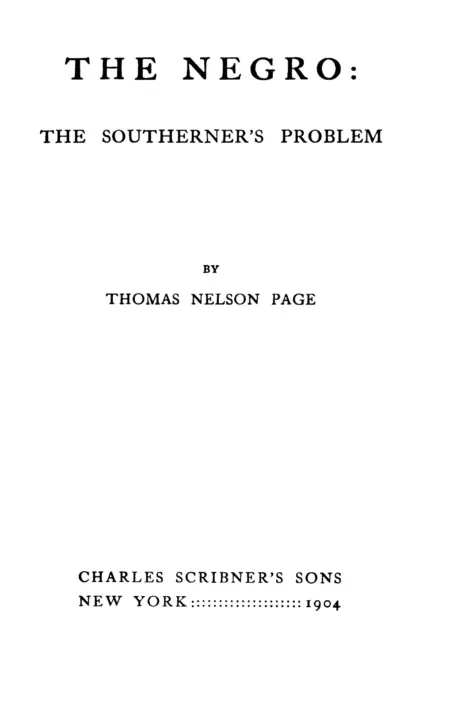
THE CLASSIC COLLECTION · 1904
"The Negro: The Southerner's Problem" by Thomas Nelson Page is a collection of essays written in the early 20th century that addresses the extensive and complex issues surrounding race relations in the post-Civil War American South. Through his writings, Page attempts to explore the historical context of the racial divide, focusing particularly on the consequences of emancipation and the ongoing challenges faced by both black and white communities in the South. The essays reflect Page's views on the inherent complexities and sensitivities involving the narrative of race in America, drawing from his experiences and observations. At the start of the text, the author lays the groundwork for a thorough examination of "The Negro Question," which he identifies as a crucial and long-standing dilemma most notably affecting Southern society. He notes that this topic has been a source of contention and misunderstanding, particularly between Southern whites who live daily with its implications and Northern whites who hold often radical views shaped by sentimental narratives. Page aims to approach this subject with candor, highlighting the historical relationships between races, the impact of slavery, and the failures and successes in attempts at integration and education for the freedmen. Through this introduction, he expresses the hope that his writings might contribute to a more informed and open dialogue about these pressing issues.
Introduction adapted from the source catalogue; source summaries may be automatically generated.
Free to read · English · 64,234 words · No account needed
MAKE TIME FOR A GOOD BOOK
On by default. Untick to stop anonymous reading totals. Each page counts after 10 seconds in view. How this works.
Anonymous counting is on unless you have switched it off.
“The illiteracy of the native white population of the Southern States ranges from 8.6 per cent. in Florida, 8 per cent. in Mississippi, and 6.1 per cent. in Texas, to 17.3 per cent. in Louisiana, and 19.5 per cent. in North Carolina, as contrasted with 0.8 per cent. in Nebraska, 1.3 per cent. in Kansas, 2.1 per cent. in Illinois, 1.2 per cent. in New York, and 0.8 per cent. in Massachusetts. A far juster comparison, however, is that which indicates the contrast, not between the South and the rest of the country in 1900, but between the South of 1880 and the South of to-day.’
TABLE SHOWING THE RANK OF EACH STATE IN PERCENTAGE OF ILLITERACY OF THE NATIVE WHITE POPULATION TEN YEARS OF AGE AND OVER:
1 Washington 0.5
2 South Dakota 0.6
3 Montana 0.6
4 Nevada 0.6
5 Wyoming 0.7
6 Massachusetts 0.8
7 Minnesota 0.8
8 Nebraska 0.8
9 Connecticut 0.8
10 Oregon 0.8
11 Utah 0.8
12 Dist. of Columbia 0.8
13 North Dakota 0.9
14 Idaho 0.9
15 California 1.0
16 New York 1.2
17 Iowa 1.2
18 Wisconsin 1.3
19 Kansas 1.3
20 New Hampshire 1.5
21 Michigan 1.7
22 New Jersey 1.7
23 Rhode Island 1.8
24 Illinois 2.1
25 Pennsylvania 2.3
26 Ohio 2.4
27 Maine 2.4
28 Oklahoma 2.5
29 Colorado 2.7
30 Vermont 2.9
31 Indiana 3.6
32 Maryland 4.1
33 Missouri 4.8
34 Delaware 5.6
35 Texas 6.1
36 Arizona 6.2
37 Mississippi 8.0
38 Florida 8.6
39 West Virginia 10.0
40 Virginia 11.1
41 Arkansas 11.6
42 Georgia 11.9
43 Kentucky 12.8
44 South Carolina 13.6
45 Indian Territory 14.0
46 Tennessee 14.2
47 Alabama 14.8
48 Louisiana 17.3
49 North Carolina 19.5
50 New Mexico 29.4
POPULATION AT LEAST TEN YEARS OF AGE AND NUMBER AND PER CENT. ILLITERATE FOR THE NEGRO AND WHITE RACES: 1900 AND 1890.
———————————————————+————————————————————————————————————————————————————— | POPULATION AT LEAST TEN YEARS OF AGE. +——————————+——————————+———————————————————+——————————— RACE. | | | Number Illiterate.| Per Cent. | | | |Illiterate. | 1900 | 1890 +—————————+—————————+—————+————— | | | 1900 | 1890 |1900 |1890 ———————————————————+——————————+——————————+—————————+—————————+—————+————— Continental U. S.: | | | | | | Negro population. | 6,415,581| 5,328,972|2,853,194|3,042,668| 44.5| 57.1 White population. |51,250,918|41,931,074|3,200,746|3,212,574| 6.2| 7.7 ———————————————————+——————————+——————————+—————————+—————————+—————+————— South Atlantic and | | | | | | South Central | | | | | | divisions: | | | | | | Negro population.| 5,664,975| 4,751,763|2,717,606|2,883,216| 48.0| 60.7 White population.|12,020,539| 9,456,368|1,401,273|1,412,983| 11.7| 14.9 ———————————————————+——————————+——————————+—————————+—————————+—————+—————
“There are 352 counties in the United States in which one-half the Negro population at least 10 years of age was illiterate in 1900. With the exception of New Madrid County, Mo., all these counties are in the South.
“If the educational facilities of the country should remain up to their present standards, but not improve, and should impart the elements of education to as large a proportion of the rising generation as they have done to those between 10 and 14 years in 1900, then, at the end of the generation, illiteracy among the Negroes in the country will have sunk from 44.5 to 30.1 per cent.; that is, nearly one-third of it will have disappeared. At the same time, illiteracy among the whites in the country will have sunk, immigration aside, from 6.2 to 3.5 per cent.; that is, about three-sevenths of the illiteracy among the whites will have disappeared.
Your reading position is saved on this browser. Take it to another device with a library code. Reading pages adapt to text, rather than matching a printed edition.
Thomas Nelson Page
Thomas Nelson Page
Thomas Nelson Page
Thomas Nelson Page
BEHIND THE BOOK
This eBook is for the use of anyone anywhere in the United States and most other parts of the world at no cost and with almost no restrictions whatsoever. You may copy it, give it away or re-use it under the terms of the Project Gutenberg License included with this eBook or online at www.gutenberg.org. If you are not located in the United States, you will have to check the laws of the country where you are located before using this eBook. Read the source licence.
The original source file, including credits and licence, is retained by this library. Request an original-format copy at no charge. Please include the book title and Project Gutenberg identifier #70834.
KEEP YOUR CURIOSITY GOING

David Patterson (Spirit) Hatch

David Patterson (Spirit) Hatch

David Patterson (Spirit) Hatch
Cécile Tormay

Moritz Busch
John L. Ransom