THE CLASSIC COLLECTION✦An outlaw’s diary: the CommuneCLASSIC FREE BOOKS
An outlaw’s diary: the Commune
Cécile Tormay
THE CLASSIC COLLECTION · 1888
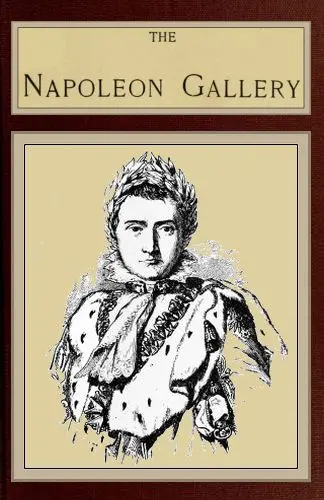
"The Napoleon Gallery" by Etienne Achille Réveil is a historical account enriched with illustrations, likely published in the late 19th century. This work showcases the life and times of Napoleon Bonaparte through various interpretations of key events and battles, showcasing both the grandeur and the tragedies of his military career. Réveil's narration likely focuses on the pivotal moments that defined Napoleon's rise and fall, highlighting his complex character and the historical context of his actions. The opening of this detailed account sets the stage with dramatic events from Napoleon's early military career, beginning with his actions during the insurrection in Paris on October 4, 1795. It narrates how he skillfully positioned his troops to quell the uprisings and transitions to his triumphant entry into Milan in 1796, where he is greeted as a hero. The initial chapters capture a collection of vivid scenes, emphasizing Napoleon's leadership qualities and ambitious nature, as well as poignant moments reflecting on the cost of war, such as the heartfelt story of a dog mourning its fallen master. This introduction offers readers a multifaceted view of one of history's most fascinating figures, inviting them to explore further into the tensions of his military exploits and personal philosophy.
Introduction adapted from the source catalogue; source summaries may be automatically generated.
Free to read · English · 17,036 words · No account needed
MAKE TIME FOR A GOOD BOOK
On by default. Untick to stop anonymous reading totals. Each page counts after 10 seconds in view. How this works.
Anonymous counting is on unless you have switched it off.
The illustrious Pitt took means to avert the storm which menaced the British Isles. A treaty of alliance was signed by Russia and Austria, and the third coalition against France was formed. Napoleon gave orders for breaking up the camp at Boulogne; and, whilst a portion of the army commenced their march toward Strasburg, Marshal Bernadotte issued orders to occupy the fortresses of Hameln and Nienburgh, with the 19th regiment of the line. General Marunno was at the same time ordered to break up his camp at Zeist, to quit Holland and ascend the Rhine, arriving upon the Maine with the First corps of the army, to take part in any subsequent operations.--September 17, 1805.
Napoleon had crossed the Rhine with his army.
The left wing, composed of the corps under Marshal Bernadotte, and of that under General Marmont, with the Bavarian army, set out on the 1st and 2d of October for Weissenburg.
Marshal Davoust, leaving Neckarels, followed the road to Meikumlh,
Ingelfrugen, Chreilsheim, Drinkelspuhl, Frembdingen, Œttingen, and
Haarburg.
Marshal Soult advanced upon the Danube.
Ney, leaving Stuttgart, followed the road to Nattheim.
Marshal Lannes quitted Ludwisburg, and directed his march towards
Nordeingen.
On the 6th of October the army held the following positions:--
Bernadotte at Weissenburg.
Davoust at Altingen upon the Wernitz.
Soult, master of the bridge of Munster, at the gates of Donawerth.
Ney at Kossingen.
Lannes at Neresheim.
And the cavalry, under Murat, along the Danube.
The second division of that portion of the army under Marshal Soult, commanded by General Vandamme, having arrived at Donawerth on the evening of the 6th, had the honor of beginning the attack on the Austrian Army.
Napoleon exhibited to his officers and soldiers an example of indefatigable activity. On horseback, night and day, he was continually in the midst of his troops, and chiefly where he thought his presence most necessary to excite the energy of his soldiers. He did not forget that similar conduct had mainly contributed to his success in Italy; and he was wise enough to see the importance of inducing those under his command, by constantly observing their actions, to expect that he would appreciate their services, and reward them with liberality.
Ney had received orders to bear down upon Ulm. Murat advanced upon Burgau, and sought to cut off the retreat of the enemy.
The French army, since crossing the Danube, had succeeded in cutting off the communication between some parts of the enemy’s army; and Napoleon, arriving at Augsburg on the evening of the 10th of October, 1805, made preparations to destroy the remainder.
Your reading position is saved on this browser. Take it to another device with a library code. Reading pages adapt to text, rather than matching a printed edition.
BEHIND THE BOOK
This eBook is for the use of anyone anywhere in the United States and most other parts of the world at no cost and with almost no restrictions whatsoever. You may copy it, give it away or re-use it under the terms of the Project Gutenberg License included with this eBook or online at www.gutenberg.org. If you are not located in the United States, you will have to check the laws of the country where you are located before using this eBook. Read the source licence.
The original source file, including credits and licence, is retained by this library. Request an original-format copy at no charge. Please include the book title and Project Gutenberg identifier #57483.
KEEP YOUR CURIOSITY GOING
Cécile Tormay

Moritz Busch
John L. Ransom
Frances Wright
Cécile Tormay

Mabel Potter Daggett