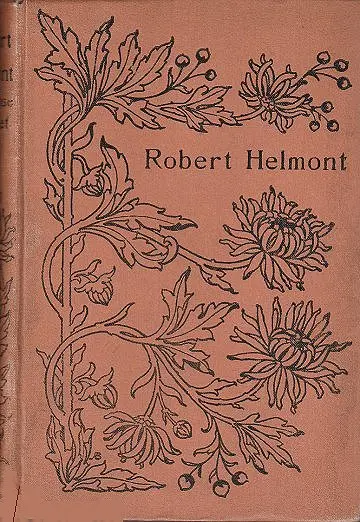
Robert Helmont: Diary of a Recluse, 1870-1871
Alphonse Daudet
THE CLASSIC COLLECTION · 1898
"The Nabob, Vol. 2 (of 2)" by Alphonse Daudet is a novel written in the late 19th century. This engaging story revolves around Bernard Jansoulet, the titular Nabob, as he navigates the complexities of Parisian society after his rise to prominence. The narrative explores themes of ambition, social status, and the interplay between personal and public life. The opening of the second volume begins on a bleak rainy day in Paris, where Felicia, a talented artist, grapples with feelings of ennui and dissatisfaction as her recent works are met with disinterest. Despite the dreary backdrop, her spirit is lifted by the arrival of Paul de Géry, with whom she shares a complicated friendship. Their interactions reflect the melancholy of artistic ambition and the quest for approval in a competitive environment. Felicia's internal struggle is juxtaposed with Jansoulet's burgeoning political career, as the narrative hints at the curiosity and envy he elicits from his peers. The excerpt sets the stage for a rich exploration of character dynamics and societal commentaries throughout the rest of the volume.
Introduction adapted from the source catalogue; source summaries may be automatically generated.
Free to read · English · 77,764 words · No account needed
MAKE TIME FOR A GOOD BOOK
On by default. Untick to stop anonymous reading totals. Each page counts after 10 seconds in view. How this works.
Anonymous counting is on unless you have switched it off.
"You are in no hurry, are you? We might walk a moment or two if you choose. It has stopped raining, it will do us good--we shall be twenty years younger."
"Yes, it's a pleasant thing," said Hemerlingue; "but I can't walk long,
my legs are heavy."
"True, your poor legs. See, there's a bench yonder. Let's go and sit down. Lean on me, old fellow."
And the Nabob, with brotherly solicitude, led him to one of the benches placed at intervals against the tombs, for the convenience of those inconsolable mourners who make the cemetery their usual resort. He arranged him comfortably, encompassed him with a protecting glance, sympathized with him in his infirmity, and, the conversation following a course very natural in such a place, they talked of their health, of the approach of old age. One was dropsical, the other subject to rushes of blood to the head. Both were taking the Jenkins Pearls,--a dangerous remedy, witness Mora's sudden taking off.
"Poor duke!" said Jansoulet.
"A great loss to the country," rejoined the banker, in a grief-stricken
tone.
Whereupon the Nabob ingenuously exclaimed:
"To me, above all others to me, for if he had lived--Ah! you have all the luck, you have all the luck! And then, you know, you are so strong, so very strong," he added, fearing that he had wounded him.
The baron looked at him and winked, so drolly that his little black lashes disappeared in his yellow flesh.
"No," he said, "I'm not the strong one. It's Marie!"
"Marie?"
"Yes, the baroness. At the time of her baptism she dropped her old name, Yumina, for Marie. She's a real woman. She knows more about the bank than I do, and about Paris and business generally. She manages everything in the concern."
"You are very fortunate," sighed Jansoulet.
His melancholy was most eloquent touching Mademoiselle Afchin's deficiencies. After a pause the baron continued:
"Marie has a bitter grudge against you, you know. She won't like it when she knows that we have been talking together."
He contracted his heavy eyebrows as if he regretted the reconciliation at the thought of the conjugal scene it would bring upon him.
"But I have never done anything to her," stammered Jansoulet.
"Ah! but you haven't been very polite to her, you know. Think of the insult put upon her at the time of our wedding-call. Your wife sending word to us that she didn't receive former slaves! As if our friendship should not have been stronger than any prejudice. Women don't forget such things."
"But I had nothing to do with it, old fellow. You know how proud those
Afchins are."
Your reading position is saved on this browser. Take it to another device with a library code. Reading pages adapt to text, rather than matching a printed edition.
Alphonse Daudet
Alphonse Daudet
Alphonse Daudet
Alphonse Daudet
BEHIND THE BOOK
This eBook is for the use of anyone anywhere in the United States and most other parts of the world at no cost and with almost no restrictions whatsoever. You may copy it, give it away or re-use it under the terms of the Project Gutenberg License included with this eBook or online at www.gutenberg.org. If you are not located in the United States, you will have to check the laws of the country where you are located before using this eBook. Read the source licence.
The original source file, including credits and licence, is retained by this library. Request an original-format copy at no charge. Please include the book title and Project Gutenberg identifier #21329.
KEEP YOUR CURIOSITY GOING
Coulson Kernahan

Maurice Baring
Frances Wright
Cécile Tormay

Frederic Jesup Stimson

W. H. P. (William Henry Pope) Jarvis