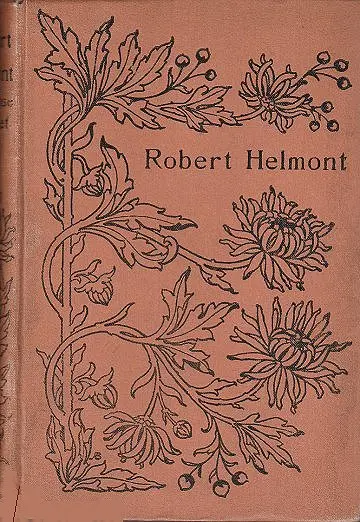
Robert Helmont: Diary of a Recluse, 1870-1871
Alphonse Daudet
THE CLASSIC COLLECTION · 1898
"The Nabob, Vol. 2 (of 2)" by Alphonse Daudet is a novel written in the late 19th century. This engaging story revolves around Bernard Jansoulet, the titular Nabob, as he navigates the complexities of Parisian society after his rise to prominence. The narrative explores themes of ambition, social status, and the interplay between personal and public life. The opening of the second volume begins on a bleak rainy day in Paris, where Felicia, a talented artist, grapples with feelings of ennui and dissatisfaction as her recent works are met with disinterest. Despite the dreary backdrop, her spirit is lifted by the arrival of Paul de Géry, with whom she shares a complicated friendship. Their interactions reflect the melancholy of artistic ambition and the quest for approval in a competitive environment. Felicia's internal struggle is juxtaposed with Jansoulet's burgeoning political career, as the narrative hints at the curiosity and envy he elicits from his peers. The excerpt sets the stage for a rich exploration of character dynamics and societal commentaries throughout the rest of the volume.
Introduction adapted from the source catalogue; source summaries may be automatically generated.
Free to read · English · 77,764 words · No account needed
MAKE TIME FOR A GOOD BOOK
On by default. Untick to stop anonymous reading totals. Each page counts after 10 seconds in view. How this works.
Anonymous counting is on unless you have switched it off.
Jenkins was interrupted by the entrance of the usher, who glided softly into the room on tiptoe, like a dancing-master, and handed a letter and a card to the minister who was still shivering in front of the fire. When he saw that envelope, of a satiny shade of gray, and of peculiar shape, the Irishman involuntarily started, while the duke, having opened his letter and glanced over it, rose to his feet full of animation, on his cheeks the faint flush of factitious health which all the heat from the fire had failed to bring to them.
"My dear Doctor, you must at any cost--"
The usher was standing near, waiting.
"What is it?--Oh! yes, this card. Show him into the gallery, I will be
there in a moment."
The Duc de Mora's gallery, which was open to visitors twice a week, was to him a sort of neutral territory, a public place where he could see anybody on earth without binding himself to anything or compromising himself. Then, when the usher had left the room:
"Jenkins, my good friend, you have already performed miracles for me. I ask you to perform another. Double my dose of the pearls, think up something, whatever you choose. But I must be in condition Sunday. You understand, in perfect condition."
And his hot, feverish fingers closed upon the little note he held with a
shudder of longing.
"Beware, Monsieur le Duc," said Jenkins, very pale, his lips pressed tightly together, "I have no desire to alarm you beyond measure concerning your weak state, but it is my duty--"
Mora smiled, a charming, mischievous smile.
"Your duty and my pleasure are two, my good fellow. Let me burn my life at both ends if it amuses me. I have never had such a fine opportunity as I have now."
He started.
"The duchess!"
A door under the hangings had opened, giving passage to a dishevelled little head of fair hair, like a mass of vapor amid the laces and furbelows of a royal deshabille.
"What is this I hear? You haven't gone out? Pray scold him, Doctor. Isn't he foolish to listen to his own fears so much? Just look at him. He looks in superb health."
"There! You see," said the duke, with a laugh, to the Irishman. "Aren't
you coming in, Duchess?"
"No, I am going to take you away, on the contrary. My uncle d'Estaing has sent me a cage filled with birds from the Indies. I want to show them to you. Marvels of all colors, with little eyes like black pearls. And so cold, so cold, almost as sensitive to cold as you are."
Your reading position is saved on this browser. Take it to another device with a library code. Reading pages adapt to text, rather than matching a printed edition.
Alphonse Daudet
Alphonse Daudet
Alphonse Daudet
Alphonse Daudet
BEHIND THE BOOK
This eBook is for the use of anyone anywhere in the United States and most other parts of the world at no cost and with almost no restrictions whatsoever. You may copy it, give it away or re-use it under the terms of the Project Gutenberg License included with this eBook or online at www.gutenberg.org. If you are not located in the United States, you will have to check the laws of the country where you are located before using this eBook. Read the source licence.
The original source file, including credits and licence, is retained by this library. Request an original-format copy at no charge. Please include the book title and Project Gutenberg identifier #21329.
KEEP YOUR CURIOSITY GOING
Coulson Kernahan

Maurice Baring
Frances Wright
Cécile Tormay

Frederic Jesup Stimson

W. H. P. (William Henry Pope) Jarvis