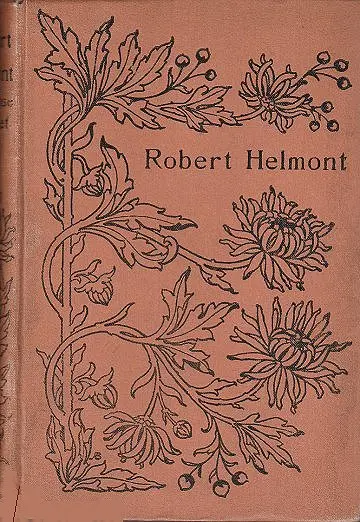
Robert Helmont: Diary of a Recluse, 1870-1871
Alphonse Daudet
THE CLASSIC COLLECTION · 1898
"The Nabob, Vol. 2 (of 2)" by Alphonse Daudet is a novel written in the late 19th century. This engaging story revolves around Bernard Jansoulet, the titular Nabob, as he navigates the complexities of Parisian society after his rise to prominence. The narrative explores themes of ambition, social status, and the interplay between personal and public life. The opening of the second volume begins on a bleak rainy day in Paris, where Felicia, a talented artist, grapples with feelings of ennui and dissatisfaction as her recent works are met with disinterest. Despite the dreary backdrop, her spirit is lifted by the arrival of Paul de Géry, with whom she shares a complicated friendship. Their interactions reflect the melancholy of artistic ambition and the quest for approval in a competitive environment. Felicia's internal struggle is juxtaposed with Jansoulet's burgeoning political career, as the narrative hints at the curiosity and envy he elicits from his peers. The excerpt sets the stage for a rich exploration of character dynamics and societal commentaries throughout the rest of the volume.
Introduction adapted from the source catalogue; source summaries may be automatically generated.
Free to read · English · 77,764 words · No account needed
MAKE TIME FOR A GOOD BOOK
On by default. Untick to stop anonymous reading totals. Each page counts after 10 seconds in view. How this works.
Anonymous counting is on unless you have switched it off.
"Nothing--no, nothing, I promise you. Only the thought that I cannot share in your joys, your triumphs. But you know that I love you, you do not doubt your mother, do you? I have never passed a day without thinking of you. Do you do as much; keep a place in your heart for me. And now kiss me, and let me go at once. I have delayed too long."
A moment more and she will not have strength to do what she still has to do. She rushes toward the door.
"I say no, you shall not go. I have a feeling that some extraordinary thing is taking place in your life that you don't wish to tell me. You are in great sorrow, I am sure of it. That man has done some shameful thing to you."
"No, no; let me go, let me go."
But on the contrary, he holds her, holds her fast.
"Come, what is the matter? Tell me, tell me--"
Then, under his breath, in a low, loving voice, like a kiss:
"He has left you, has he not?"
The unhappy creature shudders, struggles.
"Don't ask me any questions. I will not tell you anything. Adieu!"
And he rejoins, straining her to his heart:
"What can you tell me that I do not know already, my poor mother? Didn't you understand why I left his house six months ago?"
"You know?"
"Everything. And this that has happened to you to-day I have long
foreseen and hoped for."
"Oh! wretched, wretched woman that I am, why did I come?"
"Because this is your proper place, because you owe me ten years of my mother. You see that I must keep you."
He says this kneeling in front of the couch upon which she has thrown herself in a flood of tears and with the last plaintive outcries of her wounded pride. For a long while she weeps thus, her son at her feet. And lo! the Joyeuses, anxious at Andre's non-appearance, come up in a body in search of him. There is a veritable invasion of innocent faces, waving curls, modest costumes, rippling gayety, and over the whole group shines the great lamp, the good old lamp with the huge shade, which M. Joyeuse solemnly holds aloft as high and as straight as he can, in the attitude of a canephora. They halt abruptly, dumbfounded, at sight of that pale, sad woman who gazes, deeply moved, at all those smiling, charming creatures, especially at Elise, who stands a little behind the others, and whose embarrassment in making that indiscreet visit stamps her as the fiancee.
Your reading position is saved on this browser. Take it to another device with a library code. Reading pages adapt to text, rather than matching a printed edition.
Alphonse Daudet
Alphonse Daudet
Alphonse Daudet
Alphonse Daudet
BEHIND THE BOOK
This eBook is for the use of anyone anywhere in the United States and most other parts of the world at no cost and with almost no restrictions whatsoever. You may copy it, give it away or re-use it under the terms of the Project Gutenberg License included with this eBook or online at www.gutenberg.org. If you are not located in the United States, you will have to check the laws of the country where you are located before using this eBook. Read the source licence.
The original source file, including credits and licence, is retained by this library. Request an original-format copy at no charge. Please include the book title and Project Gutenberg identifier #21329.
KEEP YOUR CURIOSITY GOING
Coulson Kernahan

Maurice Baring
Frances Wright
Cécile Tormay

Frederic Jesup Stimson

W. H. P. (William Henry Pope) Jarvis