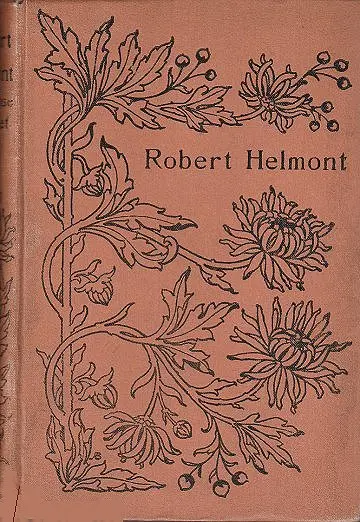
Robert Helmont: Diary of a Recluse, 1870-1871
Alphonse Daudet
THE CLASSIC COLLECTION · 1898
"The Nabob, Vol. 2 (of 2)" by Alphonse Daudet is a novel written in the late 19th century. This engaging story revolves around Bernard Jansoulet, the titular Nabob, as he navigates the complexities of Parisian society after his rise to prominence. The narrative explores themes of ambition, social status, and the interplay between personal and public life. The opening of the second volume begins on a bleak rainy day in Paris, where Felicia, a talented artist, grapples with feelings of ennui and dissatisfaction as her recent works are met with disinterest. Despite the dreary backdrop, her spirit is lifted by the arrival of Paul de Géry, with whom she shares a complicated friendship. Their interactions reflect the melancholy of artistic ambition and the quest for approval in a competitive environment. Felicia's internal struggle is juxtaposed with Jansoulet's burgeoning political career, as the narrative hints at the curiosity and envy he elicits from his peers. The excerpt sets the stage for a rich exploration of character dynamics and societal commentaries throughout the rest of the volume.
Introduction adapted from the source catalogue; source summaries may be automatically generated.
Free to read · English · 77,764 words · No account needed
MAKE TIME FOR A GOOD BOOK
On by default. Untick to stop anonymous reading totals. Each page counts after 10 seconds in view. How this works.
Anonymous counting is on unless you have switched it off.
"It's a great pity," he said in a low tone, as if he were afraid of being overheard, "that Madame Jansoulet would not come."
Jansoulet replied with a gesture of despair and savage helplessness.
"Too bad--too bad!" said the other, blowing his nose and feeling in his
pocket for his key.
"Look here, old fellow," said the Nabob, taking his arm, "because our wives don't hit it off together, is no reason--That doesn't prevent our remaining friends. What a nice little chat we had the other day, eh?"
"To be sure," said the baron, withdrawing his hand to unlock the door, which opened noiselessly, disclosing the lofty private office with its one lamp burning in front of the capacious, empty armchair.
"Ya didon, Mouci,"[5] said the poor Nabob, trying to jest, and resorting to the sabir patois to remind his old chum of all the pleasant reminiscences they had overhauled the day before. "Our visit to Le Merquier still holds. The picture we were going to offer him, you know. What day shall we go?"
[5] Ah! I say, Monsieur.
"Ah! yes, Le Merquier. To be sure. Well, very soon. I will write you."
"Sure? You know it's very urgent."
"Yes, yes, I'll write you. Adieu."
And the fat man closed his door hastily as if he feared that his wife
might appear.
Two days later the Nabob received a note from Hemerlingue, almost undecipherable with its little fly-tracks, complicated by abbreviations more or less commercial, behind which the ex-sutler concealed his absolute lack of orthography:
"MON CH/ANC/CAM/--Je ne puis decid/t'accom/ chez Le Merq/. Trop d'aff/en ce mom/. D'aill/v/ ser/mieux seuls pour caus/. Vas-y carrem/. On t'att/. R/Cassette, tous les mat/de 8 a 10.
"A toi cor/
[6] "MY DEAR OLD COMRADE,--I cannot see my way to accompanying you to see Le Merquier. Too busy just now. Indeed, you will do better to talk with him alone. Go there openly. You are expected. Rue Cassette, every morning, 8 to 10.
"Yours cordially,
Below, by way of postscript, in a hand equally fine, but much clearer,
was written very legibly:
"A religious picture, if possible."
What was he to think of that letter? Was it dictated by real friendliness or polite dissimulation? At all events, further hesitation was out of the question. The time was very short. So Jansoulet made a brave effort, for Le Merquier frightened him sadly, and went to his office one morning.
Your reading position is saved on this browser. Take it to another device with a library code. Reading pages adapt to text, rather than matching a printed edition.
Alphonse Daudet
Alphonse Daudet
Alphonse Daudet
Alphonse Daudet
BEHIND THE BOOK
This eBook is for the use of anyone anywhere in the United States and most other parts of the world at no cost and with almost no restrictions whatsoever. You may copy it, give it away or re-use it under the terms of the Project Gutenberg License included with this eBook or online at www.gutenberg.org. If you are not located in the United States, you will have to check the laws of the country where you are located before using this eBook. Read the source licence.
The original source file, including credits and licence, is retained by this library. Request an original-format copy at no charge. Please include the book title and Project Gutenberg identifier #21329.
KEEP YOUR CURIOSITY GOING
Coulson Kernahan

Maurice Baring
Frances Wright
Cécile Tormay

Frederic Jesup Stimson

W. H. P. (William Henry Pope) Jarvis