
The story of Betty
Carolyn Wells
THE CLASSIC COLLECTION · 1920
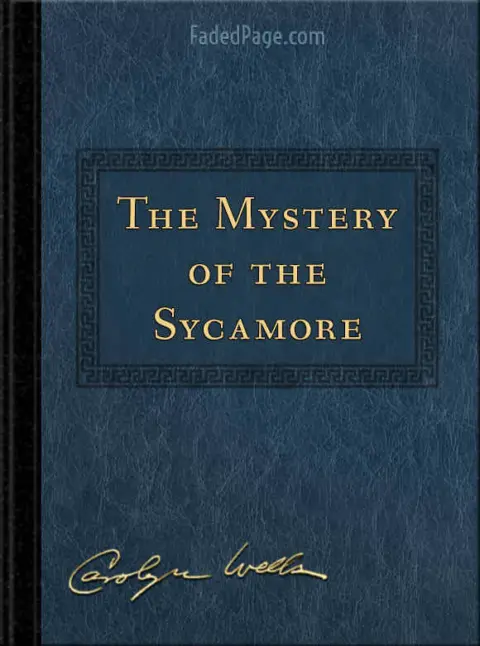
"The Mystery of the Sycamore" by Carolyn Wells is a mystery novel written in the early 20th century. The story introduces us to Curtis Keefe, a secretary working for the influential ex-governor Samuel Appleby, as well as the complex dynamics surrounding the Wheeler family, including patriarch Daniel Wheeler and his daughter Maida. The book delves into themes of political ambition, familial loyalty, and moral integrity as it unfolds the implications of a conditional pardon and the underlying tensions between personal principles and societal expectations. The opening of the novel establishes a sense of intrigue as we witness Keefe's routine at the office, where an important letter arrives calling them to Sycamore Ridge, the home of the Wheelers. As the narrative unfolds, we learn about a longstanding feud between Daniel Wheeler and Appleby, which stems from Wheeler's earlier conviction for forgery—a conviction Appleby had the power to pardon under contentious conditions. The dynamics within the Wheeler family are explored, particularly Maida's loyalty to her father and her struggle between her affections and the political ramifications of their situation. The chapter sets the stage for a confrontation of ideals as the characters navigate through personal relationships and broader ambitions in the political landscape intertwined with their lives.
Introduction adapted from the source catalogue; source summaries may be automatically generated.
Free to read · English · 64,383 words · No account needed
MAKE TIME FOR A GOOD BOOK
On by default. Untick to stop anonymous reading totals. Each page counts after 10 seconds in view. How this works.
Anonymous counting is on unless you have switched it off.
“I did say that,” Daniel Wheeler replied, “because it is true. And because I am convinced that the truth will help us all better than any further endeavor to prove a falsehood. I did see you, Maida darling, and I tried very hard to take the blame myself. But it has been proved to me by Mr. Stone that my pretence is useless, and so I’ve concluded that the fact must come out, in hope of a better result than from concealment. Do not fear, my darling, no harm shall come to you.”
“And you said you did it, father, and mother said she did it.”
“Yes, of course, I told your mother the truth, and we plotted—yes, plotted for each of us to confess to the deed, in a wild hope of somehow saving our little girl.”
“And you saw me shoot, father?”
“Why, yes, dear—that is, I heard the shot, and looked up to see you standing there with consternation and guilt on your dear face. Your arm had then dropped to your side, but your whole attitude was unmistakable. I couldn’t shut my eyes to the evident fact that there was no one else who could have done the deed.”
“There must have been, father—for—I didn’t do it.”
“I knew you didn’t! Oh, Maida!” With a bound Allen was at her side and his arm went round her. But she moved away from him, and went on talking—still in a strained, unnatural voice, but steadily and straightforwardly.
“No; I didn’t shoot Mr. Appleby. I’ve been saying so, to shield my father. I thought he did it.”
“Maida! Is it possible?” and Daniel Wheeler looked perplexed. “But, oh, I’m so glad to hear your statement.”
“But who did do it, then?” Miss Lane asked, bluntly.
“Who cares, so long as it wasn’t any of the Wheelers!” exclaimed Jeffrey Allen, unable to contain his gladness. “Oh, Maida——”
But again she waved him away from her.
“I don’t understand, Mr. Stone,” she began; “I don’t know where these disclosures will lead. I hope, not back to my mother——”
“No, Maida,” said her father, “there’s no fear of that.”
Reassured, Maida went on. “Perhaps I can’t be believed now, after my previous insistence on my guilt, but God knows it is the truth; I am utterly innocent of the crime.”
“I believe it,” said Fleming Stone. “There was little evidence against you, except your own confession. Now you’ve retracted that it only remains for me to find the real criminal.”
“Can you,” cried Fibsy excitedly, “can you, F. Stone?”
Your reading position is saved on this browser. Take it to another device with a library code. Reading pages adapt to text, rather than matching a printed edition.
Carolyn Wells

Carolyn Wells & Harry Persons Taber

Carolyn Wells

Carolyn Wells
BEHIND THE BOOK
This eBook is for the use of anyone anywhere in the United States and most other parts of the world at no cost and with almost no restrictions whatsoever. You may copy it, give it away or re-use it under the terms of the Project Gutenberg License included with this eBook or online at www.gutenberg.org. If you are not located in the United States, you will have to check the laws of the country where you are located before using this eBook. Read the source licence.
The original source file, including credits and licence, is retained by this library. Request an original-format copy at no charge. Please include the book title and Project Gutenberg identifier #50209.
KEEP YOUR CURIOSITY GOING
Coulson Kernahan

Maurice Baring
Frances Wright
Cécile Tormay

Frederic Jesup Stimson

W. H. P. (William Henry Pope) Jarvis