
The story of Betty
Carolyn Wells
THE CLASSIC COLLECTION · 1920
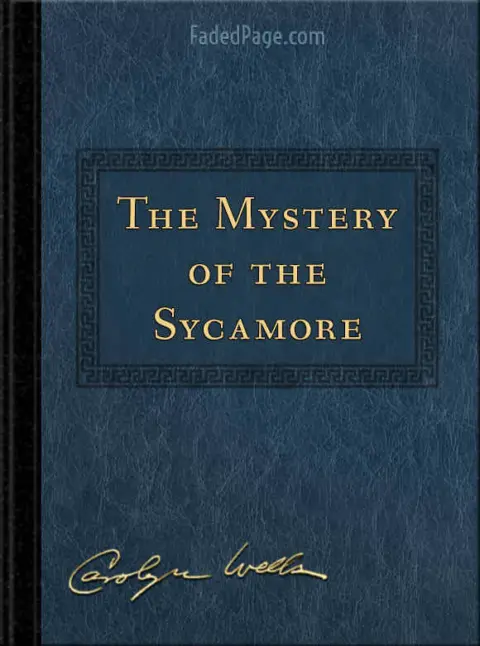
"The Mystery of the Sycamore" by Carolyn Wells is a mystery novel written in the early 20th century. The story introduces us to Curtis Keefe, a secretary working for the influential ex-governor Samuel Appleby, as well as the complex dynamics surrounding the Wheeler family, including patriarch Daniel Wheeler and his daughter Maida. The book delves into themes of political ambition, familial loyalty, and moral integrity as it unfolds the implications of a conditional pardon and the underlying tensions between personal principles and societal expectations. The opening of the novel establishes a sense of intrigue as we witness Keefe's routine at the office, where an important letter arrives calling them to Sycamore Ridge, the home of the Wheelers. As the narrative unfolds, we learn about a longstanding feud between Daniel Wheeler and Appleby, which stems from Wheeler's earlier conviction for forgery—a conviction Appleby had the power to pardon under contentious conditions. The dynamics within the Wheeler family are explored, particularly Maida's loyalty to her father and her struggle between her affections and the political ramifications of their situation. The chapter sets the stage for a confrontation of ideals as the characters navigate through personal relationships and broader ambitions in the political landscape intertwined with their lives.
Introduction adapted from the source catalogue; source summaries may be automatically generated.
Free to read · English · 64,383 words · No account needed
MAKE TIME FOR A GOOD BOOK
On by default. Untick to stop anonymous reading totals. Each page counts after 10 seconds in view. How this works.
Anonymous counting is on unless you have switched it off.
“No, sir, he ain’t. Though I daresay he will some other time. But this death of his father and the mystery and all, is no sort of help to a campaign. And, too, young Appleby hasn’t the necessary qualifications to conduct a campaign, however good he might be as governor after he got elected. No; Sam won’t run.”
“Who will?”
“Dunno, I’m sure. But there’ll be lots ready and eager for a try at it.”
“I suppose so. Well, Burdon, I’m going down now to ask some questions of the servants. You know they’re a mine of information usually.”
“Kin I go?” asked Fibsy.
“Not now, son. You stay here, or do what you like. But don’t say much and don’t antagonize anybody.”
“Not me, F. Stone!”
“Well, don’t shock anybody, then. Behave like a gentleman and a scholar.”
“Yessir,” Fibsy ducked a comical bow, and Burdon, understanding he was
dismissed, went home.
To the dining-room Stone made his way, and asked a maid there if he might
see the cook.
Greatly frightened, the waitress brought the cook to the dining-room.
But the newcomer, a typical, strong-armed, strong-minded individual, was
not at all abashed.
“What is it you do be wantin’, sor?” she asked, civilly enough, but a
trifle sullenly.
“Only a few answers to direct questions. Where were you when you first heard the alarm of the garage fire?”
“I was in me kitchen, cleanin’ up after dinner.”
“What did you do?”
“I ran out the kitchen door and, seein’ flames, I ran toward the garage.”
“Before you ran, you were at the rear of the house—I mean the south side,
weren’t you?”
“Yes, sor, I was.”
“You passed along the south veranda?”
“Not along it,” the cook looked at him wonderingly—“but by the end of it,
like.”
“And did you see any one on the veranda? Any one at all?”
The woman thought hard. “Well, I sh’d have said no—first off—but now you speak of it, I must say I do have a remimbrance of seein’ a figger—but sort of vague like.”
“You mean your memory of it is vague—you don’t mean a shadowy figure?”
“No, sor. I mean I can’t mind it rightly, now, for I was thinkin’ intirely of the fire, and so as I was runnin’ past the end of the verandy all I can say is, I just glimpsed like, a person standin’ there.”
“Standing?”
“Well, he might have been moving—I dunno.”
“Are you sure it was a man?”
Your reading position is saved on this browser. Take it to another device with a library code. Reading pages adapt to text, rather than matching a printed edition.
Carolyn Wells

Carolyn Wells & Harry Persons Taber

Carolyn Wells

Carolyn Wells
BEHIND THE BOOK
This eBook is for the use of anyone anywhere in the United States and most other parts of the world at no cost and with almost no restrictions whatsoever. You may copy it, give it away or re-use it under the terms of the Project Gutenberg License included with this eBook or online at www.gutenberg.org. If you are not located in the United States, you will have to check the laws of the country where you are located before using this eBook. Read the source licence.
The original source file, including credits and licence, is retained by this library. Request an original-format copy at no charge. Please include the book title and Project Gutenberg identifier #50209.
KEEP YOUR CURIOSITY GOING
Coulson Kernahan

Maurice Baring
Frances Wright
Cécile Tormay

Frederic Jesup Stimson

W. H. P. (William Henry Pope) Jarvis