
The story of Betty
Carolyn Wells
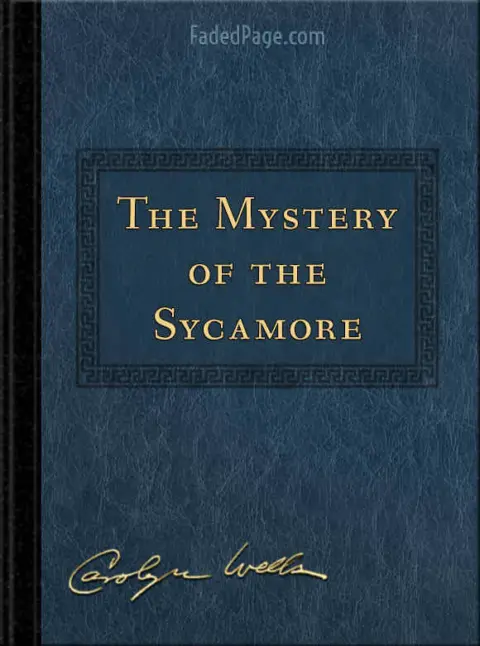
THE CLASSIC COLLECTION · 1920
"The Mystery of the Sycamore" by Carolyn Wells is a mystery novel written in the early 20th century. The story introduces us to Curtis Keefe, a secretary working for the influential ex-governor Samuel Appleby, as well as the complex dynamics surrounding the Wheeler family, including patriarch Daniel Wheeler and his daughter Maida. The book delves into themes of political ambition, familial loyalty, and moral integrity as it unfolds the implications of a conditional pardon and the underlying tensions between personal principles and societal expectations. The opening of the novel establishes a sense of intrigue as we witness Keefe's routine at the office, where an important letter arrives calling them to Sycamore Ridge, the home of the Wheelers. As the narrative unfolds, we learn about a longstanding feud between Daniel Wheeler and Appleby, which stems from Wheeler's earlier conviction for forgery—a conviction Appleby had the power to pardon under contentious conditions. The dynamics within the Wheeler family are explored, particularly Maida's loyalty to her father and her struggle between her affections and the political ramifications of their situation. The chapter sets the stage for a confrontation of ideals as the characters navigate through personal relationships and broader ambitions in the political landscape intertwined with their lives.
Introduction adapted from the source catalogue; source summaries may be automatically generated.
Free to read · English · 64,383 words · No account needed
MAKE TIME FOR A GOOD BOOK
On by default. Untick to stop anonymous reading totals. Each page counts after 10 seconds in view. How this works.
Anonymous counting is on unless you have switched it off.
Curtis Keefe, engaged in this daily performance, slit the envelopes neatly and laid the letters down in three piles. These divisions represented matters known to be of no great interest; matters known to be important; and, third, letters with contents as yet unknown and therefore of problematical value.
The first two piles were, as usual, dispatched quickly, and the real attention of the secretary centred with pleasant anticipation on the third lot.
“Gee whiz, Genevieve!”
As no further pearls of wisdom fell from the lips of the engrossed reader of letters, the stenographer gave him a round-eyed glance and then continued her work.
Curtis Keefe was, of course, called Curt by his intimates, and while it may be the obvious nickname was brought about by his short and concise manner of speech, it is more probable that the abbreviation was largely responsible for his habit of curtness.
Anyway, Keefe had long cultivated a crisp, abrupt style of conversation. That is, until he fell in with Samuel Appleby. That worthy ex-governor, while in the act of engaging Keefe to be his confidential secretary, observed: “They call you Curt, do they? Well, see to it that it is short for courtesy.”
This was only one of several equally sound bits of advice from the same source, and as Keefe had an eye single to the glory of self-advancement, he kept all these things and pondered them in his heart.
The result was that ten years of association with Lawyer Appleby had greatly improved the young man’s manner, and though still brief of speech, his curtness had lost its unpleasantly sharp edge and his courtesy had developed into a dignified urbanity, so that though still Curt Keefe, it was in name only.
“What’s the pretty letter all about, Curtie?” asked the observant stenographer, who had noticed his third reading of the short missive.
“You’ll probably answer it soon, and then you’ll know,” was the reply, as Keefe restored the sheet to its envelope and took up the next letter.
Genevieve Lane produced her vanity-case, and became absorbed in its
possibilities.
“I wish I didn’t have to work,” she sighed; “I wish I was an opera
singer.”
“‘Cromwell, I charge thee, fling away ambition,’ murmured Keefe, his eyes still scanning letters; ‘by that sin fell the angels,’ and it’s true you are angelic, Viva, so down you’ll go, if you fall for ambition.”
“How you talk! Ambition is a good thing.”
“Only when tempered by common sense and perspicacity—neither of which you possess to a marked degree.”
“Pooh! You’re ambitious yourself, Curt.”
Your reading position is saved on this browser. Take it to another device with a library code. Reading pages adapt to text, rather than matching a printed edition.
Carolyn Wells

Carolyn Wells & Harry Persons Taber

Carolyn Wells

Carolyn Wells
BEHIND THE BOOK
This eBook is for the use of anyone anywhere in the United States and most other parts of the world at no cost and with almost no restrictions whatsoever. You may copy it, give it away or re-use it under the terms of the Project Gutenberg License included with this eBook or online at www.gutenberg.org. If you are not located in the United States, you will have to check the laws of the country where you are located before using this eBook. Read the source licence.
The original source file, including credits and licence, is retained by this library. Request an original-format copy at no charge. Please include the book title and Project Gutenberg identifier #50209.
KEEP YOUR CURIOSITY GOING
Coulson Kernahan

Maurice Baring
Frances Wright
Cécile Tormay

Frederic Jesup Stimson

W. H. P. (William Henry Pope) Jarvis