THE CLASSIC COLLECTION✦Letters on LiteratureCLASSIC FREE BOOKS
Letters on Literature
Andrew Lang
THE CLASSIC COLLECTION · 1901
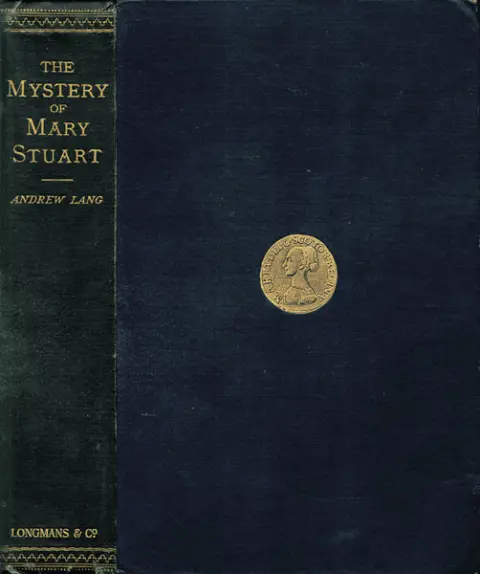
"The Mystery of Mary Stuart" by Andrew Lang is a historical account written in the late 19th century. It explores the complexities surrounding the life and reign of Mary Stuart, Queen of Scots, particularly focusing on her trials, enemies, and the controversial "Casket Letters" which implicated her in various conspiracies. Lang aims to unravel the truth behind the historical events that led to her downfall, scrutinizing both her character and the motives of those around her. The opening of the text introduces the intricate web of personalities involved in the tragic story of Mary Stuart, providing a rich prelude to her struggles for power amidst political intrigue and personal betrayal. Lang illustrates the historical setting, emphasizing the socio-political climate of Scotland during Mary’s reign and the pivotal figures that shaped her narrative, including her husbands, noble adversaries, and loyal aides. The insight into her characterized traits, motives, and the events leading up to her troubles, including the infamous murder of her second husband, Darnley, sets a compelling stage for a deeper exploration of her life. The reader is invited to reflect on the multifaceted interactions of these historical figures and the enduring debate over Mary Stuart's guilt or innocence in the eyes of history.
Introduction adapted from the source catalogue; source summaries may be automatically generated.
Free to read · English · 123,454 words · No account needed
MAKE TIME FOR A GOOD BOOK
On by default. Untick to stop anonymous reading totals. Each page counts after 10 seconds in view. How this works.
Anonymous counting is on unless you have switched it off.
Buchanan’s plan clearly was to accuse the persons whom it was convenient to accuse, at any given time; and to alter his account of the method of the murder so as to suit each new accusation. Probably he was not dishonest. The facts ‘were to him ministered,’ by the Lords, in 1568, and also by Lennox. Later, different sets of facts were ‘ministered’ to him, as occasion served, and he published them without heeding his inconsistencies. He was old, was a Lennox man, and an advanced Liberal.
Of one examination, which ought to have been important, we have found no record. There was a certain Captain James Cullen, who wrote letters in July 13 to July 18, 1560, from Edinburgh Castle, to the Cardinal of Lorraine. He was then an officer of Mary of Guise, during the siege of Leith.[153] In the end of 1565, and the beginning of 1566, Captain Cullen was in the service of Frederic II. of Denmark, and was trying to enlist English sailors for him.[154] Elizabeth refused to permit this, and Captain Cullen appears to have returned to his native Scotland, where he became, under Bothwell, an officer of the Guard put about Mary’s person, after Riccio’s murder. On February 28, 1567, eighteen days after Darnley’s murder, Scrope writes that ‘Captain Cullen with his company have the credit nearest her’ (Mary’s) ‘person.’ On May 13, Drury remarks, ‘It was Captain Cullen’s persuasion, for more surety, to have the King strangled, and not only to trust to the powder,’ the Captain having observed, in his military experience, that the effects of explosions were not always satisfactory. ‘The King was long of dying, and to his strength made debate for his life.’[155]
To return to honest Captain Cullen: after Bothwell was acquitted, and had issued a cartel offering Trial by Combat to any impugner of his honour, some anonymous champion promised, under certain conditions, to fight. This hero placarded the names of three Balfours, black John Spens, and others, as conspirators; as ‘doers’ he mentioned, with some companions, Tala, Bowton, Pat Wilson, and James Cullen. On April 25, the Captain was named as a murderer in Elizabeth’s Instructions to Lord Grey.[156] On May 8, Kirkcaldy told Bedford that Tullibardine had offered, with five others, to fight Ormistoun, ‘Beynston,’ Bowton, Tala, Captain Cullen, and James Edmonstone, who, says Tullibardine, were at the murder. On June 16, 1567, the day after Mary’s capture at Carberry, Scrope writes, ‘The Lords have taken Captain Cullen, who, after some strict dealing [torture], has revealed the King’s murder with the whole matter thereof.’[157] Scrope was mistaken. He had probably heard of the capture of Blackader, who was hanged on June 24, denying his guilt. He had no more chance than had James Stewart of the Glens with a Campbell jury. His jury was composed of Lennox men, Darnley’s clansmen. Our Captain had not been taken, but on September 15 Moray told Throckmorton that Kirkcaldy, in Shetland, had captured Cullen, ‘one of the very executors, he may clear the whole action.’[158]
Your reading position is saved on this browser. Take it to another device with a library code. Reading pages adapt to text, rather than matching a printed edition.
Andrew Lang
Andrew Lang
Andrew Lang

Andrew Lang
BEHIND THE BOOK
This eBook is for the use of anyone anywhere in the United States and most other parts of the world at no cost and with almost no restrictions whatsoever. You may copy it, give it away or re-use it under the terms of the Project Gutenberg License included with this eBook or online at www.gutenberg.org. If you are not located in the United States, you will have to check the laws of the country where you are located before using this eBook. Read the source licence.
The original source file, including credits and licence, is retained by this library. Request an original-format copy at no charge. Please include the book title and Project Gutenberg identifier #42910.
KEEP YOUR CURIOSITY GOING
Cécile Tormay

Moritz Busch
John L. Ransom
Frances Wright
Cécile Tormay

Mabel Potter Daggett