THE CLASSIC COLLECTION✦Letters on LiteratureCLASSIC FREE BOOKS
Letters on Literature
Andrew Lang
THE CLASSIC COLLECTION · 1901
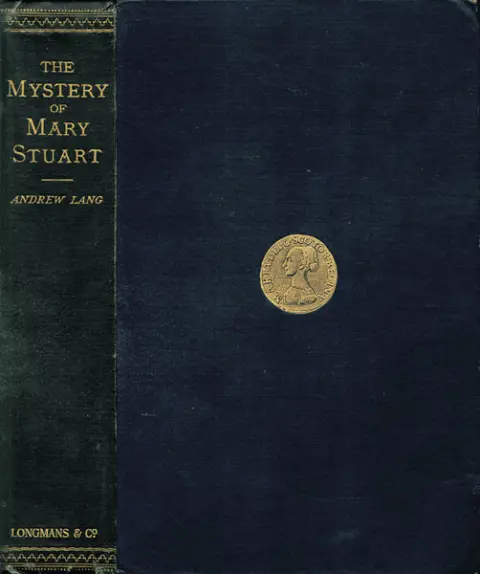
"The Mystery of Mary Stuart" by Andrew Lang is a historical account written in the late 19th century. It explores the complexities surrounding the life and reign of Mary Stuart, Queen of Scots, particularly focusing on her trials, enemies, and the controversial "Casket Letters" which implicated her in various conspiracies. Lang aims to unravel the truth behind the historical events that led to her downfall, scrutinizing both her character and the motives of those around her. The opening of the text introduces the intricate web of personalities involved in the tragic story of Mary Stuart, providing a rich prelude to her struggles for power amidst political intrigue and personal betrayal. Lang illustrates the historical setting, emphasizing the socio-political climate of Scotland during Mary’s reign and the pivotal figures that shaped her narrative, including her husbands, noble adversaries, and loyal aides. The insight into her characterized traits, motives, and the events leading up to her troubles, including the infamous murder of her second husband, Darnley, sets a compelling stage for a deeper exploration of her life. The reader is invited to reflect on the multifaceted interactions of these historical figures and the enduring debate over Mary Stuart's guilt or innocence in the eyes of history.
Introduction adapted from the source catalogue; source summaries may be automatically generated.
Free to read · English · 123,454 words · No account needed
MAKE TIME FOR A GOOD BOOK
On by default. Untick to stop anonymous reading totals. Each page counts after 10 seconds in view. How this works.
Anonymous counting is on unless you have switched it off.
What, we ask once more, in these circumstances, are the examinations of the murderers worth, after passing through the hands of the accomplices? On December 8, 1568, Moray gave in the written records of the examinations to the English Commissioners. We have, first, Bothwell’s servant, Powrie, examined before the Lords of the Secret Council (June 23, July 3, 1567). He helped to carry the powder to Kirk o’ Field on February 9, but did not see what was done with it. Dalgleish, examined at Edinburgh on June 26, 1567, before Morton, Atholl, the Provost of Dundee, and Kirkcaldy, said nothing about the powder. Tala was examined, on September 13, at Edinburgh, before Moray, Morton, Atholl, the Lairds of Loch Leven and Pitarro, James Makgill, and the Justice Clerk, Bellenden. No man implicated, except Morton, was present. Tala said that Bothwell arranged to lay the powder in Mary’s room, under Darnley’s. This was done; the powder was placed in ‘the nether house, under the King’s chamber,’ the plotters entering by the back door, from the garden, of which Paris had the key. Thus there would be no show at the front door, in the quadrangle, of men coming and going: they were in Mary’s room, but did not enter by the front door. Next, on December 8, Bowton was examined at Edinburgh before Moray, Atholl, Lindsay, Kirkcaldy of Grange, and Bellenden. He implicated Morton, Lethington, and Balfour, but, at Westminster, Moray suppressed the evidence utterly. (See Introduction, pp. xiii-xviii, for the suppressions). Next we have the trial of Bowton, Tala, Powrie, and Dalgleish, on January 3, 1568, before Sir Thomas Craig and a jury of burgesses and gentlemen. The accused confessed to their previous depositions. The jury found them guilty on the depositions alone, found that ‘the whole lodging was raised and blown in the air, and his Grace [Darnley] was murdered treasonably, and most cruelly slain and destroyed by them therein.’ When Mr. Hosack asserts that these depositions ‘were taken before the Lords of the Secret Council, namely Morton, Huntly, Argyll, Maitland, and Balfour,’ he errs, according to the documents cited. Only Powrie is described as having been examined ‘before the Lords of the Secret Council.’ Mr. Hosack must have known that Huntly and Argyll were not in Edinburgh on June 23, when Powrie was examined.[146] We can only say that Powrie’s depositions, made before the Lords of the Secret Council, struck the keynote, to which all later confessions, including that of Bothwell’s valet, Paris, correspond.[147] Thus vanish, for the moment, the mine and the strangling, while the deed is done by powder in Mary’s own chamber. Nobody is now left in the actual crime save Bothwell, Bowton, Tala, Powrie, Dalgleish, Wilson, Paris, Ormistoun, and Hob Ormistoun. They knew of no strangling.[148]
Your reading position is saved on this browser. Take it to another device with a library code. Reading pages adapt to text, rather than matching a printed edition.
Andrew Lang
Andrew Lang
Andrew Lang

Andrew Lang
BEHIND THE BOOK
This eBook is for the use of anyone anywhere in the United States and most other parts of the world at no cost and with almost no restrictions whatsoever. You may copy it, give it away or re-use it under the terms of the Project Gutenberg License included with this eBook or online at www.gutenberg.org. If you are not located in the United States, you will have to check the laws of the country where you are located before using this eBook. Read the source licence.
The original source file, including credits and licence, is retained by this library. Request an original-format copy at no charge. Please include the book title and Project Gutenberg identifier #42910.
KEEP YOUR CURIOSITY GOING
Cécile Tormay

Moritz Busch
John L. Ransom
Frances Wright
Cécile Tormay

Mabel Potter Daggett