THE CLASSIC COLLECTION✦Letters on LiteratureCLASSIC FREE BOOKS
Letters on Literature
Andrew Lang
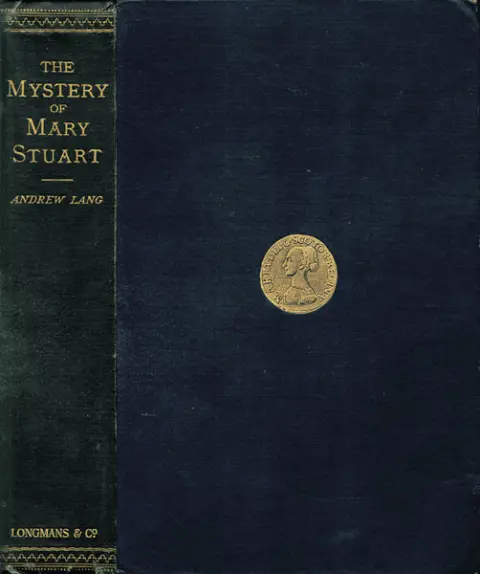
THE CLASSIC COLLECTION · 1901
"The Mystery of Mary Stuart" by Andrew Lang is a historical account written in the late 19th century. It explores the complexities surrounding the life and reign of Mary Stuart, Queen of Scots, particularly focusing on her trials, enemies, and the controversial "Casket Letters" which implicated her in various conspiracies. Lang aims to unravel the truth behind the historical events that led to her downfall, scrutinizing both her character and the motives of those around her. The opening of the text introduces the intricate web of personalities involved in the tragic story of Mary Stuart, providing a rich prelude to her struggles for power amidst political intrigue and personal betrayal. Lang illustrates the historical setting, emphasizing the socio-political climate of Scotland during Mary’s reign and the pivotal figures that shaped her narrative, including her husbands, noble adversaries, and loyal aides. The insight into her characterized traits, motives, and the events leading up to her troubles, including the infamous murder of her second husband, Darnley, sets a compelling stage for a deeper exploration of her life. The reader is invited to reflect on the multifaceted interactions of these historical figures and the enduring debate over Mary Stuart's guilt or innocence in the eyes of history.
Introduction adapted from the source catalogue; source summaries may be automatically generated.
Free to read · English · 123,454 words · No account needed
MAKE TIME FOR A GOOD BOOK
On by default. Untick to stop anonymous reading totals. Each page counts after 10 seconds in view. How this works.
Anonymous counting is on unless you have switched it off.
Presently, her temper outworn by the perpetual thwartings which checked her every movement, and regardless of the opposition of Moray, of the Hamiltons, of Argyll, and of the whole Protestant community, Mary wedded Darnley (July 29, 1565). Her adversaries assembled in arms, secretly encouraged by Elizabeth, and what Kirkcaldy of Grange had prophesied occurred: Mary ‘shook Bothwell out of her pocket’ at her opponents. In July, she sent Hepburn of Riccartoun to summon him back from France. Riccartoun was captured by the English, but Bothwell, after a narrow escape, presented himself before Mary on September 20. By October, Moray, the Hamiltons, and Argyll were driven into England or rendered harmless. Randolph now reported that Bothwell and Atholl were all-powerful. The result was ill feeling between Darnley and Bothwell. Darnley wished his father, Lennox, to govern on the Border, but Mary gave the post to Bothwell.[28] Her estrangement from Darnley had already begun. Jealousy of Mary’s new secretary, Riccio, was added.
The relations between Darnley, Bothwell, Mary, and Riccio, between the crushing of Moray’s revolt, in October 1565, and the murder of the Italian Secretary, in March 1566, are still obscure. Was Riccio Mary’s lover? What were the exact causes of the estrangement from Darnley, which was later used as the spring to discharge on Riccio, and on Mary, the wrath of the discontented nobles and Puritans? The Lennox Papers inform us, as to Mary and Darnley, that ‘their love never decayed till their return from Dumfries,’ whence they had pursued Moray into England.
Mary had come back to Edinburgh from Dumfries by October 18, 1565. Riccio was already, indeed by September 22, complained of as a foreign upstart, but not as a lover of Mary, by the rebel Lords.[29] The Lennox Papers attribute the estrangement of Mary and Darnley to her pardoning without the consent of the King, her husband, ‘sundry rebels,’ namely the Hamiltons. The pardon implied humiliation and five years of exile. It was granted about December 3.[30] The measure was deeply distasteful to Darnley and Lennox, who had long been at mortal feud, over the heirship to the crown, with the Lennox Stewarts. The pardon is attributed to the influence of ‘Wicked David,’ Riccio. But to pardon perpetually was the function of a Scottish prince. Soon we find Darnley intriguing for the pardon of Moray, Ruthven, and others, who were not Hamiltons. Next, Lennox complains of Mary for ‘using the said David more like a lover than a husband, forsaking her husband’s bed and board very often.’ But this was not before November. The ‘Book of Articles’ put in against Mary by her accusers is often based on Lennox’s papers. It says ‘she suddenly altered the same’ (her ‘vehement love’ of Darnley) ‘about November, for she removed and secluded him from the counsel and knowledge of all Council affairs.’[31] The ‘Book of Articles,’ like Lennox’s own papers, omits every reference to Riccio that can be avoided. The ‘Book of Articles,’ indeed, never hints at his existence. The reason is obvious: Darnley had not shone in the Riccio affair. Moreover the Lennox party could not accuse Mary of a guilty amour before mid November, 1565, for James VI. was born on June 19, 1566. It would not do to discredit his legitimacy. But, as early as September 1565, Bedford had written to Cecil that ‘of the countenance which Mary gave to David he would not write, for the honour due to the person of a Queen.’[32] Thus, a bride of six weeks, Mary was reported to be already a wanton! Moreover, on October 13, 1565, Randolph wrote from Edinburgh that Mary’s anger against Moray (who had really enraged her by rising to prevent her from marrying Darnley) came from some dishonourable secret in Moray’s keeping, ‘not to be named for reverence sake.’ He ‘has a thing more strange’ even than the fact that Mary ‘places Bothwell in honour above every subject that she hath.’ As the ‘thing’ is not a nascent passion for Bothwell, it may be an amour with Riccio.[33] Indeed, on October 18, 1565, he will not speak of the cause of mischief, but hints at ‘a stranger and a varlet,’ Riccio.[34] Randolph and the English diplomatists were then infuriated against Mary, who had expelled their allies, Moray and the rest, discredited Elizabeth, their paymistress, and won over her a diplomatic victory. Consequently this talk of her early amour with Riccio, an ugly Milanese musician, need not be credited. For their own reasons, the Lennox faction dared not assert so early a scandal.
Your reading position is saved on this browser. Take it to another device with a library code. Reading pages adapt to text, rather than matching a printed edition.
Andrew Lang
Andrew Lang
Andrew Lang

Andrew Lang
BEHIND THE BOOK
This eBook is for the use of anyone anywhere in the United States and most other parts of the world at no cost and with almost no restrictions whatsoever. You may copy it, give it away or re-use it under the terms of the Project Gutenberg License included with this eBook or online at www.gutenberg.org. If you are not located in the United States, you will have to check the laws of the country where you are located before using this eBook. Read the source licence.
The original source file, including credits and licence, is retained by this library. Request an original-format copy at no charge. Please include the book title and Project Gutenberg identifier #42910.
KEEP YOUR CURIOSITY GOING
Cécile Tormay

Moritz Busch
John L. Ransom
Frances Wright
Cécile Tormay

Mabel Potter Daggett