THE CLASSIC COLLECTION✦Letters on LiteratureCLASSIC FREE BOOKS
Letters on Literature
Andrew Lang
THE CLASSIC COLLECTION · 1901
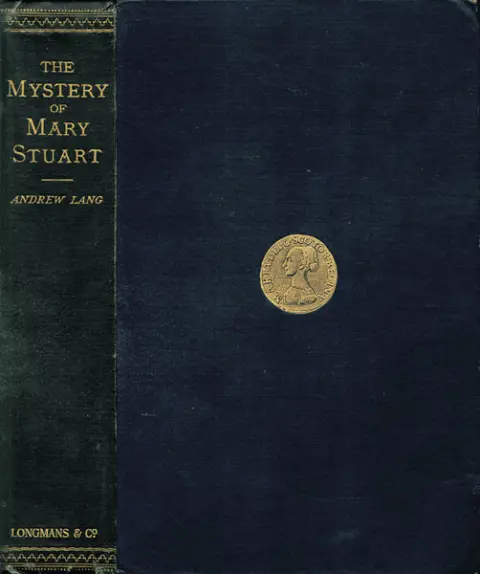
"The Mystery of Mary Stuart" by Andrew Lang is a historical account written in the late 19th century. It explores the complexities surrounding the life and reign of Mary Stuart, Queen of Scots, particularly focusing on her trials, enemies, and the controversial "Casket Letters" which implicated her in various conspiracies. Lang aims to unravel the truth behind the historical events that led to her downfall, scrutinizing both her character and the motives of those around her. The opening of the text introduces the intricate web of personalities involved in the tragic story of Mary Stuart, providing a rich prelude to her struggles for power amidst political intrigue and personal betrayal. Lang illustrates the historical setting, emphasizing the socio-political climate of Scotland during Mary’s reign and the pivotal figures that shaped her narrative, including her husbands, noble adversaries, and loyal aides. The insight into her characterized traits, motives, and the events leading up to her troubles, including the infamous murder of her second husband, Darnley, sets a compelling stage for a deeper exploration of her life. The reader is invited to reflect on the multifaceted interactions of these historical figures and the enduring debate over Mary Stuart's guilt or innocence in the eyes of history.
Introduction adapted from the source catalogue; source summaries may be automatically generated.
Free to read · English · 123,454 words · No account needed
MAKE TIME FOR A GOOD BOOK
On by default. Untick to stop anonymous reading totals. Each page counts after 10 seconds in view. How this works.
Anonymous counting is on unless you have switched it off.
[319] See Bain, ii. 581, for Crawford; the matter of this his second deposition, made on December 13, is not given; we know it from the Lennox Papers. The Diurnal avers that Tala, on the scaffold, accused Huntly, Argyll, Lethington, Balfour, and others of signing the band for the murder, ‘whereto the Queen’s grace consented.’ Naturally the Queen’s accusers did not put the confession about Lethington forward, but if Tala publicly accused Mary, why did they omit the circumstance?
[320] Ballad by Tom Truth, in Bain under date of December, 1568.
[321] Goodall, ii. 257-260. Bain, ii. 580, 581.
[322] Froude, viii. 484. Mr. Froude’s page-heading runs: ‘The English nobles pronounce them’ (the Letters) ‘genuine.’ But this, as he shows in the passage cited, they really did not do. They only said that Elizabeth must not see Mary, ‘until some answer had been made first....’ However, Elizabeth would not even let Mary see the Letters; and so no ‘answer’ was possible.
[323] Lingard, vi. 94, note 2 (1855).
[324] Bain, ii. 583.
[325] Another account, by Lesley, but not ‘truly nor fully’ reported, as Cecil notes, is in Groodall, ii. 260, 261. Compare La Mothe Fénelon, i. 82. Bain, ii. 585.
[326] Hosack, i. 460.
[327] Goodall, ii. 281.
[328] La Mothe, January 20, 30, 1569, i. 133-162.
[329] Goodall, ii. 272, 273.
[330] Goodall, ii. 307-309.
[331] Lesley, like Herries, had no confidence in Mary’s cause. On December 28, 1568, he wrote a curious letter to John Fitzwilliam, at Gray’s Inn. Lesley, Herries, and Kilwinning (a Hamilton) had met Norfolk, Leicester, and Cecil privately. The English showed the Book of Articles, but refused to give a copy, which seems unfair, as Mary could certainly have picked holes in that indictment. Lesley found the Englishmen ‘almost confirmed in favour of our mistress’s adversaries.’ Norfolk and Cecil ‘war sayrest’ (most severe), and Norfolk must either have been dissembling, or must have had his doubts about the authenticity of the Casket Letters shaken by comparing them with Mary’s handwriting. Lesley asks Fitzwilliam to go to their man of law, ‘and bid him put our defences to the presumptions in writ, as was devised before in all events, but we hope for some appointment (compromise), but yet we arm us well.’ Mary, however, would not again stoop to compromise. (Bain, ii. 592, 593.)
[332] Bain, ii. 570.
[333] In the Cambridge MS. of the Scots translations (C) our Letter II. is placed first. This MS. is the earliest.
[334] It is indubitable that ‘Cecil’s Journal’ was supplied by the prosecution, perhaps from Lennox, who had made close inquiries about the dates.
Your reading position is saved on this browser. Take it to another device with a library code. Reading pages adapt to text, rather than matching a printed edition.
Andrew Lang
Andrew Lang
Andrew Lang

Andrew Lang
BEHIND THE BOOK
This eBook is for the use of anyone anywhere in the United States and most other parts of the world at no cost and with almost no restrictions whatsoever. You may copy it, give it away or re-use it under the terms of the Project Gutenberg License included with this eBook or online at www.gutenberg.org. If you are not located in the United States, you will have to check the laws of the country where you are located before using this eBook. Read the source licence.
The original source file, including credits and licence, is retained by this library. Request an original-format copy at no charge. Please include the book title and Project Gutenberg identifier #42910.
KEEP YOUR CURIOSITY GOING
Cécile Tormay

Moritz Busch
John L. Ransom
Frances Wright
Cécile Tormay

Mabel Potter Daggett