THE CLASSIC COLLECTION✦Letters on LiteratureCLASSIC FREE BOOKS
Letters on Literature
Andrew Lang
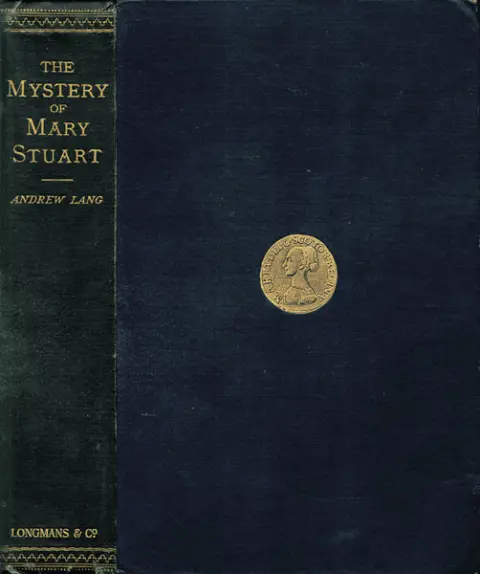
THE CLASSIC COLLECTION · 1901
"The Mystery of Mary Stuart" by Andrew Lang is a historical account written in the late 19th century. It explores the complexities surrounding the life and reign of Mary Stuart, Queen of Scots, particularly focusing on her trials, enemies, and the controversial "Casket Letters" which implicated her in various conspiracies. Lang aims to unravel the truth behind the historical events that led to her downfall, scrutinizing both her character and the motives of those around her. The opening of the text introduces the intricate web of personalities involved in the tragic story of Mary Stuart, providing a rich prelude to her struggles for power amidst political intrigue and personal betrayal. Lang illustrates the historical setting, emphasizing the socio-political climate of Scotland during Mary’s reign and the pivotal figures that shaped her narrative, including her husbands, noble adversaries, and loyal aides. The insight into her characterized traits, motives, and the events leading up to her troubles, including the infamous murder of her second husband, Darnley, sets a compelling stage for a deeper exploration of her life. The reader is invited to reflect on the multifaceted interactions of these historical figures and the enduring debate over Mary Stuart's guilt or innocence in the eyes of history.
Introduction adapted from the source catalogue; source summaries may be automatically generated.
Free to read · English · 123,454 words · No account needed
MAKE TIME FOR A GOOD BOOK
On by default. Untick to stop anonymous reading totals. Each page counts after 10 seconds in view. How this works.
Anonymous counting is on unless you have switched it off.
[37] Bain, ii. 234.
[38] Randolph to Cecil, Nov. 19, Dec. 1, 1565. Bain, ii. 241, 242.
[39] Bain, ii. 242.
[40] Buchanan, Historia, 1582, fol. 210.
[41] Bain, ii. 247.
[42] The Foreign Calendar cites Randolph up to the place where amantium iræ is quoted, but omits that. The point is important, if it indicates that Randolph had ceased to believe in Mary’s amour with Riccio. Cf. Bain, ii. 248.
[43] Nau, p. 192.
[44] The subject is discussed, with all the evidence, in Hay Fleming, pp.
379, 380, note 33.
[45] Ruthven’s Narrative. Keith, iii. 260. There are various forms of this Narrative; one is in the Lennox MSS.
[46] Goodall, i. 274.
[47] Bain, ii. 255.
[48] Printed in a scarce volume, Maitland’s Narrative, and in Tytler,
iii. 215. 1864.
[49] Bain, ii. 259-261.
[50] Goodall, i. 266-268.
[51] Hosack, ii. 78, note 3.
[52] See Dr. Stewart, A Lost Chapter in the History of Mary Queen of
Scots, pp. 93, 94.
[53] This is alleged by Mary, and by Claude Nau, her secretary.
[54] Goodall, i. 264, 265.
[55] Bain, ii. 289.
[56] Cal. For. Eliz. viii. 51.
[57] Bain, ii. 276. Cal. For. Eliz. viii. 52.
[58] Cal. For. Eliz. viii. 62.
[59] Bain ii. 278.
[60] Ibid. ii. 281.
[61] See Joseph Robertson’s Inventories, 112.
[62] Bain, ii. 283.
[63] Melville, pp. 154, 155.
[64] Bain, ii. 288, 289.
[65] Bain, ii. 290.
[66] Bain, ii. 294.
[67] Nau, 20, 22.
[68] Bain, ii. 296.
[69] Detection, 1689, pp. 2, 3.
[70] Cal. For. Eliz. viii. 118.
[71] Stevenson, Selections, pp. 163-165.
[72] Cheruel, Marie Stuart et Catherine de Médicis, p. 47.
[73] Robertson, Inventories, p. 167.
[74] Bain, ii. 300.
[75] Detection (1689), p. 4.
[76] Bain, ii. 440.
[77] Bannatyne, Journal, p. 238. This transference of disease, as from Archbishop Adamson to a pony, was believed in by the preachers.
[78] Teulet, Papiers d’État, ii. 139-146, 147, 151. See also Keith, ii.
448-459.
[79] Frazer, The Lennox, ii. 350, 351.
[80] Cal. For. Eliz. ix. 354, 355.
[81] Laing, ii. 331, 334.
[82] Nau, p. 35.
[83] Bain, ii. 599, 600.
[84] Bain, ii. 276.
[85] Diurnal, p. 99.
[86] See the evidence in Hay Fleming, 414, note 61.
[87] Cal. For. Eliz. viii. 139. Diurnal, 101.
[88] Teulet, ii. 150.
[89] Laing, ii. 72.
[90] Hay Fleming, 418, 419.
[91] Queen Mary at Jedburgh, p. 23.
[92] Bain, ii. 597-599. Anderson, iv. pt. ii. 186. Keith, iii. 290-294.
[93] Goodall, ii. 359.
[94] Historia, fol. 214.
[95] Keith, iii. 294. Bain, ii. 600.
[96] Laing, ii. 293, 294.
[97] The original MS. has been corrected by Lennox, in the passages within brackets. The italics are my own.
[98] Bain, ii. 516, 517.
[99] De Brienne came to Craigmillar on November 21, 1566, Diurnal.
[100] Nau, p. 33.
[101] Bain, ii. 293, 310.
[102] Melville, p. 172. (1827.)
[103] Crawford, in his deposition against Mary, says that she spoke sharp words of Lennox, at Stirling, to his servant, Robert Cunningham.
[104] Keith, i. xcviii.
Your reading position is saved on this browser. Take it to another device with a library code. Reading pages adapt to text, rather than matching a printed edition.
Andrew Lang
Andrew Lang
Andrew Lang

Andrew Lang
BEHIND THE BOOK
This eBook is for the use of anyone anywhere in the United States and most other parts of the world at no cost and with almost no restrictions whatsoever. You may copy it, give it away or re-use it under the terms of the Project Gutenberg License included with this eBook or online at www.gutenberg.org. If you are not located in the United States, you will have to check the laws of the country where you are located before using this eBook. Read the source licence.
The original source file, including credits and licence, is retained by this library. Request an original-format copy at no charge. Please include the book title and Project Gutenberg identifier #42910.
KEEP YOUR CURIOSITY GOING
Cécile Tormay

Moritz Busch
John L. Ransom
Frances Wright
Cécile Tormay

Mabel Potter Daggett