THE CLASSIC COLLECTION✦Letters on LiteratureCLASSIC FREE BOOKS
Letters on Literature
Andrew Lang
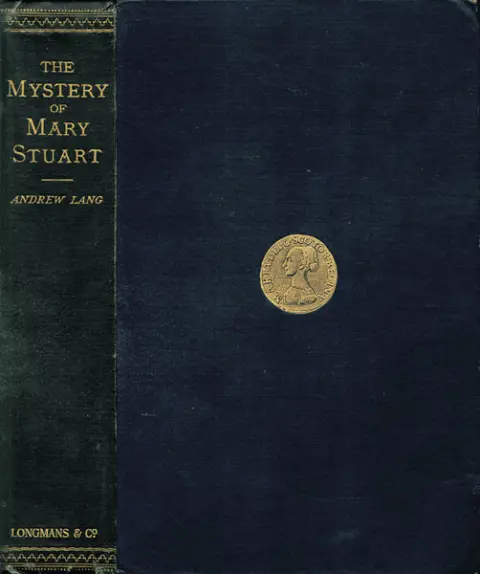
THE CLASSIC COLLECTION · 1901
"The Mystery of Mary Stuart" by Andrew Lang is a historical account written in the late 19th century. It explores the complexities surrounding the life and reign of Mary Stuart, Queen of Scots, particularly focusing on her trials, enemies, and the controversial "Casket Letters" which implicated her in various conspiracies. Lang aims to unravel the truth behind the historical events that led to her downfall, scrutinizing both her character and the motives of those around her. The opening of the text introduces the intricate web of personalities involved in the tragic story of Mary Stuart, providing a rich prelude to her struggles for power amidst political intrigue and personal betrayal. Lang illustrates the historical setting, emphasizing the socio-political climate of Scotland during Mary’s reign and the pivotal figures that shaped her narrative, including her husbands, noble adversaries, and loyal aides. The insight into her characterized traits, motives, and the events leading up to her troubles, including the infamous murder of her second husband, Darnley, sets a compelling stage for a deeper exploration of her life. The reader is invited to reflect on the multifaceted interactions of these historical figures and the enduring debate over Mary Stuart's guilt or innocence in the eyes of history.
Introduction adapted from the source catalogue; source summaries may be automatically generated.
Free to read · English · 123,454 words · No account needed
MAKE TIME FOR A GOOD BOOK
On by default. Untick to stop anonymous reading totals. Each page counts after 10 seconds in view. How this works.
Anonymous counting is on unless you have switched it off.
Preston, Laird of Craigmillar (Provost of Edinburgh), Mary imprisoned in
his house, 188
Price, Mr. F. Compton, cited, 363
Ramsay, Robert (Moray’s servant), hears Paris avouch the truth of his
deposition, 157
Randolph (English ambassador at Holyrood), his opinion of Darnley, 11, 12; on the Earl of Arran, 49; reports Bothwell and Atholl all-powerful, 57; on Lennox at Glasgow, 61; reports ‘private disorders’ between Mary and Darnley, 63; on Mary’s demand for free Mass for all men, 65; aware of Darnley’s and Lennox’s schemes for obtaining the crown, 66; favours Moray, 73; on a murder-band, kept in a casket, aimed at Darnley, 87; on the conduct of Lethington and Kirkcaldy towards Mary, 194, 360; accuses Lethington of advising Mary’s death, 204; hints at Lethington having tampered with the Letters(?), 361
Read, John (Buchanan’s secretary), supplies Cecil with a list of the signatories to Ainslie’s band, 177
‘Relation,’ the, cited on Riccio’s murder, 65
Reres, Lady, alleged confidant of Mary’s amour with Bothwell, 33, 48,
82, 83;
telepathic story assigned to her, 82;
Paris’s account of her as a go-between, 162;
rails at Mary’s marriage with Bothwell, 184
Reres, Laird of (son of Lady Reres), 83
Riccio, David, his intimacy with Mary, 58, 59;
complained of as a foreign upstart by Scots nobles, 58, 65;
reasons for discrediting his amour with Mary, 60;
Darnley’s hatred and jealousy of him, 63, 64, 65, 66;
‘band of assurance’ for his murder, 67;
nobles and others concerned, 67;
murdered, 69
Ridolfi plot, the, 6
Robertson, Dr. Joseph, on Lady Reres as wet nurse to Mary’s baby, 83;
on the Paris deposition, 158;
on the Glasgow Letter, 296
Rogers, William, informs Cecil of Darnley’s design to seize the Scilly
Isles, 108 note
Ronsard (poet), quoted, 314;
on the Casket Sonnets, 344, 349
Ross, Bishop of. See Lesley
Ruthven Earl of, his account of Riccio’s murder, 17;
presents Mary with a ring as an antidote to poison, 17;
conspiring with Darnley, 67;
seeks refuge in England, 70;
his dying vision, 37;
death, 73
Sadleyr (one of Elizabeth’s commissioners), at the York inquiry, 246
St. Andrews, in Mary’s time, 40
St. Mary in the Fields. See Kirk o’ Field
Sanquhar, signs the band for delivering Mary from Loch Leven, 275, 276
Scarborough, Darnley’s designs on, 108
Schiller’s ‘Marie Stewart,’ cited, 2
Scilly Isles, Darnley’s designs on, 108 note
Scots Parliament, Casket Letters produced before, 241
Scottish Guards (in France), Bothwell captain of, 54
Scott’s ‘Abbot,’ cited, 2
Scrope, quoted, on Captain Cullen, 151-3
Sebastian (Mary’s servant), his marriage at Holyrood, 136, 148
Sempil, John, husband of Mary Livingstone, 356
Sepp, Dr., on the Casket Letters, 242
Seton, Mary (Mary’s attendant), ‘the finest busker of a woman’s hair,’
3, 4
Seton, Mary’s conduct at, 175
Skelton, Sir John, on Bothwell’s age, 14; his ‘Maitland of Lethington’ cited, 23; on Mary’s knowledge of the plot against Darnley, 116, 117; on Mary’s submissive attitude to Bothwell, 315
Sorcery, belief in, in the sixteenth century, 36
Your reading position is saved on this browser. Take it to another device with a library code. Reading pages adapt to text, rather than matching a printed edition.
Andrew Lang
Andrew Lang
Andrew Lang

Andrew Lang
BEHIND THE BOOK
This eBook is for the use of anyone anywhere in the United States and most other parts of the world at no cost and with almost no restrictions whatsoever. You may copy it, give it away or re-use it under the terms of the Project Gutenberg License included with this eBook or online at www.gutenberg.org. If you are not located in the United States, you will have to check the laws of the country where you are located before using this eBook. Read the source licence.
The original source file, including credits and licence, is retained by this library. Request an original-format copy at no charge. Please include the book title and Project Gutenberg identifier #42910.
KEEP YOUR CURIOSITY GOING
Cécile Tormay

Moritz Busch
John L. Ransom
Frances Wright
Cécile Tormay

Mabel Potter Daggett