THE CLASSIC COLLECTION✦Letters on LiteratureCLASSIC FREE BOOKS
Letters on Literature
Andrew Lang
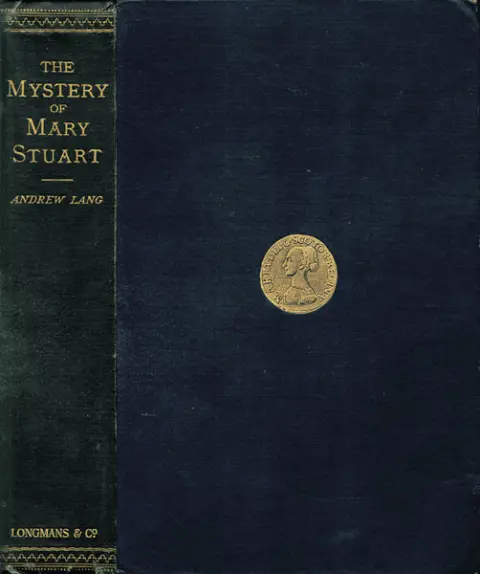
THE CLASSIC COLLECTION · 1901
"The Mystery of Mary Stuart" by Andrew Lang is a historical account written in the late 19th century. It explores the complexities surrounding the life and reign of Mary Stuart, Queen of Scots, particularly focusing on her trials, enemies, and the controversial "Casket Letters" which implicated her in various conspiracies. Lang aims to unravel the truth behind the historical events that led to her downfall, scrutinizing both her character and the motives of those around her. The opening of the text introduces the intricate web of personalities involved in the tragic story of Mary Stuart, providing a rich prelude to her struggles for power amidst political intrigue and personal betrayal. Lang illustrates the historical setting, emphasizing the socio-political climate of Scotland during Mary’s reign and the pivotal figures that shaped her narrative, including her husbands, noble adversaries, and loyal aides. The insight into her characterized traits, motives, and the events leading up to her troubles, including the infamous murder of her second husband, Darnley, sets a compelling stage for a deeper exploration of her life. The reader is invited to reflect on the multifaceted interactions of these historical figures and the enduring debate over Mary Stuart's guilt or innocence in the eyes of history.
Introduction adapted from the source catalogue; source summaries may be automatically generated.
Free to read · English · 123,454 words · No account needed
MAKE TIME FOR A GOOD BOOK
On by default. Untick to stop anonymous reading totals. Each page counts after 10 seconds in view. How this works.
Anonymous counting is on unless you have switched it off.
Bothwell, Lady. See Lady Jane Gordon
Bowes (Elizabeth’s envoy to Scotland), 365; tries to induce Gowrie to give up the Casket, 366
Bowton, Hepburn of, his statement of Darnley’s murder, 143, 144, 146,
158, 165, 170, 233, 278, 280, 310;
dying confession, 167;
execution, 139
Boyd, Lord, 73
Brantôme, on Bothwell’s personal appearance, 18;
on the Casket Sonnets, 344
Branxholme, the Lady of, rails at Mary’s marriage with Bothwell, 184
Bresslau, Herr, on the Casket Letters, 387
Buchan, Earl of (grandfather of Christian Stewart), 19
Buchan, Master of, killed at Pinkie, 19
Buchanan, George (poet and historian), celebrates Mary’s virtues, 15; his inaccurate accounts of her behaviour, 33, 34; anecdotes of visions portending Darnley’s fate, 37; tale of Mary at Alloa with Bothwell, 80; on the guilty intimacy of Mary and Bothwell, 81; respecting Lady Reres, 82, 83; on the Craigmillar conference, 96, 97, 98; Latin elegiacs on Mary, 105; on Darnley’s murder, 141; his treatment of the Darnley case, 148-151; on Paris’s Deposition, 157; on Darnley’s meek endurance of Mary’s slights, 314; account of a brawl between Darnley and Lord Robert Stuart, 323, 328
Caithness, Earl of (member of council), 172
Calderwood, on Morton’s warrant from Mary for signing Ainslie’s band, 254
Callendar, Mary at, 112, 318 note
Camden, on Lethington counterfeiting Mary’s handwriting, 357, 358
Carberry Hill, Mary and Bothwell at, 186
Cardauns, M., on the translations of the Casket Letters, 386
Carwood, Margaret, Mary’s intended bequest of a casket to, 365
Casket, the, official description of, 365; the one in possession of the Hamilton family, 367-370
Casket Letter I., its place in order of composition, 290, 291;
question of date, 291, 292;
intelligible if classed as Letter II., 293;
purport, 293;
reference to Lethington in English copy, 294;
possibly authentic and indicating a presumptively authentic Letter
II., 295;
published Scots and English translations, 391-393
Casket Letter II., shows Mary’s complicity in the murder of Darnley, 14; not genuine if the chronology of Cecil’s Journal be accepted, 296; authenticity opposed by the letter cited by Moray and Lennox, 296, 320; probably garbled, 297, 300; difficulties of internal chronology, 297; Crawford’s corroboration of parts, 297; theory of dovetailing by a forger, 300 et seq.; objections based on Crawford’s written Deposition, 302-304; verbal identities with Crawford’s account, 305, 306; differences from, 307; reveals Darnley’s unconcealed knowledge of Mary’s relations with Bothwell, 307; German theory respecting correspondence of deposition with, 308; influence of Mary’s memoranda with regard to genuineness, 309; forgery--balance of probabilities, 309, 313, 314; not inconsistent with Mary’s style and character, 313; shows Mary’s remorse and submission to Bothwell, 315; reasons pointing to partial genuineness, 316; the phrase ‘a more secret way by medicine,’ 317; confused by Buchanan with the letter described by Moray and Lennox, 318; the ‘ludgeing’ in Edinburgh, 318; the Craigmillar reference, 319, 320; represents Mary as tortured by remorse, 348; published Scots and English translations, 393-414; concerning, 211, 212, 213, 214, 215, 229, 232, 245, 253
Casket Letter III., copy of the French original, 322; gives brawl between Darnley and Lord Robert Stuart, 323-328; its affected style, 325, 328; original French version at Hatfield, 414, 415
Your reading position is saved on this browser. Take it to another device with a library code. Reading pages adapt to text, rather than matching a printed edition.
Andrew Lang
Andrew Lang
Andrew Lang

Andrew Lang
BEHIND THE BOOK
This eBook is for the use of anyone anywhere in the United States and most other parts of the world at no cost and with almost no restrictions whatsoever. You may copy it, give it away or re-use it under the terms of the Project Gutenberg License included with this eBook or online at www.gutenberg.org. If you are not located in the United States, you will have to check the laws of the country where you are located before using this eBook. Read the source licence.
The original source file, including credits and licence, is retained by this library. Request an original-format copy at no charge. Please include the book title and Project Gutenberg identifier #42910.
KEEP YOUR CURIOSITY GOING
Cécile Tormay

Moritz Busch
John L. Ransom
Frances Wright
Cécile Tormay

Mabel Potter Daggett