THE CLASSIC COLLECTION✦Letters on LiteratureCLASSIC FREE BOOKS
Letters on Literature
Andrew Lang
THE CLASSIC COLLECTION · 1901
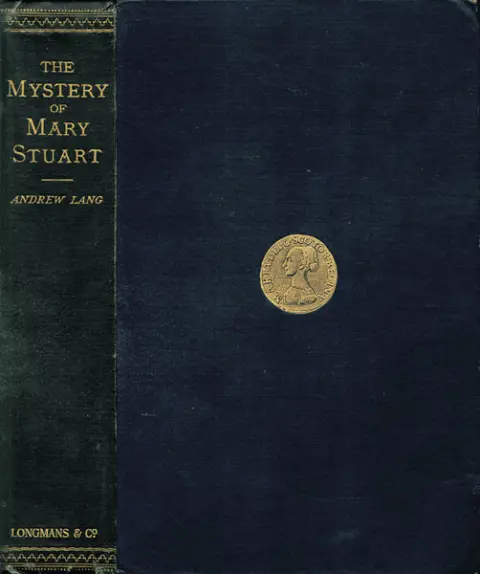
"The Mystery of Mary Stuart" by Andrew Lang is a historical account written in the late 19th century. It explores the complexities surrounding the life and reign of Mary Stuart, Queen of Scots, particularly focusing on her trials, enemies, and the controversial "Casket Letters" which implicated her in various conspiracies. Lang aims to unravel the truth behind the historical events that led to her downfall, scrutinizing both her character and the motives of those around her. The opening of the text introduces the intricate web of personalities involved in the tragic story of Mary Stuart, providing a rich prelude to her struggles for power amidst political intrigue and personal betrayal. Lang illustrates the historical setting, emphasizing the socio-political climate of Scotland during Mary’s reign and the pivotal figures that shaped her narrative, including her husbands, noble adversaries, and loyal aides. The insight into her characterized traits, motives, and the events leading up to her troubles, including the infamous murder of her second husband, Darnley, sets a compelling stage for a deeper exploration of her life. The reader is invited to reflect on the multifaceted interactions of these historical figures and the enduring debate over Mary Stuart's guilt or innocence in the eyes of history.
Introduction adapted from the source catalogue; source summaries may be automatically generated.
Free to read · English · 123,454 words · No account needed
MAKE TIME FOR A GOOD BOOK
On by default. Untick to stop anonymous reading totals. Each page counts after 10 seconds in view. How this works.
Anonymous counting is on unless you have switched it off.
From August 19, 1561, to June 15, 1567, the ‘Diurnal’ and the ‘Diary’ record in common twenty-one events, with date. In seven of these cases they differ, as to date. They differ as to the day of Mary’s departure from Edinburgh to Jedburgh, as to the departure of the ambassadors from Stirling, as to the arrival of Mary with her infant child in Edinburgh (January, 1567), as to the return of Mary and Darnley from Glasgow, as to the day of Darnley’s burial, as to the day of opening Parliament, and as to the attack on Borthwick Castle by the Lords: while the ‘Diurnal’ makes the explosion at Kirk o’ Field occur at 2 A.M. on February 10, but ends the Parliament on April 29, which is absurd. When the dates are correctly known from other sources, and when the ‘Diary’ and the ‘Diurnal’ coincide as to these dates, then, of course, we may accept their authority. But when, as in the case of Mary’s departure from Edinburgh, and arrival in Glasgow, the ‘Diary’ and ‘Diurnal’ oppose ‘Cecil’s Journal,’ and Drury’s version, every reader must estimate the value of their coincidence for himself. If their date, January 20, is correct, then a letter may have been written, and sent, and received, and the facts, so far, are corroborated by Paris’s deposition.
The argument of Chalmers, that Mary was at Edinburgh till January 24, because there are entries as if of her presence there in the Register of Privy Seal, is not valid, as such entries were occasionally made in the absence of the King or Queen.
This Band, which is constantly cited in all the troubles from 1567 to 1586, is a most mysterious document. We have seen that Mary’s secretary, Nau, wilfully or accidentally confuses it with an anti-Darnley band signed by Morton, Moray, and many others, early in October, 1566. We have also seen that Randolph, in 1570, distinguishes between this ‘old band’ and the band for the murder, which, he says, Lethington and Balfour abstracted from a little coffer in the Castle, covered with green cloth or velvet, immediately after Mary surrendered at Carberry. I have ventured the theory that this carefully covered little coffer may have been the Casket itself.[415] Drury, again, in November, 1567, reports that the band has been burned, while the papers as to Mary are ‘kept to be shewn.’ But, in Scotland, till Morton’s execution in June, 1581, the murder band was believed to be extant: at least Sir James Balfour, if he chose, could give evidence about it. What Mary wished to be believed as to this matter, we have seen in Nau, who wrote under her inspiration between 1575 and 1587. He asserts that Bothwell, ‘to ease his conscience’ gave Mary a copy of the band, when he rode away from Carberry (June 15, 1567). He showed Mary the signatures of Morton, Balfour, Lethington, and others. She kept the document, and, when she met Morton on Carberry Hill, told him that he was one of the chief murderers, as she had learned. He slunk away.[416] Probably Mary did accuse Morton, at Carberry. When he was executed (June 3, 1581) Sir John Foster, from Alnwick, sent an account of the trial to Walsingham. In the evidence against Morton was ‘the Queen’s confession when she was taken at Carberry Hill. She said he was the principal man that was the deed-doer, and the drawer of that purpose.’ Morton certainly was not present, and it is as good as certain that he did not sign the band. Still, Mary, at Carberry, charged him with complicity.[417]
Your reading position is saved on this browser. Take it to another device with a library code. Reading pages adapt to text, rather than matching a printed edition.
Andrew Lang
Andrew Lang
Andrew Lang

Andrew Lang
BEHIND THE BOOK
This eBook is for the use of anyone anywhere in the United States and most other parts of the world at no cost and with almost no restrictions whatsoever. You may copy it, give it away or re-use it under the terms of the Project Gutenberg License included with this eBook or online at www.gutenberg.org. If you are not located in the United States, you will have to check the laws of the country where you are located before using this eBook. Read the source licence.
The original source file, including credits and licence, is retained by this library. Request an original-format copy at no charge. Please include the book title and Project Gutenberg identifier #42910.
KEEP YOUR CURIOSITY GOING
Cécile Tormay

Moritz Busch
John L. Ransom
Frances Wright
Cécile Tormay

Mabel Potter Daggett