THE CLASSIC COLLECTION✦Letters on LiteratureCLASSIC FREE BOOKS
Letters on Literature
Andrew Lang
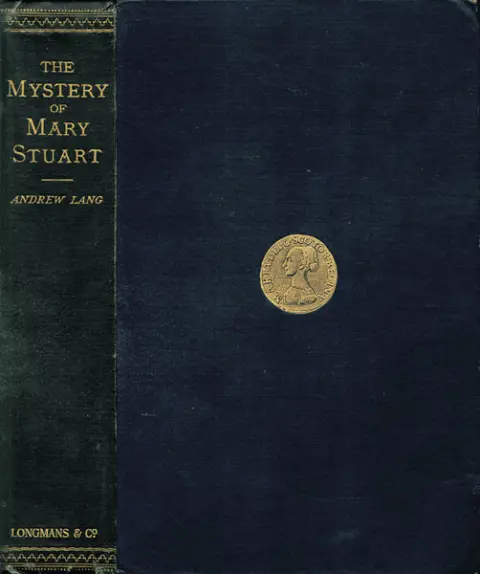
THE CLASSIC COLLECTION · 1901
"The Mystery of Mary Stuart" by Andrew Lang is a historical account written in the late 19th century. It explores the complexities surrounding the life and reign of Mary Stuart, Queen of Scots, particularly focusing on her trials, enemies, and the controversial "Casket Letters" which implicated her in various conspiracies. Lang aims to unravel the truth behind the historical events that led to her downfall, scrutinizing both her character and the motives of those around her. The opening of the text introduces the intricate web of personalities involved in the tragic story of Mary Stuart, providing a rich prelude to her struggles for power amidst political intrigue and personal betrayal. Lang illustrates the historical setting, emphasizing the socio-political climate of Scotland during Mary’s reign and the pivotal figures that shaped her narrative, including her husbands, noble adversaries, and loyal aides. The insight into her characterized traits, motives, and the events leading up to her troubles, including the infamous murder of her second husband, Darnley, sets a compelling stage for a deeper exploration of her life. The reader is invited to reflect on the multifaceted interactions of these historical figures and the enduring debate over Mary Stuart's guilt or innocence in the eyes of history.
Introduction adapted from the source catalogue; source summaries may be automatically generated.
Free to read · English · 123,454 words · No account needed
MAKE TIME FOR A GOOD BOOK
On by default. Untick to stop anonymous reading totals. Each page counts after 10 seconds in view. How this works.
Anonymous counting is on unless you have switched it off.
We are not to suppose Lethington so foolish as to confess that he was himself the forger. Even if Lethington did tell Norfolk that he had often imitated Mary’s hand, he could not have meant to accuse himself in this case. His son, in 1620, asked Camden for his authority, and we know not that Camden ever replied. He never altered his statement, which meant no more than that, by the argument of his own powers of imitating Mary’s handwriting, Lethington kept urging the Duke of Norfolk to doubt her guilt.[392] Lethington’s illustration of the ease with which Mary’s writing could be imitated is rather, if he used it, a proof that he did not hold the pen which may have tampered with the Casket Letters. Our reasons for suspecting him of engaging, though not as penman, in the scheme are:
1. Elizabeth’s early suspicion of Lethington, and the probability that Robert Melville, who had just parted from Lethington, inspired that suspicion.
2. The probability, derived from Randolph’s letter, already cited, that Lethington had access to the Casket before June 21, 1567, but after Mary’s capture at Carberry.
3. Of all men Lethington, from his knowledge of Mary’s disgust at his desertion, ingratitude, and ‘extreme opposition’ to her, in her darkest hour, and from his certainty that Mary held, or professed to hold, documentary proof of his own guilt, had most reason to fear her, and desire and scheme her destruction.
4. Kirkcaldy of Grange, on April 20, 1567, months before the Letters were discovered, wrote to Cecil that Mary ‘has said that she cares not to lose (a) France, (b) England, and (c) her own country’ for Bothwell.[393]
Compare, in the Lennox version of the letter never produced (p. 214)--
(a) The loss of her dowry in France.
(b) Her titles to the crown of England.
(c) The crown of her realm.
Unless this formula of renunciations, in this sequence, was a favourite of Mary’s, in correspondence and in general conversation, its appearance, in the letter not produced, and in Kirkcaldy’s letter written before the Casket was captured, donne furieusement à penser.
5. Another curious coincidence between a Casket Letter (VII.) and Mary’s instructions to the Bishop of Dunblane, in excuse of her marriage, has already been noticed. We may glance at it again.
We thocht his continuance in the awayting upon us ... had procedit onelie upoun the ackawlegeing of his dewtie, being our borne subject.
The persuasionis quhilk oure friendis or his unfriendis mycht cast out for his hinderence ...
Sa ceased he nevir till be persuasionis and importune sute, accumpaneit nottheles with force.
Gif abone the dewtie of ane subject yow advance yourself.
Your reading position is saved on this browser. Take it to another device with a library code. Reading pages adapt to text, rather than matching a printed edition.
Andrew Lang
Andrew Lang
Andrew Lang

Andrew Lang
BEHIND THE BOOK
This eBook is for the use of anyone anywhere in the United States and most other parts of the world at no cost and with almost no restrictions whatsoever. You may copy it, give it away or re-use it under the terms of the Project Gutenberg License included with this eBook or online at www.gutenberg.org. If you are not located in the United States, you will have to check the laws of the country where you are located before using this eBook. Read the source licence.
The original source file, including credits and licence, is retained by this library. Request an original-format copy at no charge. Please include the book title and Project Gutenberg identifier #42910.
KEEP YOUR CURIOSITY GOING
Cécile Tormay

Moritz Busch
John L. Ransom
Frances Wright
Cécile Tormay

Mabel Potter Daggett